Must-see tour of Colombia and Ecuador
A change of scenery from the Colombian Caribbean coast to the Galapagos Islands
Ideal for discovering the richness of each of these countries, this trip takes you to Bogota, the coffee region, and beautiful Cartagena de Indias … before flying to the neighboring country, its capital Quito, the Andes and the majestic Galapagos Islands.
Length of stay: 15 days
Theme: Multi-country-tours
Difficulty: For all audiences
Travel Itinerary
- Day 1 : Bogota
- Day 2 : Bogota
- Day 3 : Bogota
- Day 4 : Pereira
- Day 5 : Cartagena
- Day 6 : Cartagena
- Day 7 : Cartagena
- Day 8 : Quito Airport
- Day 9 : Quito Historic Center
- Day 10 : Otavalo
- Day 11 : Cotopaxi Park
- Day 12 : Quito Airport
- Day 13 : Puerto Villamil
- Day 14 : Puerto Villamil
- Day 15 : Puerto Villamil
- Day 16 : Baltra
Bogota
Pereira
Carthagène
Aéroport de Quito
Quito Centre Historique
Otavalo
Parc Cotopaxi
Puerto Villamil
Baltra

Bogota
Arrival at Bogotá’s El Dorado international airport, at an altitude of 2,640 m. Transfer to your hotel in the Candelaria district and end of the day free to enjoy the Colombian capital at your leisure, with its mix of modern and historic districts, urban architecture and verdant parks. Overnight at Hotel Casa Deco in a Standard room.

Bogota
A day devoted to sightseeing in Bogotá, including: – Cerro de Monserrate , for a breathtaking view of the capital and surrounding area. Perched at an altitude of 3,152 metres, the Sanctuary (accessible by cable car or funicular) is a place of pilgrimage, particularly popular on religious feast days.
– The Paloquemao market, where you can sample exotic flavours and shop for Bogotanos’ favourite dish – The Candelaria district, Bogotá’s historic and cultural center, with its authentic colonial atmosphere, cobbled streets, colourful facades, beautifully carved wooden balconies and Baroque churches – The Gold Museum, one of the most dazzling on the continent. Nearly 34,000 pieces of gold are on display, making it the world’s largest collection of pre-Hispanic gold and silverware from the Quimbaya, Taironas, Muiscas and Tolimas civilizations.
– The Botero Foundation, dedicated to the Colombian artist Fernando Botero, where his own works (some 100 drawings, paintings and sculptures) are on display, along with his private collection of no fewer than 85 masterpieces by internationally renowned artists (Renoir, Dali, Chagall, Picasso, Miro, etc.).) – Plaza Bolivar, with its imposing buildings (Town Hall, Palace of Justice, Cathedral, National Congress, etc.) Note 1: La Candelaria is best visited on foot (3 to 4 hours’ walk into town), with vehicle support for visits to Montserrate and Paloquemao.
Note 2: the order and content of activities are indicative, depending on the day of the week (Gold Museum closed on Mondays; Botero Foundation closed on Tuesdays). Note 3: Montserrate is very popular on Sundays, and there are usually many visitors on that day. Overnight at Hotel Casa Deco in a Standard room.
Bogota
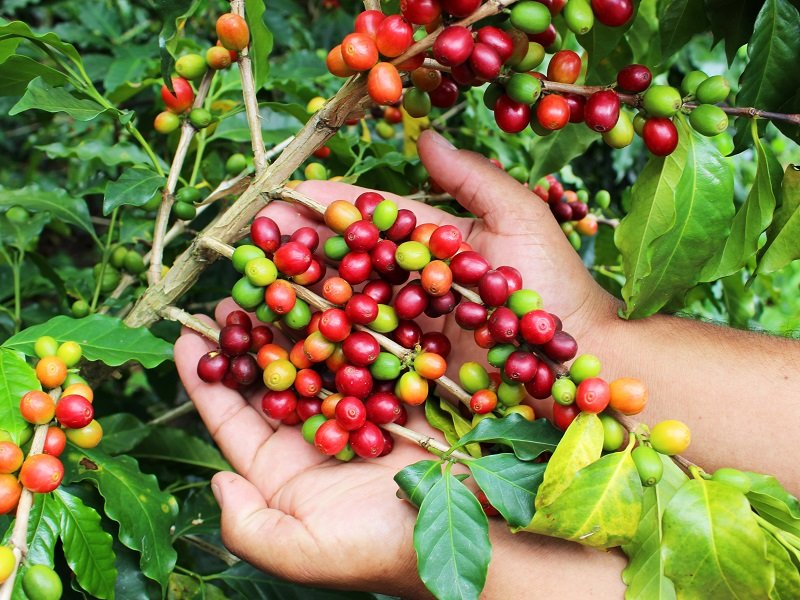
Transfer to Bogota airport for your domestic flight. Domestic flight to Pereira. Arrival in the “coffee triangle” (made up of three departments: Quindío, Risaralda and Caldas). It is here, on the high Andean plateaus of western Colombia, that almost 10% of the world’s coffee is grown, at altitudes ranging from 800 to 1,800 m. Welcome and transfer to your hotel. Discover the Risaralda Valley on horseback, enjoying the peace and quiet and admiring the beauty of the scenery. Duration: 2h horseback ride After this beautiful ride, we propose to take you into the colorful world of exotic fruits, through a tasting guided by an expert! You’ll be amazed by the diversity of colors, tastes and textures! Overnight at Hotel Sazagua in a Premium Suite room.
Pereira
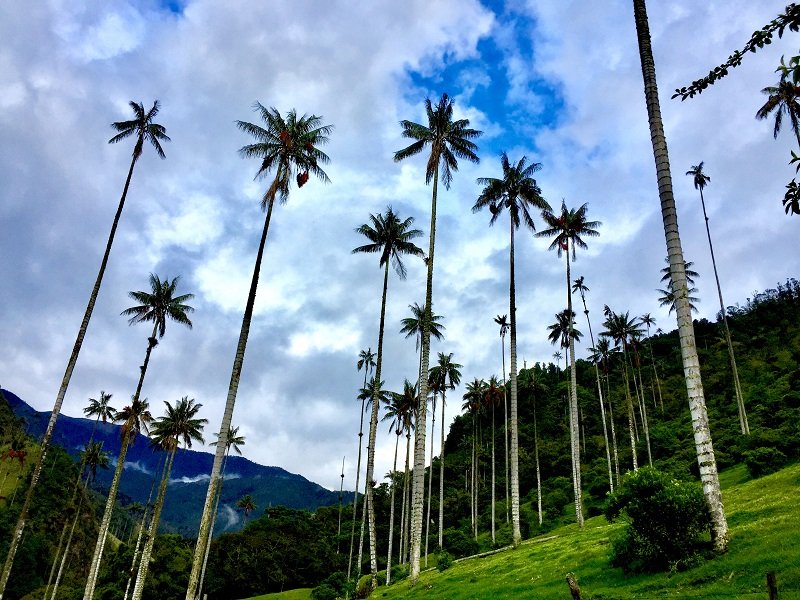
A day dedicated to discovering the villages and landscapes typical of the coffee region. On the program: – Willys tour through the verdant Cocora Valley – Hike among the wax palms (Colombia’s national tree) During the walk, you’ll pass through bucolic landscapes, among wax palms along the crystal-clear waters of the Rio Quindio, with the impressive peaks of the Cordillera Occidental as a backdrop. Then you’ll arrive at the Acaime reserve. On arrival, you’ll be offered a coffee or agua de panela. Get your cameras ready: Acaime is a paradise for hummingbird watching – Lunch break – Visit a Colombian coffee plantation, whose production can be as complex and sophisticated as wine. On site, you’ll have the opportunity to walk among the coffee trees, be introduced to the harvesting and roasting processes, before tasting the beverage produced on site. Note: 4 to 5 hours’ walk approx.; moderate to difficult level Transfer to Pereira airport for your domestic flight. Domestic flight to Cartagena de Indias. Welcome in Cartagena de Indias, on the Caribbean coast. Transfer to your hotel in the historic center and end of the day free to discover the unrivalled charm of this superb colonial city, listed as a World Heritage Site by UNESCO. Overnight at Hotel La Passion in a Premium room.

Cartagena
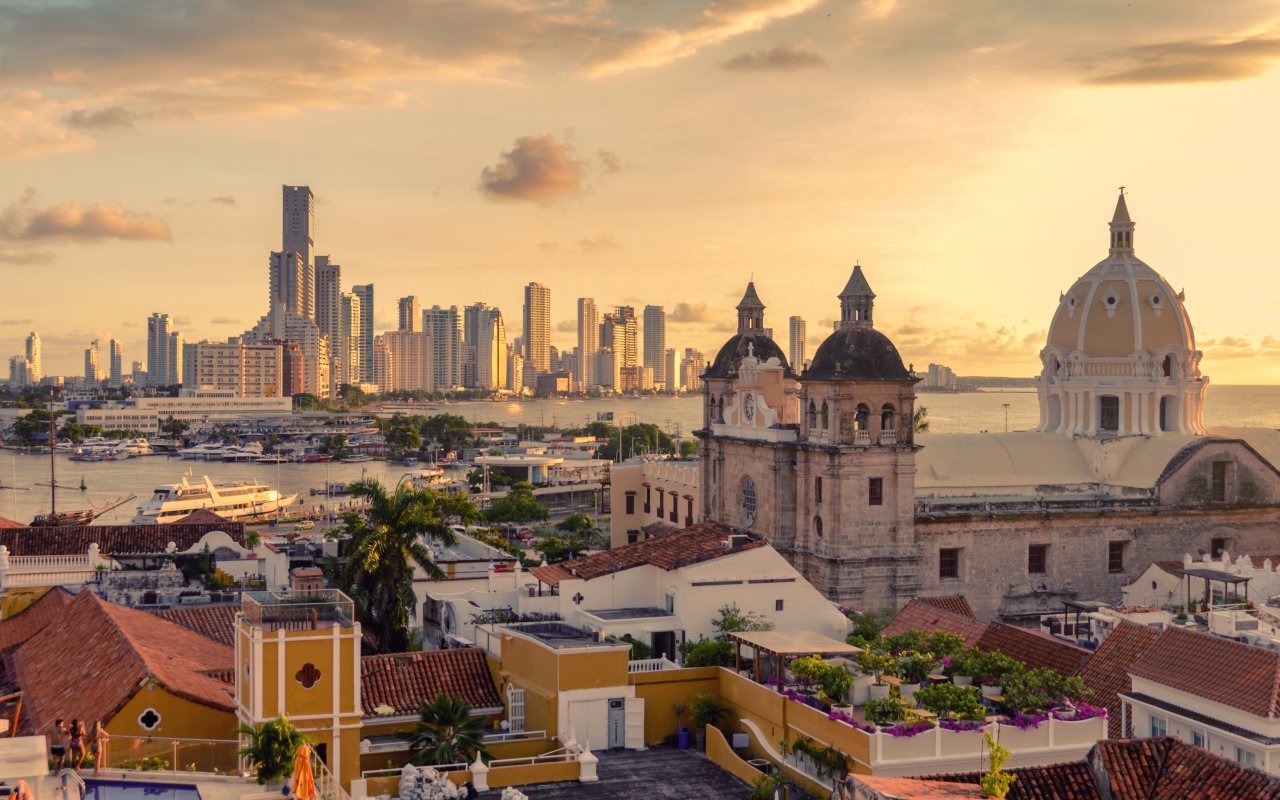
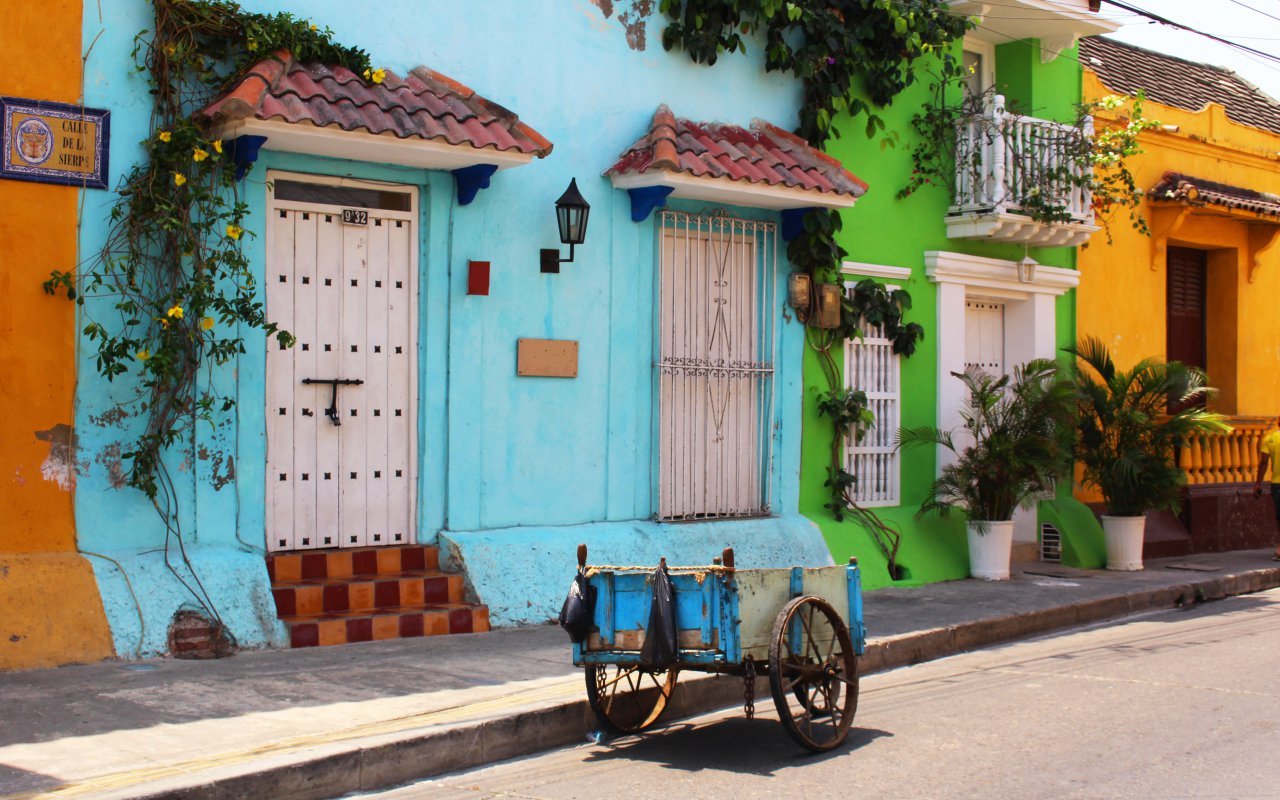
Half-day tour of Cartagena’s historic center and main sights. On foot, we’ll explore the Getsemani, San Diego and Santo Domingo districts, witness to the city’s past. Afternoon free to enjoy Cartagena’s many attractions. You can visit the historic city at your own pace and enjoy its unique atmosphere, discover the modern district of Bocagrande, store for handicrafts in Las Bovedas, take a day trip to relax on the Rosario islands and admire the sunset from the city walls. Overnight at Hotel La Passion in a Premium room.
Cartagena
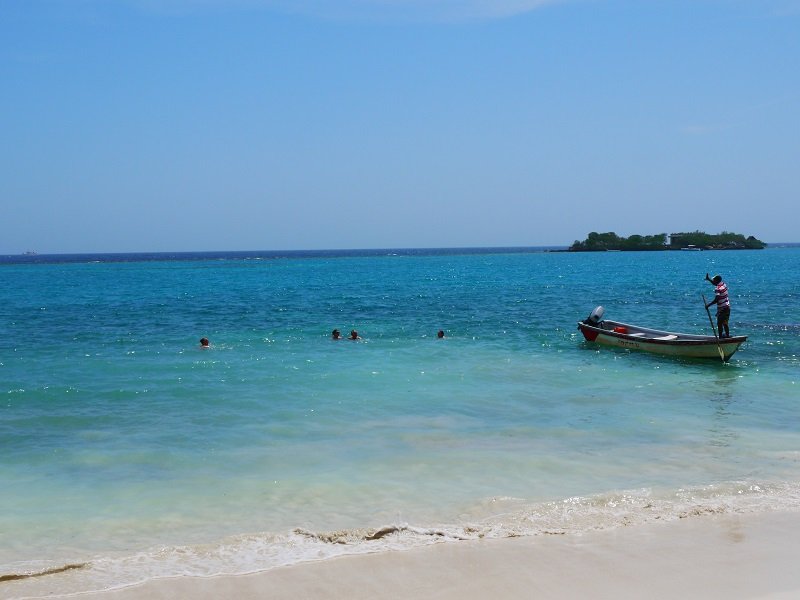
Transfer from your hotel to the port of Cartagena. A day of relaxation in the heart of the beautiful Rosario archipelago. Enjoy a unique day aboard a fully-privatized sailboat, lazing on the beaches, swimming in the heart of the Caribbean, discovering the mangrove swamps, exploring the seabed… Lunch on one of the archipelago’s islands. Transfer from the port of Cartagena de Indias to your hotel. Overnight at the Hotel La Passion in a Premium room.
Cartagena
Transfer to Cartagena airport for your domestic flight. Domestic flight to Bogota. International flight to Quito, Ecuador.
Quito Airport
Welcome at Quito airport by an English-speaking guide (if you are 1 to 3 people, your guide will also be your driver). Private transfer with Spanish-speaking driver from Quito airport to hotel. Overnight at Hotel Casa Gardenia in Quito’s historic center.
Quito Historic Center
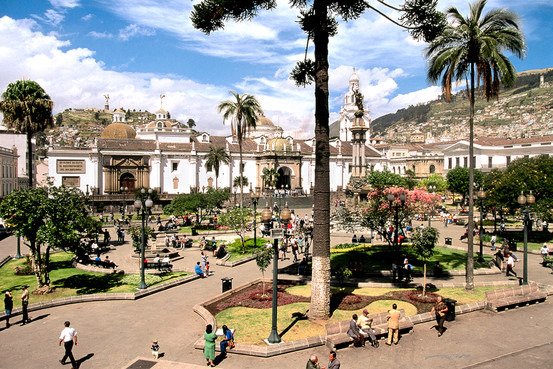
Quito, the capital of Ecuador, is a veritable jewel in the crown of the Pichincha, Cayambe and Antisana volcanoes. Perched at an altitude of 2,830 metres, it is the second-highest capital in the world. It was the first city to be declared a UNESCO World Heritage Site in 1978, and its historic center is the largest and best preserved in Latin America. To give you a good overview of the city in half a day, we’ll head for Panecillo, a small hill overlooking the city crowned by the statue of the Virgin of Quito. Afterwards, we’ll visit Quito’s colonial and republican center: – the Jesuit church (weather permitting, as it only opens at 12:30) or the Sucre Theater; – the Franciscan church of San Francisco; – the Grand Plaza, home to the Presidential Palace (Carondelet) and Quito Cathedral. Leaving Quito for Otavalo, you’ll pass through one of the regions where Ecuador’s famous roses are grown, and enjoy the scenery with its many northern Andes peaks. Stop at 0° latitude: a giant sundial marks the Equator line. We’ll explain the phenomena observable from this mythical spot for us and the civilizations that preceded us. You’ll discover how local people integrate seasonal rhythms and activities into the agricultural calendar, and what their meaning is, between sky and nature. Visit the Cuicocha lagoon in the Cotacachi – Cayapas ecological reserve, where you’ll discover the sparkling blue waters of one of Ecuador’s most beautiful high-altitude lakes. At the center of an ancient crater at an altitude of 3064m, it’s a nature-lover’s rendezvous with an extremely varied flora; over 400 species have been recorded here. Overnight at Hotel Las Palmeras on the outskirts of Otavalo. Accompanied by an English-speaking guide in private transport (if you are 1 to 3 people, your guide will also be your driver).
Otavalo
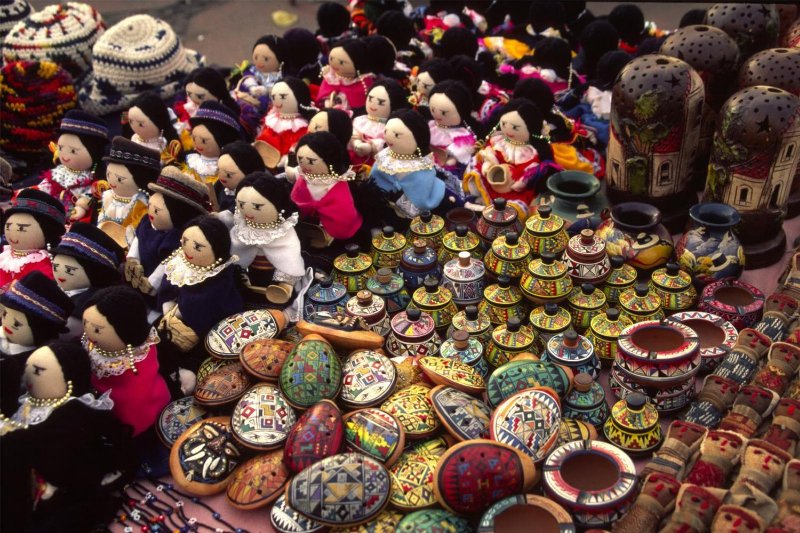
This morning, you’ll visit Otavalo’s famous indigenous market, Ecuador’s largest handicrafts market in the Andes, where you’ll come across the Otavaleños natives wearing espadrilles, brown felt hats and blue ponchos over their shoulders. They are Ecuador’s most prosperous natives and formidable traders. You’ll return to Cayambe from the Otavalo region, enjoying the magnificent mountain scenery. You’ll spend 2 hours at the hacienda de la Compañia de Jesús, a property that originally belonged to the Jesuits before they were expelled from the country. You’ll be able to visit the main house, a French neo-classical style house with its ornamental garden and fountain, still home to the hacienda’s owners today. At the heart of this experience are the roses, with a visit to the adjoining plantation. The owner will explain the entire process, from cultivation to the preparation of bouquets for export. Roses from Ecuador are reputed to be the most beautiful in the world. Grown at altitudes of over 2,500m, roses derive their intense coloring from the sharp variations in temperature between day and night. Mineral elements from the Cotopaxi and Cayambe volcanoes give the buds of these roses their exceptional size. The volcanic hillsides also provide plenty of pure water, and to top it all off, a visit to the showroom! The old stables have been adapted for the pleasure of the eye, offering an impressive display of hundreds of roses of different varieties. You’ll return to Cotopaxi Park from the Cayambe region, enjoying the magnificent mountain scenery and observing the locals, in traditional costume or busy herding their animals, along the roadside, a symbol of modernity contrasting with practices inherited from pre-Inca civilizations. You’ll then come to the hacienda La Cienega, not far from Cotopaxi National Park, where the character and historic furnishings have been carefully preserved, and where celebrities from all over the world have passed through, including Charles Marie de la Condamine, the French scientist who took part in the Geodesic Mission (1736-44), which determined the true shape of the Earth, and Alexander Von Humboldt, the German naturalist who studied Cotopaxi’s volcanic activity (1802) and its unique flora. The immense corridors, with their waxed parquet floors and ancestral galleries on the walls, lend a special charm to this old family home, which has a soul and a whole history of its own. This is where you’ll spend the night. Accompanied by an English-speaking guide in private transport (if you are 1 to 3 people, your guide will also be your driver).
Cotopaxi Park
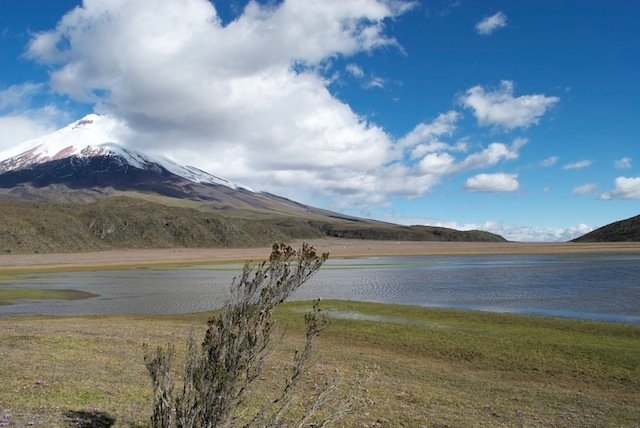
Visit Cotopaxi Park, where the volcano of the same name is Ecuador’s second-highest peak at 5897 metres. It is also the highest active volcano in the world. Most of the time, it simply emits a few fumaroles visible from the rim of the ice-covered crater, but occasionally it throws up a fine column of smoke and ash above its cone. You’ll visit the park and take a short stroll around the Limpiapungo Lagoon, with its magnificent panoramic views of Cotopaxi, to discover the particular fauna of the paramo (these typical Andean plains swept by cold winds). You’ll then take a vehicle up to the parking area at 4600 metres and continue on foot to the José Rivas refuge 200 metres higher up. Due to the eruptive process of the Cotopaxi volcano, which began on August 14, 2015, this information is subject to revision at any time, in compliance with the safety requirements of the Ecuadorian Ministry for the Coordination of Safety and our agency. You will then take the road back to Quito. You’ll spend the night at the Quito Polo Club boutique hotel. Accompanied by an English-speaking guide in private transport (if you are 1 to 3 people, your guide will also be your driver).
Quito Airport
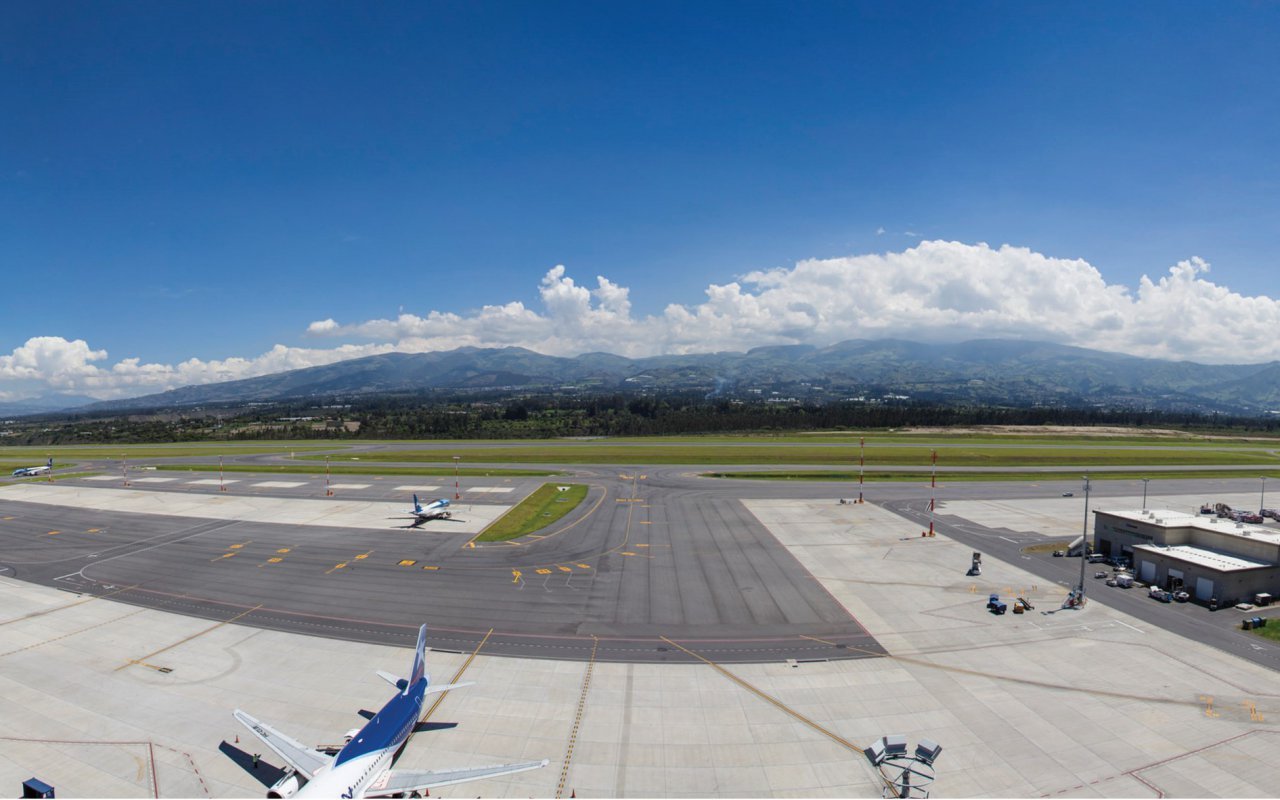
You’ll take a 2-hour flight from Quito to Baltra in the Galapagos. At the airport, after paying the Galapagos migration card (us$20/person) and checking your luggage (maximum 20 kg in the hold per person) on the mainland, you can check in and board the plane for a 3-hour flight to Baltra airport, located on a small island next to Santa Cruz. Santa Cruz is the second-largest island in the Galapagos and the most densely populated of the archipelago. You’ll pay the Galapagos National Park entrance fee ($100 per person) before collecting your luggage, and our local representative will pick you up as you leave the airport. You’ll reach the Itabaca Canal by public bus (5 minutes), then take the public barge across. From here, you’ll continue to the main island by private pick-up to Puerto Ayora (45 minutes), where you’ll visit the Charles Darwin Research Center to learn about the islands’ biodiversity conservation efforts and see up close the famous giant tortoises, island iguanas and magnificent examples of local flora.
Note: If your flight arrival time is before 10 a.m., you’ll pay a visit to the Highlands, before heading to the port of Ayora, to the Gemelos volcanic formations, or to the Manzanillo farm to see the giant tortoises running free. Overnight at Hotel Deja Vu in Santa Cruz.
Puerto Villamil
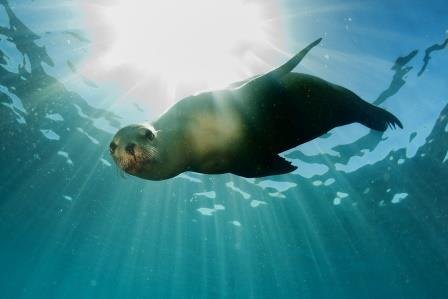
Overnight at the Wooden House Hotel. At the port of Puerto Ayora, your luggage will be checked before boarding. You’ll then need to take a taxi-boat to reach your boat, for which you’ll have to pay on the spot (between $0.50 and $1 maximum per person.) Then it’s a 2? hr. ride by fast public boat to Isabela, the largest island in the archipelago and the wildest of the 3 big islands. On arrival at Isabela, you’ll need to take a new taxi-boat (maximum $1 per person) to disembark on the island. You’ll need to pay the Isabela tax (us$10 per person). Our representative will meet you at the pier and take you to your hotel. You can then enjoy this enchanted island to the full, with a stroll to the bay of Concha y Perla, whose crystal-clear waters will allow you to discover the marine riches of the Galapagos, and certainly to swim with sea lions, turtles, penguins, etc. .in the afternoon, you’ll take an excursion to Las Tintoreras (20 min. from the port), where you can observe sea lions, pelicans, penguins, blue-footed boobies… and walk on lava formations through large colonies of marine iguanas, which won’t mind your presence. A small sandy beach is home to a colony of sea lions, resting peacefully in the shade of the mangroves; the bay is a favourite haunt of white-tip reef sharks, known as Tintoreras, which you can observe from the ground, overlooking the lava corridors where they take refuge. An unforgettable natural spectacle. You can also get up close and personal with a mask and snorkel, and enjoy other animals, depending on the season, such as the impressive sea turtles within easy reach, stingrays, sunfish and more…
Puerto Villamil
Overnight at the Wooden House Hotel. After breakfast, off to the TUNNELS / CAPE ROSE: located 40 minutes by boat to the south-west of Puerto Villamil. From the lava concretions, you’ll be able to see numerous seabirds, and snorkelling will bring you up close and personal with multicoloured fish, rays, sea turtles and sea lions. Free afternoon in Isabela: – Relax on Puerto Villamil’s long sandy beach – Visit the turtle breeding center, the pink flamingo lagoon or other small beaches with enchanting names such as playa Amor.
Puerto Villamil
Overnight at the Wooden House Hotel. Early-morning vehicle departure from Puerto Villamil to reach the mountainous region of the island until the end of the road. Hike (5 to 6 hours’ walk at your own pace) through a world of recent geological history to the edge of the Sierra Negra volcano, which is still active and last erupted in October 2005. Walk and enjoy a fantastic view of its crater, almost 9 km in diameter, making it the second-largest Caldera in the world. You’ll then continue on to the Chico volcano, which boasts spectacular fumaroles and lava fields from its last eruptions, and you’ll be able to see much of the western side of the island with the fantastic Elizabeth Bay in the distance, as well as the north with the Alcedo Volcano, the Darwin Volcano and Wolf. Afternoon at leisure in Puerto Villamil.
Baltra
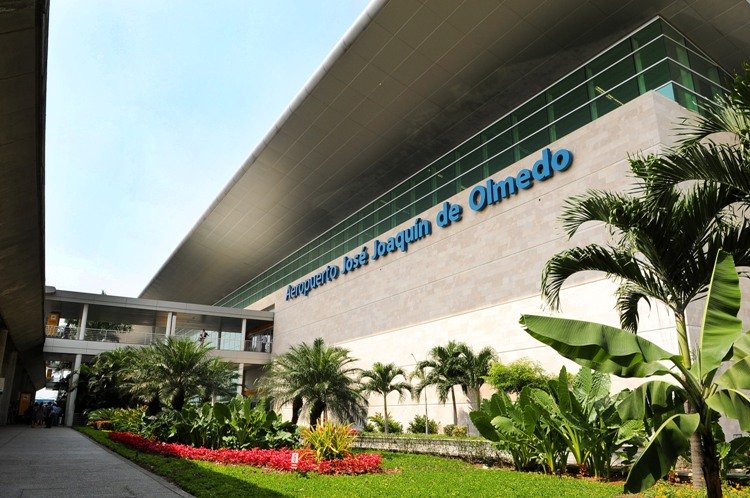
Take a 2-hour flight from Baltra to Guayaquil. Early departure after a leisurely breakfast to catch a fast boat to Puerto Ayora. Once again, you’ll need to pay for the taxi-boat at Puerto Villamil and Puerto Ayora (maximum us$2 per person). From there, a vehicle will take you to Baltra airport for your return flight to the mainland. Free connection for your international flight.
Why travel with us?
Local expertise

Custom design
24/7 Assistance & Safety
Authentic experiences
Without intermediaries
Responsible tourism
Our family itinerary ideas
in Colombia
Other travel ideas

Honeymoon tour in Peru and Colombia
Peru and Colombia tour : the coffee and cocoa route
Multi-country travel Colombia, Panama and Costa Rica