Santa Cruz de Mompox epitomizes the image of the charming colonial village, transporting us out of time, into another dimension, another period ofhistory. The village is located in the department of Bolivar, in northern Colombia. Mompox is one of the most beautiful jewels of the colonial era, which has earned it a privileged place on the list of 17 heritage villages. Today, these villages are true emblems of Colombia’s tourist and cultural destinations
Map of Mompox

The essentials about the village of Mompox
UNESCO World Heritage Site
Located on the banks of the Magdalena River south of Cartagena, the village of Mompox was declared a UNESCO World Heritage Site in 1995. Seemingly frozen in time, Mompox has long been difficult to access, but has escaped the sirens of architectural modernization and retained all its charm of yesteryear. Founded in 1540 by the Spanish, the village has preserved its fine colonial architecture, with its houses and churches. The locals will tell you: “You don’t pass through Mompox, you stop in Mompox”. What was once a hub of river traffic, thanks to the Magdalena River, is now a neo-colonial treasure trove that has preserved its streets, architecture and customs, including goldsmithing.

Mompox's climate
Mompox has a hot desert climate. Temperatures generally oscillate between 22°C and 28°C all year round. We note that showers can fall all year round in this area, and even in the driest months, rainfall remains fairly heavy. The best months to visit this village are January to May and October to December.

The Mompox Story
Foundation of “Mompos
Mompox, also known as Mompos, was founded in 1540 by Alonso de Heredia (the brother of Pedro de Heredia, founder of Cartagena de Indias), on the eastern branch of the Magdalena River. At the time, it was an important trading center and a busy port through which all goods from Cartagena passed on their way to the interior. The city thus played a key role in the Spanish colonization of northern South America. Its history is an integral part of the process of colonial penetration and domination during the Spanish conquest, and of the development of communications and trade observed from the 17th to the early 19th centuries
Three central squares along the river
Instead of the central square typical of most towns founded by the Spanish, Mompox has three squares in a row along the river, each with its own church, corresponding respectively to three ancient Indian villages. Today, most of the buildings in the historic center are in a remarkable state of preservation and still serve their original purpose, offering an exceptional image of what a Spanish colonial town bordering a river once was. The identity of Santa Cruz de Mompox’s historic center as a colonial river port defines the uniqueness and singularity of its monumental architecture. This initially flourishing village also minted colonial currency and became famous for its goldsmiths, whose skills are still evident today in superb filigree jewelry.

Decline and independence of Mompox
Mompox declared its independence from the Spanish Empire in 1810, the first Colombian town to do so. Its economic decline in the 19th century, when goods transport was diverted, paradoxically helped to preserve it. Mompox’s loneliness is the same as that found in Gabriel Garcia Marquez‘s masterpiece One Hundred Years of Solitude, in which we can make out details of the village even though the novel is actually based on Aracataca. Mompox has thus begun a century-long slumber from which only tourism has been able to extricate it.
What to do in Mompox
A destination off the beaten track
Mompox is full of secret treasures: take the time to stroll through its narrow streets, admire its architecture, discover the watermark, sail through the marshes, enjoy traditional festivals and much more!
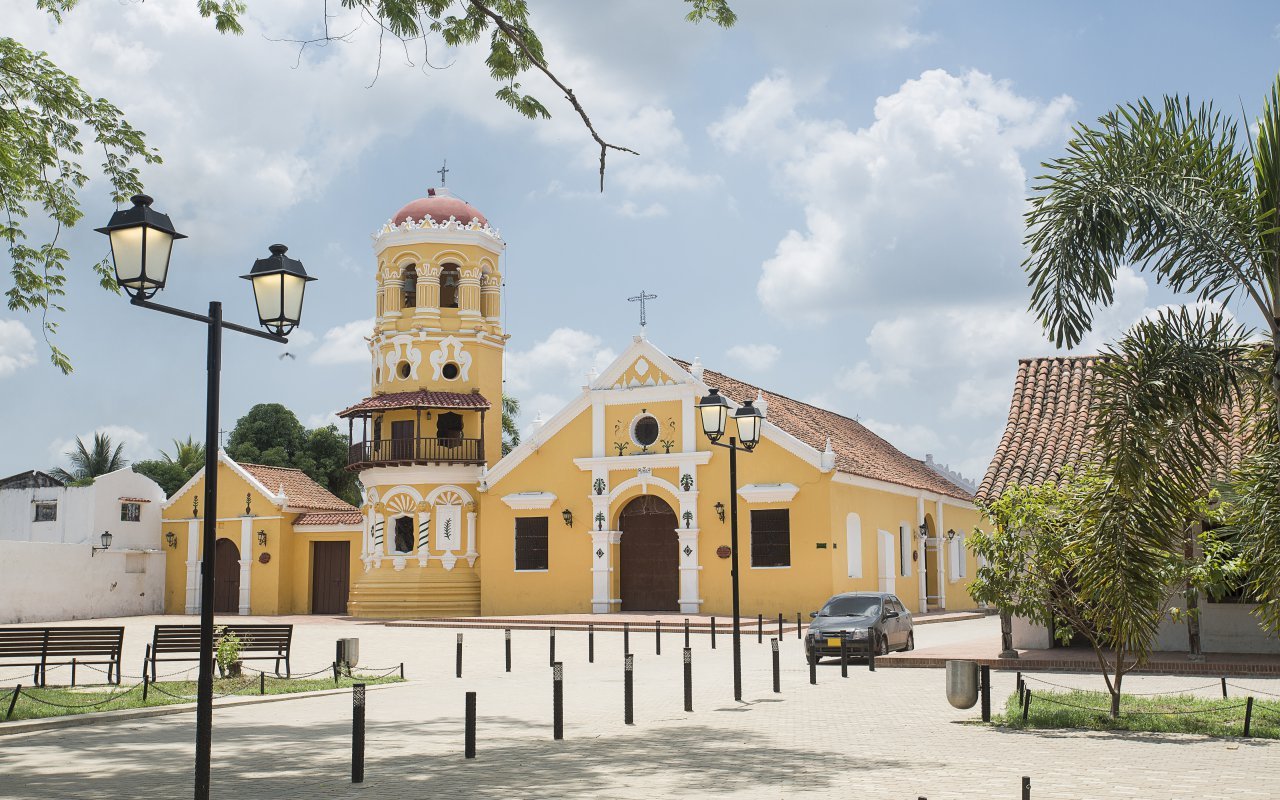
Iglesia Santa Barbara
This church dates back to 1613, and features a tower with a strange Moorish-style architecture that contrasts with the traditional colonial style. No doubt in reference to the legend that animates this place..
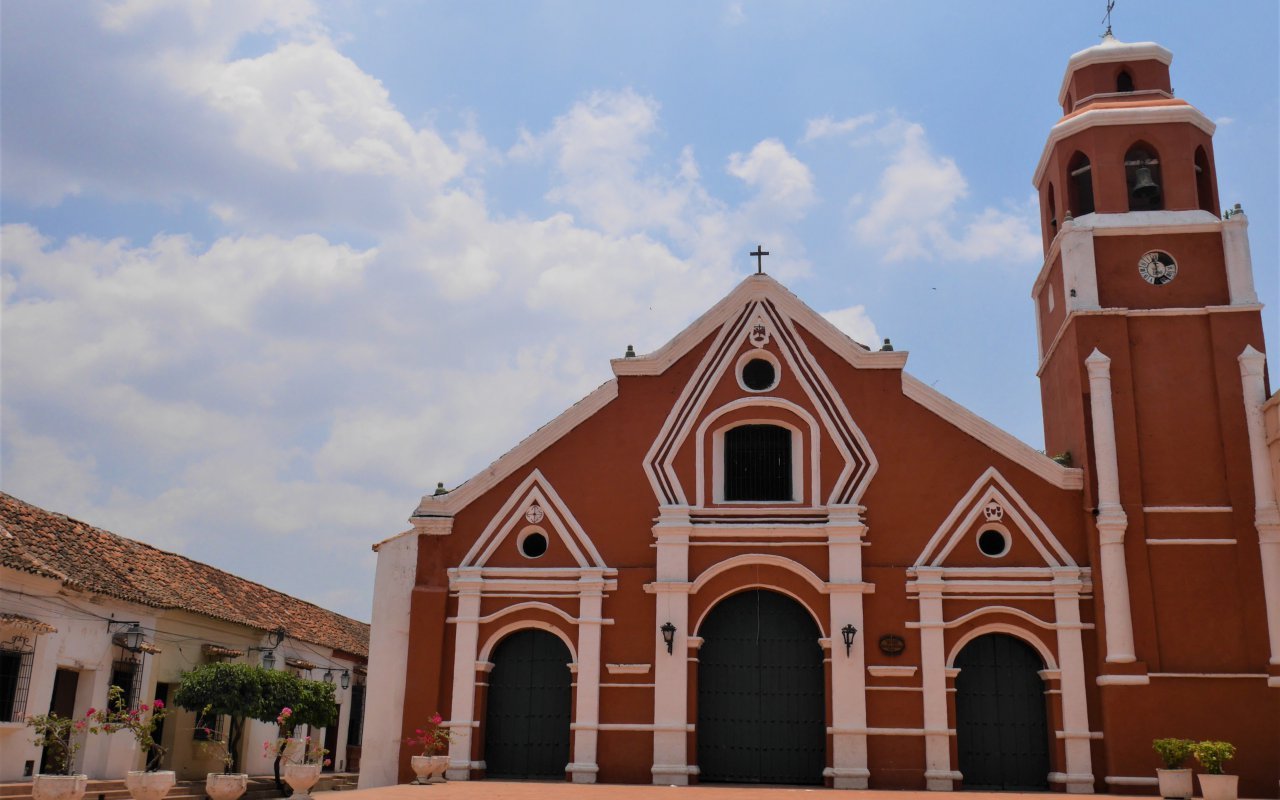
San Francisco church and convent
Built in 1580, this is the oldest church in Mompox. Majestic and elegant, it is distinguished by its white and ochre tones.
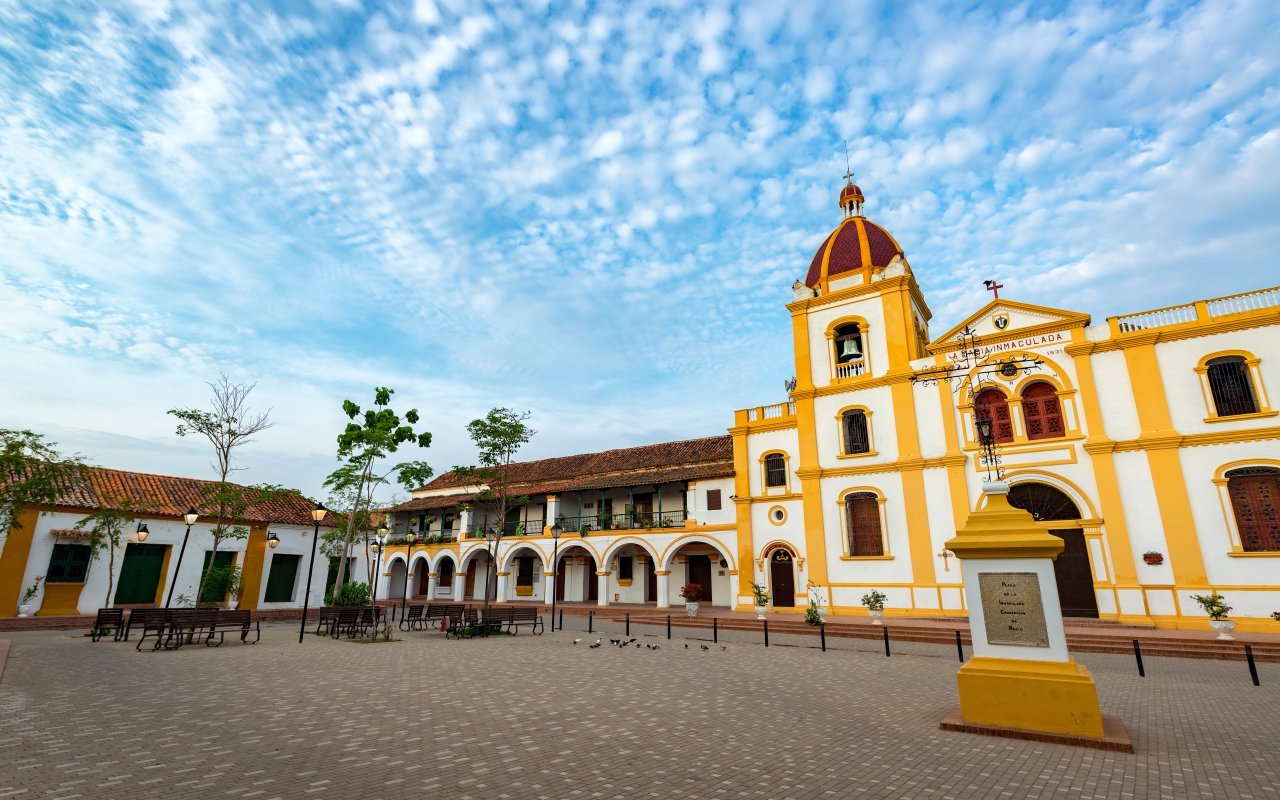
Iglesia de la Inmaculada Concepción
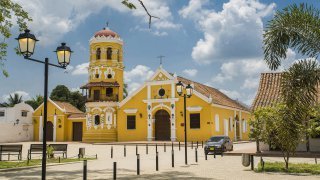
Colombia’s most photogenic church, with its semi-Romanesque white-and-yellow style, is now an integral part of the nation’s heritage.
Piedra de Bolivar
Right on the banks of the Magdalena River, this solemn stone illustrates the comings and goings of Simon Bolivar during the wars of independence against the Spanish Empire.
Museo del Arte Religioso
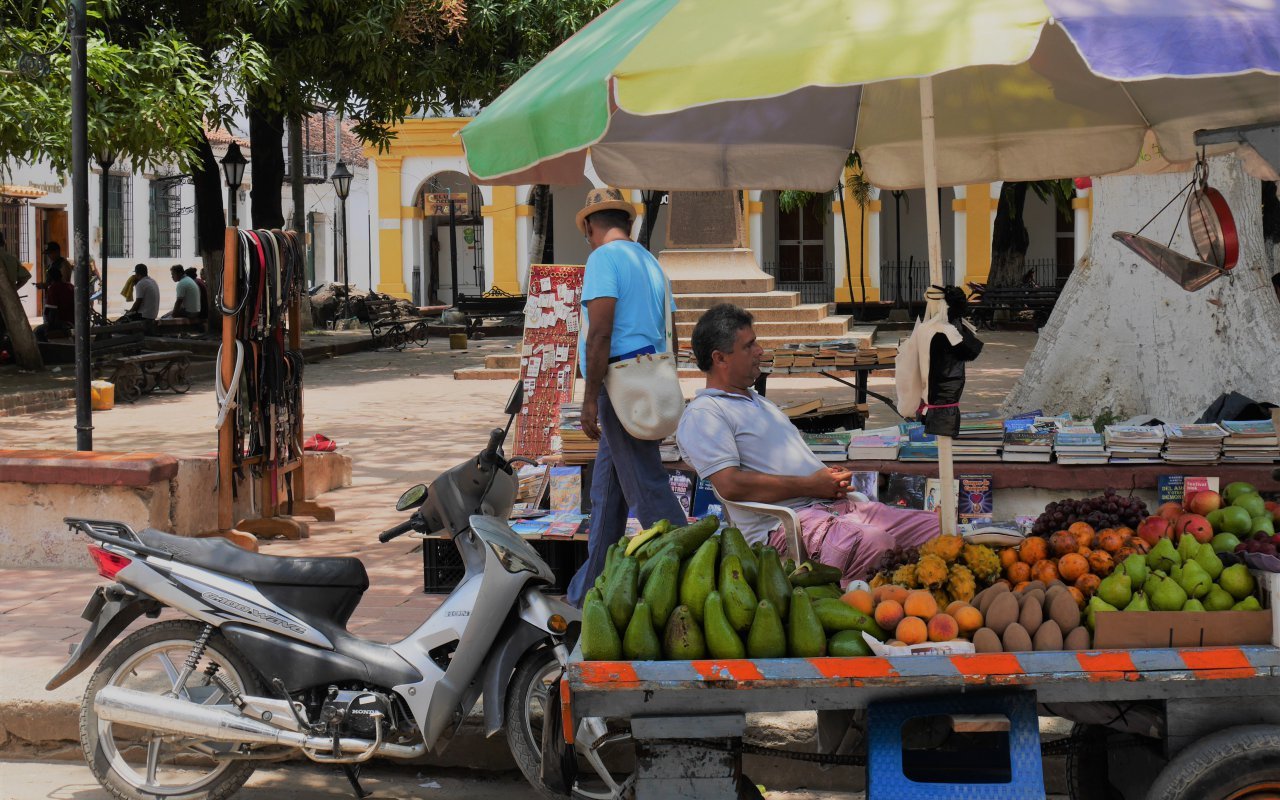
Housed in a beautiful colonial mansion, this museum features a collection of paintings, gold and silver crosses and other religious objects.
Visit a goldsmith’s workshop
A visit to one of the many workshops in the village is a must. Filigree silver jewelry is one of Mompox’s specialties, a true heritage of Arab goldsmiths, and an art form to be discovered during your stay.
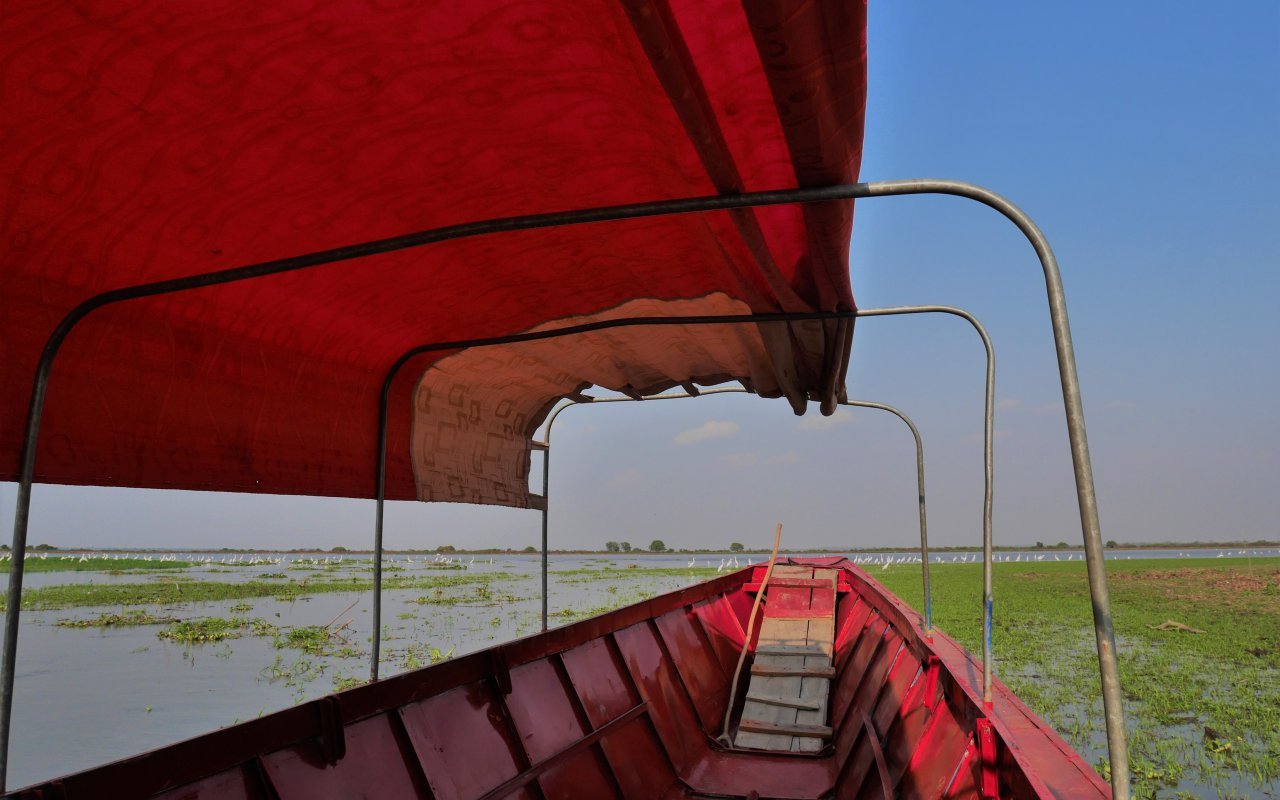
Sailing in the Cienaga de Pijiño
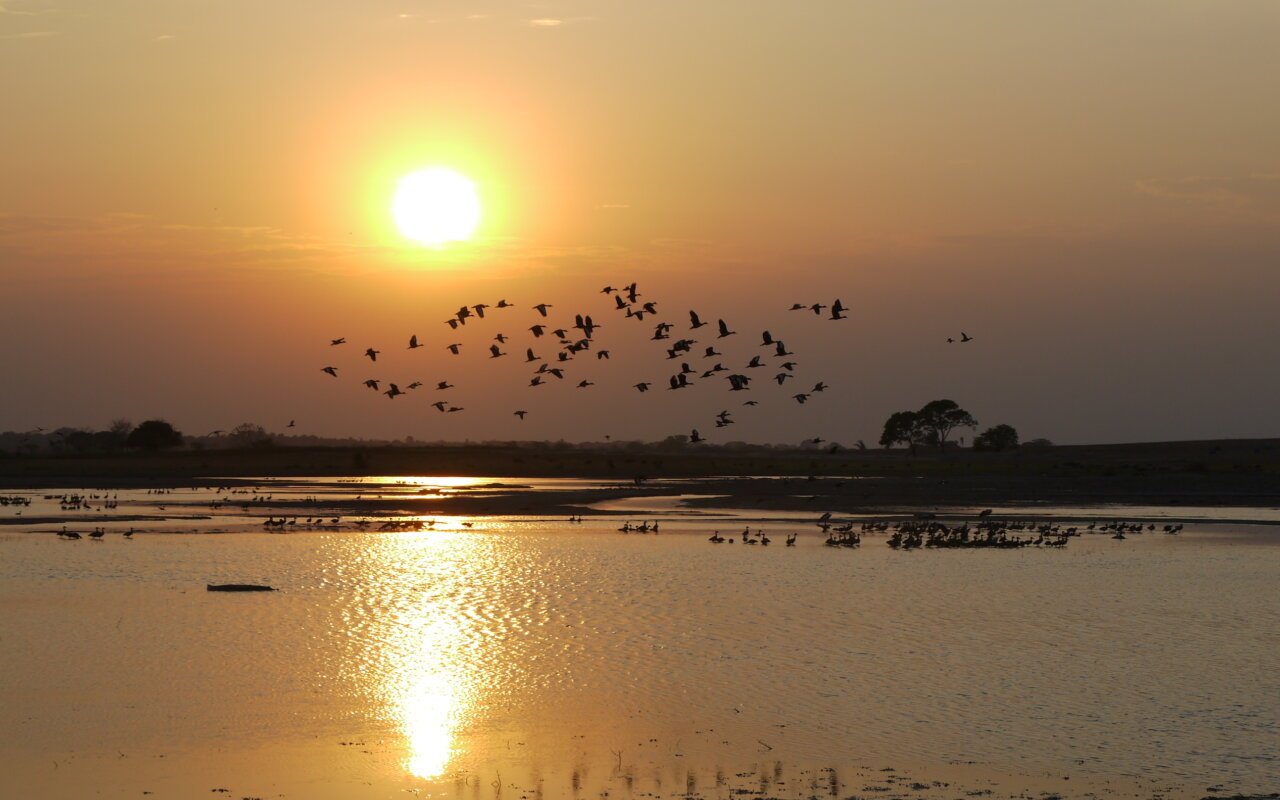
The Pijiño marsh is a haven for migratory birds and fishermen who seek their livelihood across this vast terrain. Take the time to explore this incredible nature by navigating the Magdalena River.
How to get to Mompox
Santa Cruz de Mompox, located on the banks of the Magdalena River in the department of Bolívar, is now easily accessible from Colombia’s main cities, thanks to the construction of the new Magangué Bridge. This infrastructure has revolutionized access to this colonial gem, previously linked only by river.
Getting to Mompox from Cartagena de Indias
The most popular route to Mompox takes around 6 hours. The road passes through Magangué before taking the new bridge that leads directly to the colonial village.
By bus :
- Company: Unitransco
- Duration: 6 hours
- Frequency: 2 daily departures from Cartagena, one early return from Mompox
By private transport:
- Rental car or “Toto Express” service (private shuttle)
- Duration: 6 hours
- Benefit: Door-to-door service and flexible timetables
From Barranquilla
Barranquilla offers several daily connections to Mompox. The journey is longer than by car, but still comfortable with modern bus companies.
By bus :
- Company: Unitransco
- Journey time: 8 hours
- Frequency: 2 departures daily in each direction
By car:
- Two possible routes via Magangué (recommended) or via Bosconia
- Duration: 6 hours
From Santa Marta
There is no direct bus service from Santa Marta. Travellers have to make a connection in Barranquilla, which considerably lengthens the journey.
By bus with connection :
- Stage 1: Santa Marta → Barranquilla (2h) with Copetran or Unitransco
- Stage 2: Barranquilla → Mompox (8h) with Unitransco
- Total time: 10-11 hours
By car:
- Direct route via Bosconia
- Duration: 6 hours
Getting to Mompox from Bucaramanga
Bucaramanga offers regular connections to Mompox, including a convenient overnight bus to optimize travel time.
By bus :
- Company: Copetran
- Journey time: 8 hours
- Options: Day bus or night bus
By car:
- Two routes: via El Banco (shorter but difficult road at the end of the route) or via Bosconia (fully asphalted)
- Journey time: 8 hours
From Sincelejo airport
Sincelejo has the closest airport to Mompox, making it an attractive option for international travelers or those coming from distant parts of Colombia.
By bus :
- Company: Torcoroma
- Journey time: 3 hours
- Shortest route to Mompox
By car:
- Route via El Bongo and Magangué
- Duration: 3 hours
Practical information
The Mompox bus terminal is on Carrera 1 Albarrada, right in the historic center. The main companies serving the city are Unitransco, Copetran and Expreso Brasilia. Once here, the historic center is easily reached on foot, and tuk-tuks are available for longer trips.
Advance bookings are recommended only during busy periods such as Holy Week and Christmas. For the rest of the year, tickets can be purchased directly at the terminal before departure.
When should you visit Mompox?
Not-to-be-missed city events
Mompox is also a series of unmissable events that we’d like to share with you… Make sure you book your accommodation in advance for both events
Mompox Jazz Festival
Every year at the end of September, jazz takes over the streets of Mompox. The festival lasts three days, during which numerous national and international artists take to the stage for one of Colombia’s biggest musical events.

Holy Week (Semana Santa)
Mompox, also known as ” La Tierra de Dios ” (the Land of God), is a particularly religious place. Semana Santa festivities are among the most elaborate in the country. Numerous processions criss-cross the city, and it’s an important celebration of faith for many Colombian families, who take advantage of the week to get together.
What to do in mompox
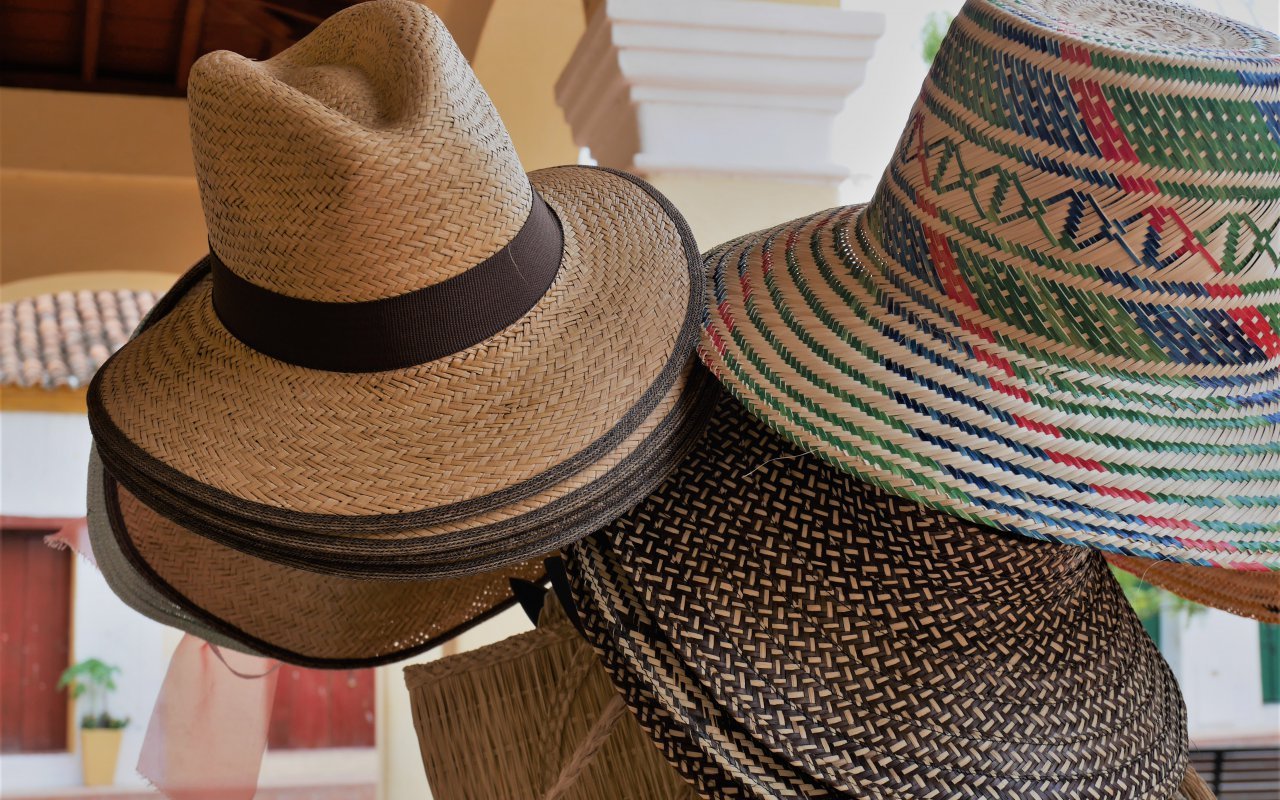
Wander the narrow streets by day and evening
Mompox, and especially its UNESCO-listed historic center, is renowned for its exceptional architectural heritage. The many squares and six churches in the historic center will delight you, so don’t hesitate to take a stroll and admire the many colonial houses built by wealthy merchant families before the country’s independence.
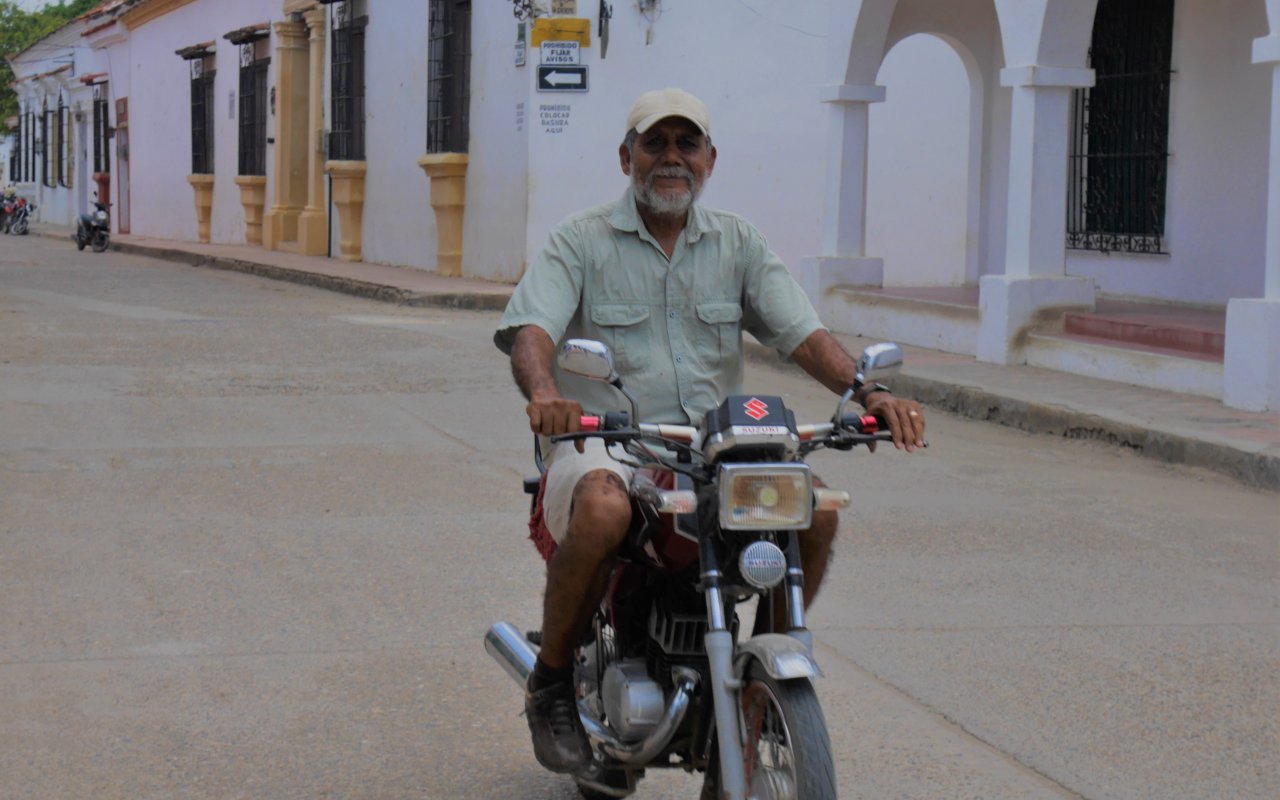
Meet the locals
Mompox’s isolation from the rest of the country’s major tourist routes makes it the perfect place to meet locals. The locals are always very welcoming and curious when they meet travelers.

Test the local gastronomy
While strolling the streets, and after meeting a few locals, take the time to discover the culinary specialties, including Vino de Corozo, an artisanal wine typical of the area. Pair it with the famous Queso de Capa or a lemon-based dessert: Dulce de limon.
Local gastronomy and good addresses in Mompox
Mompox’s gastronomy reflects its river heritage and its position as a historic commercial crossroads. This inland Caribbean cuisine is distinguished by its freshwater fish, local cheeses and unique traditional drinks, the legacy of know-how handed down since colonial times.
Must-try Mompox specialities
Vino de Corozo is the town’s gastronomic treasure. This traditional alcoholic beverage, made from the fruit of the corozo palm, has been present in the region for over 500 years. Its artisanal production and unique taste make it a must for understanding the culinary identity of Momposina. Don’t leave town without trying one!
Queso de Capa is the local cheese specialty par excellence. This fresh, mozzarella-like cheese can be tasted all over the city, especially in Santo Domingo square. Its melt-in-the-mouth texture and delicate taste are the perfect accompaniment to local dishes, or simply enjoyed as a snack.
Dulce de Limón will delight sweet tooths. This traditional lemon-based dessert takes several days to prepare, giving it its distinctive candied texture. This handcrafted confection is a testament to the patience and culinary know-how of the local people.
Freshwater fish such as mojarra and bagre dominate the local cuisine, accompanied by manioc and washed down with corn chicha. Ñeque, an artisanal panela-based rum, completes this palette of authentic flavours.
Best places to eat in Mompox
El Comedor Costeño – local authenticityOn the Malecón, facing the riverA popular restaurant where travellers can discover real Mompox cuisine. Specializing in freshwater fish and dishes typical of the Caribbean coast. Relaxed atmosphere overlooking the Magdalena River. Ideal for an authentic lunch at an affordable price.
Ambrosia – refined cuisineCalle 19, Parque de la Inmaculada ConcepciónFor lovers of more elaborate cuisine, this restaurant offers a varied menu with pasta, fish and excellent salads. Well-decorated and air-conditioned. In the evening, tables are set up in the square, offering a unique ambience in the heart of the historic center.
El Fuerte San Anselmo – gourmet optionsCarrera 1 N° 12-163, on the MalecónThis must-visit address, run by Austrian chef Walter, offers refined Mediterranean cuisine in an enchanting setting. The wood-fired pizzas are a hit, accompanied by homemade pastas, gazpachos and creative salads such as lobster with pesto. Dinner is served on large wooden tables in a magnificent patio with soft lighting
Puerto Bambú – Panoramic viewPlaza de la ConcepciónA very pleasant terrace overlooking the square and benefiting from the proximity of the river. Traditional Colombian cuisine in a privileged setting for observing the bustle of the square.
Street food experiences
Plaza Santo Domingo – Night barbecuesEvery evening, this square is transformed into a veritable street food festival. Local barbecues (around 10,000 pesos) are accompanied by live music, creating an authentic popular atmosphere. It’s the ideal place to eat like a local while enjoying the Momposina social effervescence.
Panadería Mompoxpal – Calle 18Perfect for discovering local pastries and enjoying a typical breakfast. This traditional bakery offers sweet specialties that go perfectly with a Colombian coffee.
Crêpes de’la Villa – Plaza de la ConcepciónA few plastic tables in the shade offer the best crêpes in town. Open only at the end of the day, this is a confidential address appreciated by regulars.
Bars and nightlife
La Isla Cerveceria – Plaza San FranciscoWide selection of beers in a relaxed setting. The ideal place for an evening out with friends in a relaxed, typically Momposina atmosphere.
Bars on the Malecón – Boulevard Santa BárbaraTraditional wooden huts along the river offer local drinks in a 100% authentic atmosphere. The owners will spontaneously invite you to share a drink and chat about local life – the very essence of Momposina hospitality!
Practical tips
Opening hours: Restaurants generally open for lunch around 12pm and dinner from 6:30pm. Many close in the afternoon during the hottest hours.
Budget: Count on 12,000-15,000 COP for a full meal in a local restaurant, 25,000-40,000 COP in more refined establishments.
Reservations: Recommended for El Fuerte San Anselmo, especially at weekends. Other establishments generally operate without reservations.