Cartagena, Colombian city
Cartagena de Indias… an evocative and inspiring name. Cartagena has a beauty all its own, an unadorned beauty, a grippinghistory that we love to discover as we lose ourselves in the colorful streets of the old town. Cartagena is also that dose of romance that overflows, that image of a city where absolutely everything transports you… and it’s even better for two! Some would say that’s a cliché, but Cartagena is also a much more rustic place, with uncommon local experiences and discoveries. Here, Colombia offers you the most vibrant of cities, with a renowned and varied gastronomy, a rich history and a nightlife punctuated by the sound of Cumbia. As raw as it is romantic, beautiful Cartagena de Indias will transport you, and Terra Colombia will organize the trip for you!

Key facts about Cartagena
Cartagena de Indias
Located in the department of Bolivar, of which it is the capital, Cartagena de Indias, or Cartagena in its more familiar sense, is the most visited city in Colombia! And with good reason… the fabulous architecture of its historic colonial center has earned it a place on UNESCO’s World Heritage List. Founded in 1533 by Pedro de Heredia, the city’s history and present have been marked by both glory and turmoil. With its labyrinth of cobbled streets, bougainvillea-covered balconies, sometimes imposing churches and shady squares, the old town is a place to be experienced, rather than visited. The writer Gabriel Garcia Marquez, who worked in the city in 1948, was also forever marked by Cartagena, and his memories often permeate his novels. The heart of Cartagena offers a multitude of facets, like its palenqueras, its fishermen, its Getsemani street artists… facets that we recommend you discover by strolling its streets. To take things a step further, we suggest activities with a local flavour in the La Boquilla district or at the Bazurto market. Cartagena de Indias also boasts extensive fortifications, forming one of the most complete systems of military fortifications in South America. exactly 13km of centuries-old fortifications surround the old city. Nicknamed “the heroic” or ” la fantastica “, Cartagena will surprise anyone who wants to discover it!

How long does it take to visit Cartagena de Indias in Colombia?
Cartagena de Indias deserves at least 3 days to explore its main attractions, but ideally 4 to 5 days will give you the full experience without the rush.
Cartagena must-see program
Day 1: The historic heart
- Morning: Explore the Ciudad Amurallada (walled city), a UNESCO World Heritage Site
- Noon: Discover local flavours at a restaurant in the San Diego district
- Afternoon: Visit the Castillo San Felipe de Barajas, an impressive fortress overlooking the city
- Evening: Stroll along the ramparts at sunset, then dine in the Getsemaní district
Day 2: Culture and history
- Morning: Visit the Palacio de la Inquisición and the Museo Histórico
- Noon: Lunch in the lively El Centro district
- Afternoon: Discover the Convento de la Popa with its panoramic view of the city
- Evening: Stroll around the Plaza de los Coches and sample the local delicacies
Day 3: Relaxation and islands
- Full day: Excursion to the Rosario Islands (Islas del Rosario) to enjoy the beaches and snorkel in the crystal-clear waters
- Evening: Experience the nightlife of Cartagena, perhaps with a salsa class or rum tasting
Day 4 (optional): Local experiences
- Morning: Colombian cooking class or visit to the Bazurto market
- Afternoon: Relax at Bocagrande beach or shop for local handicrafts
- Evening: Enjoy a dinner cruise in Cartagena Bay
Day 5 (optional): Discover the surrounding area
- Day trip to El Totumo mud volcano or Playa Blanca on Barú Island
Cartagena weather and climate
Cartagena enjoys a semi-arid tropical climate. Averagehumidity is around90%, with rainy seasons that can be intense, generally in May-June and October-November. The climate is therefore hot and windy, with colder winds from November to February. The average temperature throughout the year is 27.5 degrees.
| Month | Min temperature (°C) | Max temperature (°C) | Average temperature (°C) | Relative humidity (%) | Precipitation (mm) | Days without rain |
|---|---|---|---|---|---|---|
| January | 24 | 31 | 27 | 80 | 0 | 27 |
| February | 24 | 31 | 28 | 80 | 0 | 27 |
| March | 25 | 31 | 28 | 80 | 3 | 23 |
| April | 26 | 31 | 28 | 80 | 12 | 15 |
| May | 26 | 32 | 29 | 80 | 82 | 11 |
| June | 26 | 32 | 29 | 80 | 67 | 14 |
| July | 26 | 32 | 29 | 80 | 87 | 14 |
| August | 26 | 32 | 29 | 80 | 78 | 12 |
| September | 26 | 32 | 29 | 80 | 95 | 12 |
| October | 26 | 31 | 28 | 80 | 147 | 11 |
| November | 25 | 31 | 28 | 80 | 94 | 12 |
| December | 25 | 31 | 28 | 80 | 101 | 15 |
History of Cartagena
Cartagena de Indias, or Cartagena of the Indies, is so named to differentiate it from the Spanish city of Cartagena in Murcia. The city was founded on the site of the Amerindian village of Calamari. It quickly became prosperous and, despite a huge fire, grew to become the main Spanish port on the Caribbean coast. It became the most important gateway to the interior of the country and the whole of South America. Given its strategic position, Cartagena also served as a storage place for gold and other riches, making it a target for pirates and freebooters in search of treasure. In fact, the most famous attack was organized by the English privateer Francis Drake in 1586, who brought his booty back to England. To protect themselves from the attacks, which had become far too numerous, the Spanish built forts around the city, thus avoiding several sieges and thwarting the most important of all attacks, that of the British commander Edward Vernon in 1741. Blas de Lezo commanded the victorious defense with just 2,500 men, compared with 25,000 for the English. The Spanish officer, who died shortly afterwards (having lost both legs and one eye), is considered the saviour of Cartagena, and a statue in front of the Castillo San Felipe de Barajaspays homage to him. Despite these tumultuous times, Cartagena continued to grow in wealth, becoming the most important stronghold of the Spanish overseas empire during the colonial period, and playing an essential role in the history of Colombia.

A new twist came in 1810, when the city declared its independence from Spain, encouraging other cities to follow suit, including today’s capital, Bogotá. The declaration was signed on November 11, 1811, but Spanish forces regained power in 1815, leaving some 6,000 dead in their wake. In 1819, Simon Bolivar’s troops began to liberate the country, in Boyacá to be precise. Cartagena had to wait until 1821 to be liberated by pro-independence groups. It was then that Bolivar christened Cartagena “La Heroica” (The Heroic), which gradually regained its status and its flamboyant trade, thanks in particular to its port. Many foreigners were attracted to Cartagena, with Jews, Italians, French, Turks, Lebanese and Syrians settling in the city. Today, their descendants own many hotels, shops and restaurants… and it’s not uncommon to see shopping arcades like the famous “souks” in the streets of the old town. Many foreigners still arrive today for the same reasons.
What to do in and around Cartagena
Cartagena is full of surprises, and we’d like to share a few of them with you..
Colonial Cartagena, its squares, churches and fortresses
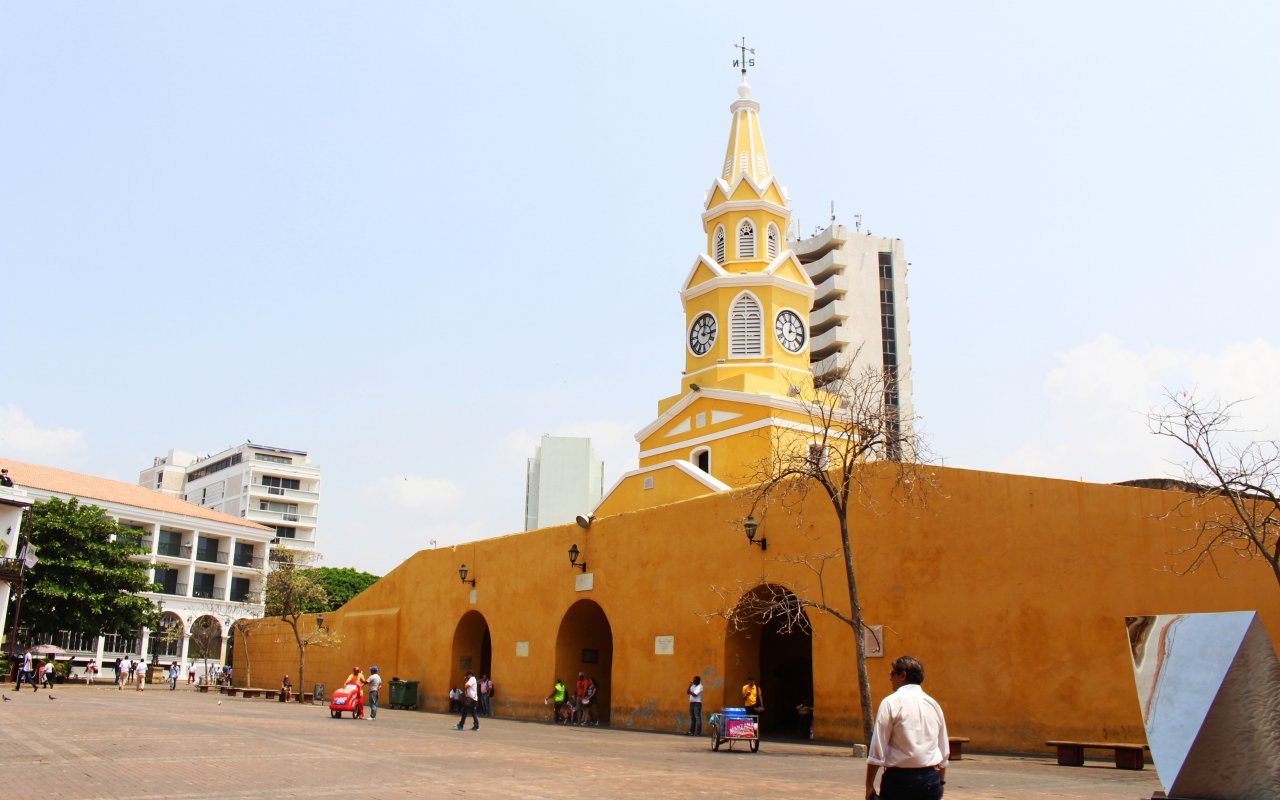
Puerta del Reloj
Originally named “Boca del Puente” because a drawbridge linked it to the Getsemani district, this immense and majestic gate was the main point of access to the walled city. The Republican-style tower features a four-dial clock dating from 1888.
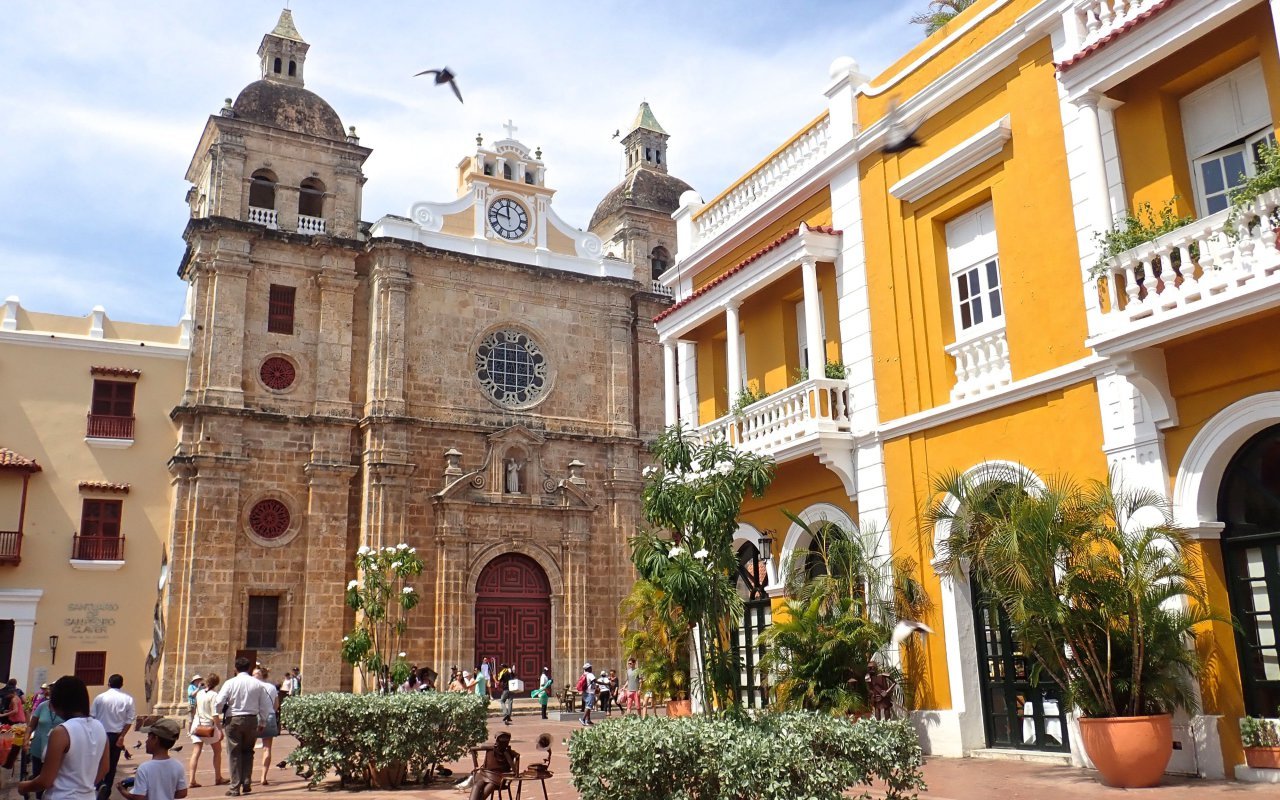
Iglesia San Pedro Claver
This church, located in the convent of the same name, boasts an imposing stone façade distinguished by beautiful stained glass windows and an Italian marble high altar. The relics of San Pedro Claver, a great Cartagena figure, are preserved in a glass coffin in the altar.
Plaza de la Aduana
This is the largest and oldest square in the old town. In colonial times, it housed the main government and administrative buildings. A statue of Christopher Columbus stands in the middle of the square
Plaza de Bolivar
Formerly the “Plaza de la Inquisicion”, just opposite the palace-museum, this tree-lined square is by far the most popular in Cartagena for its cool shade under the trees.
Iglesia de Santo Domingo
Santo Domingo is said to be the city’s oldest church, as beautiful as it is imposing, and well worth a visit.
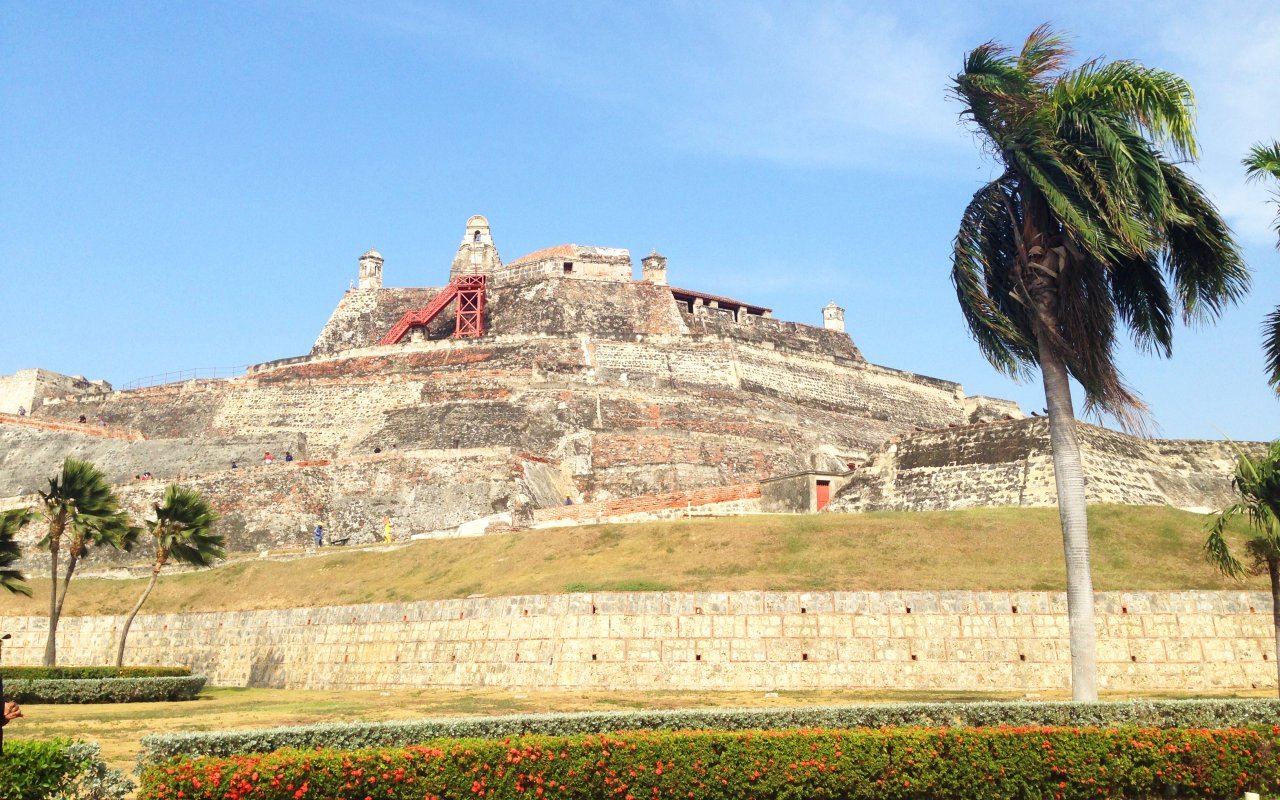
Castillo de San Felipe de Barajas
The castillo is the largest fortress ever built by the Spanish, and dominates a large part of the city’s landscape. With its forts, tunnels and other trays to outwit the enemy, this fortress makes for an incredible visit!
Cartagena and its museums
Museo de Arte Moderno
On the Plaza del Convento, the Museo de Arte Moderno occupies a beautifully refurbished part of the former customs office. A fine collection of works, sculptures, abstract art and temporary exhibitions.
Palacio de la inquisición
Housed in one of the city’s most beautiful buildings, this museum features a number of torture objects used by the inquisitors. The history of the inquisition is on display, as well as pre-Columbian pottery and objects dating from colonization and independence.

Museo del Oro Zenu
The little brother of Bogotá’s big gold museum! It houses a superb collection of gold items and pottery from the Zenu (or Sinu) people
Cartagena, in the original version
La Boquilla
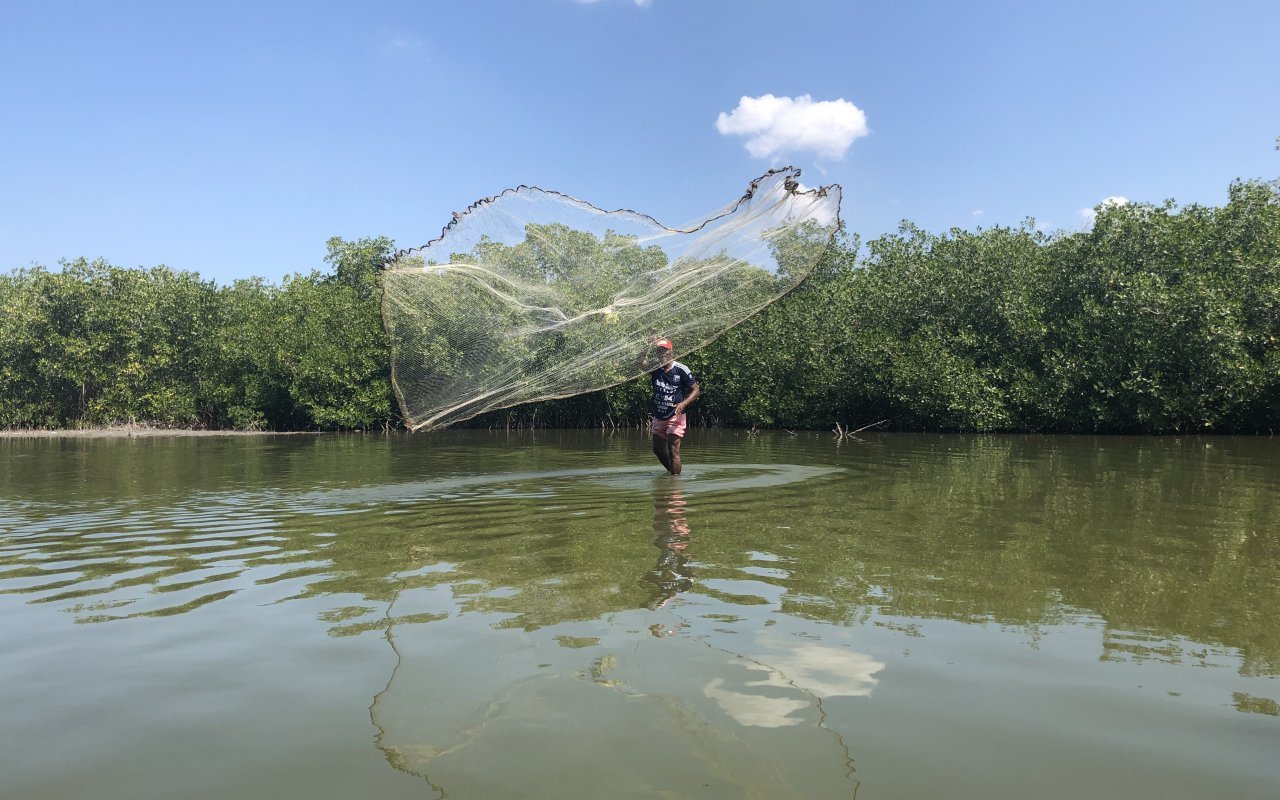
La Boquilla is a more popular area of Cartagena. This small seaside community lives mainly from fishing, so you can watch the fishermen returning at sunset or visit the mangroves by kayak. A long, beautiful beach runs along the edge of the town, with numerous beach restaurants, where fish is naturally the typical dish.
Mercado Bazurto
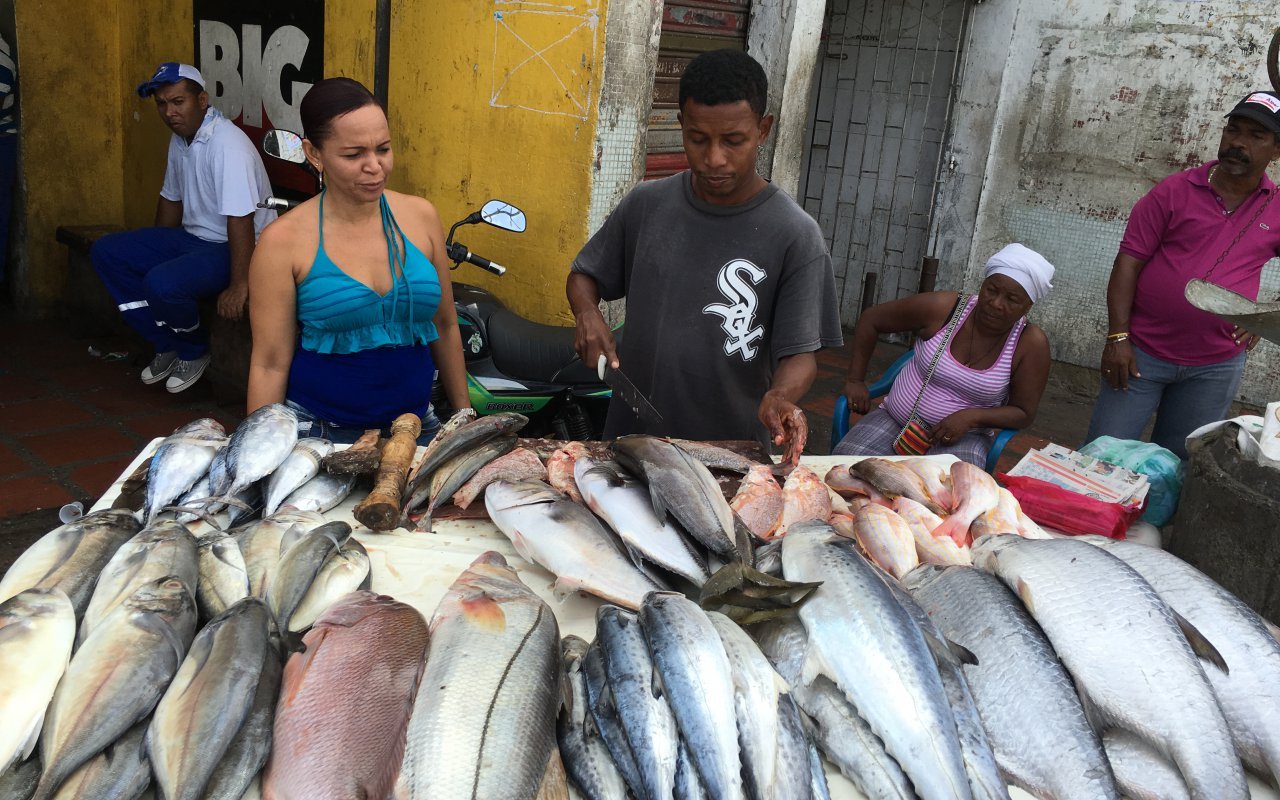
Exploring the Bazurto market is an interesting time for adventurous spirits. From stalls selling fruit and vegetables, fish and meat in the open air, to a huge selection of food on the go and fresh fruit juices of every color, this market of diverse tastes and smells takes you on a voyage of discovery of another Cartagena!


The most beautiful beaches in and around Cartagena
Bocagrande and El Laguito beaches
These urban beaches offer a refreshing break just a stone’s throw from the historic center. The golden sand stretches for several kilometers, lined with palm trees and modern buildings. Ideal for an impromptu swim between two explorations of the walled city. In the late afternoon, the sight of sailing ships silhouetted against the setting sun is well worth a visit. Take a seat in one of the waterfront cafés for a tropical fruit cocktail. Street vendors offer local delicacies – try grilled prawns seasoned with lime and chilli.
Good to know: Lively atmosphere, easily accessible from the center, water less crystal-clear than on the islands but perfect for a quick swim.
Marbella Beach
This local beach shows a more authentic face of Cartagena. Less frequented by visitors, it offers a more immersive experience. Watch fishermen haul in their nets in the early hours of the morning. When the waves are favorable, a few local surfers glide across the water – a great opportunity to share a moment with the Cartagena locals. Small seaside restaurants serve freshly caught fish, simply grilled and accompanied by patacones.
Worth knowing: Wilder, less touristy, accessible in 10 minutes by cab from the historic center, ideal for getting off the beaten track.
Playa Blanca (Barú Island)
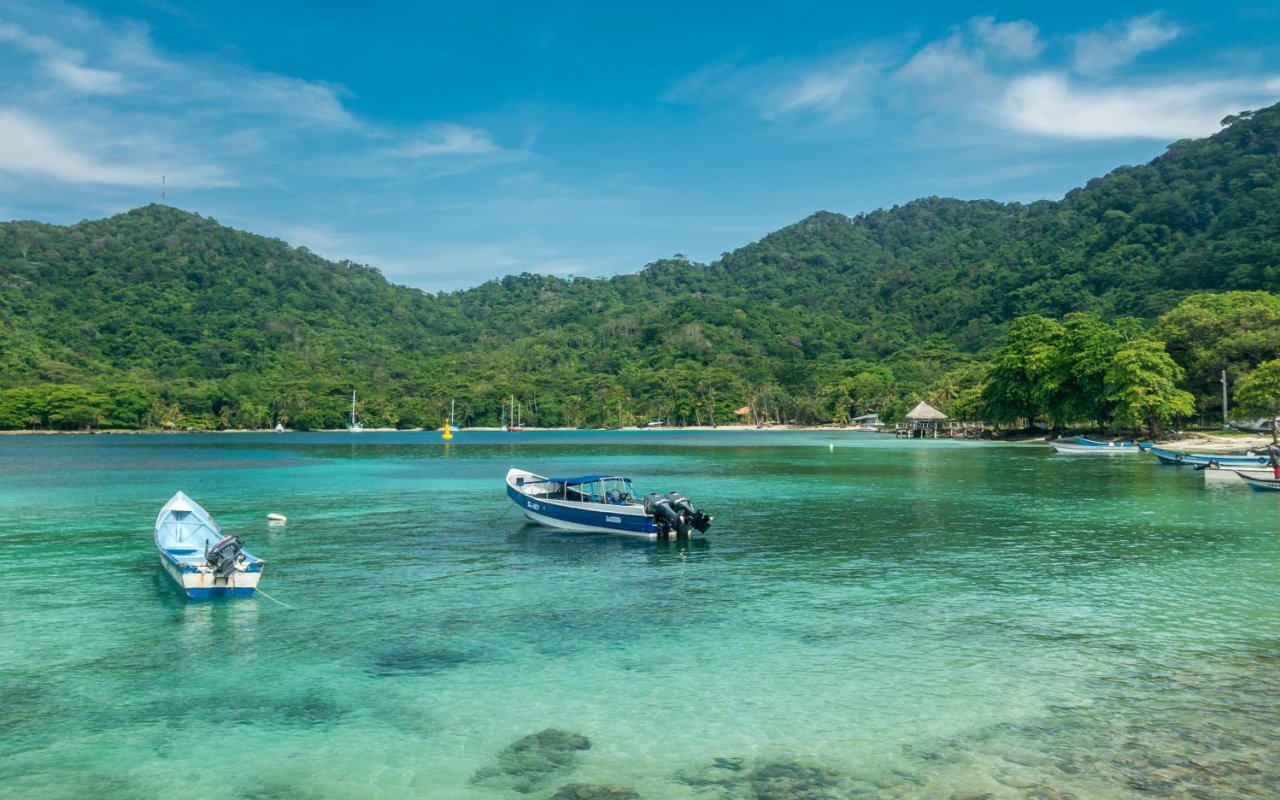
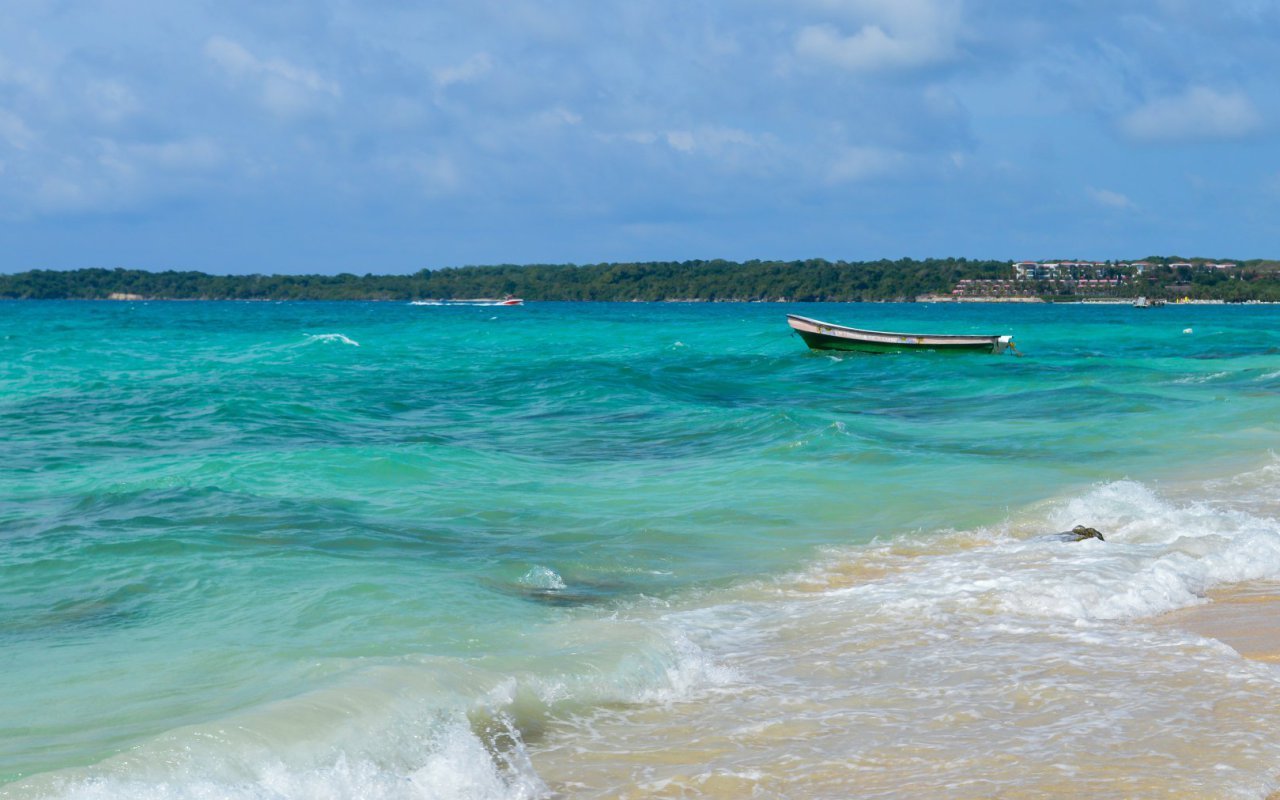
Turquoise water meets dazzling white sand on this heavenly beach. The crossing from Cartagena already reveals the beauty of the coastal scenery. Set up your hammock between two palm trees or rent a rustic hut where you can spend the night for the full experience. Swim or snorkel in the crystal-clear waters, where colorful fish swim fearlessly alongside bathers.
Good to know: Accessible by water cab (1 hr.) or car (1 hr. 30 min.), possibility of overnight stay on site, most beautiful early in the morning before the arrival of daily visitors, book an excursion that includes various stopping points on the island.
Rosaire Archipelago
The hidden beaches of these coral islands offer postcard-perfect scenery and crystal-clear waters. Explore the reefs by snorkeling to discover the underwater world – multicolored corals, parrotfish, rays and sea turtles. On Isla Grande, follow the trails through tropical vegetation to the lagoon, where the water glows at night. Some islands offer eco-friendly accommodation.
Worth knowing: Day trips (1h-1h30 by boat) or longer stays are possible. Book your visit to the Oceanario to observe the protected marine species, a veritable sanctuary of Caribbean biodiversity.
San Bernardo Islands
Far from the usual tourist circuits, this archipelago is more unspoilt. The deserted beaches of Tintipán offer a moment of peace and quiet, while the waters of Múcura beach are a deep blue. Don’t miss the astonishing Santa Cruz del Islote, a tiny island village built on coral reefs by generations of fishermen. Spend a night in an eco-cabin on stilts, lulled by the lapping of the waves and the murmur of palm fronds. Meals prepared by the islanders feature traditional fish and seafood recipes.
Good to know: Less crowded than the Rosario islands, 2h-3h boat trip from Cartagena, can be combined with an overnight stay at Rincón del Mar for a more complete experience, minimum 2-3 days.
Rincón del Mar
This authentic fishing village remains miraculously untouched by mass tourism. Wild beaches stretch as far as the eye can see, punctuated by colorful pirogues and piles of nets. Here, you can experience Caribbean life in its purest form. Stroll through the sandy lanes where children play soccer. Share a coffee with the locals on the porch of a brightly-colored traditional house. In the early morning, join the fishermen for a trip out to sea and enjoy a unique experience off the beaten tourist track.
Good to know: 3-hour drive from Cartagena, wild, unspoilt beaches, ideal departure point for the San Bernardo islands, authentic experience guaranteed, some simple but charming accommodation.
Isla Tierra Bomba
Just a few minutes by boat from the historic center lies this little-known island. The main beach at Punta Arena boasts fine sand and calm waters. The unique view of Cartagena’s ramparts offers exceptional photographic opportunities. Explore the San Fernando fort in Bocachica, a silent witness to the naval battles of yesteryear. Share a lunch at one of the beach restaurants where fish is cooked according to recipes handed down from generation to generation.
Good to know: Easily accessible (10-15 minutes by boat from Cartagena), perfect for a day trip, less developed touristically than Barú, preserved local atmosphere.

The area around Cartagena de Indias
San Basilio de Palenque
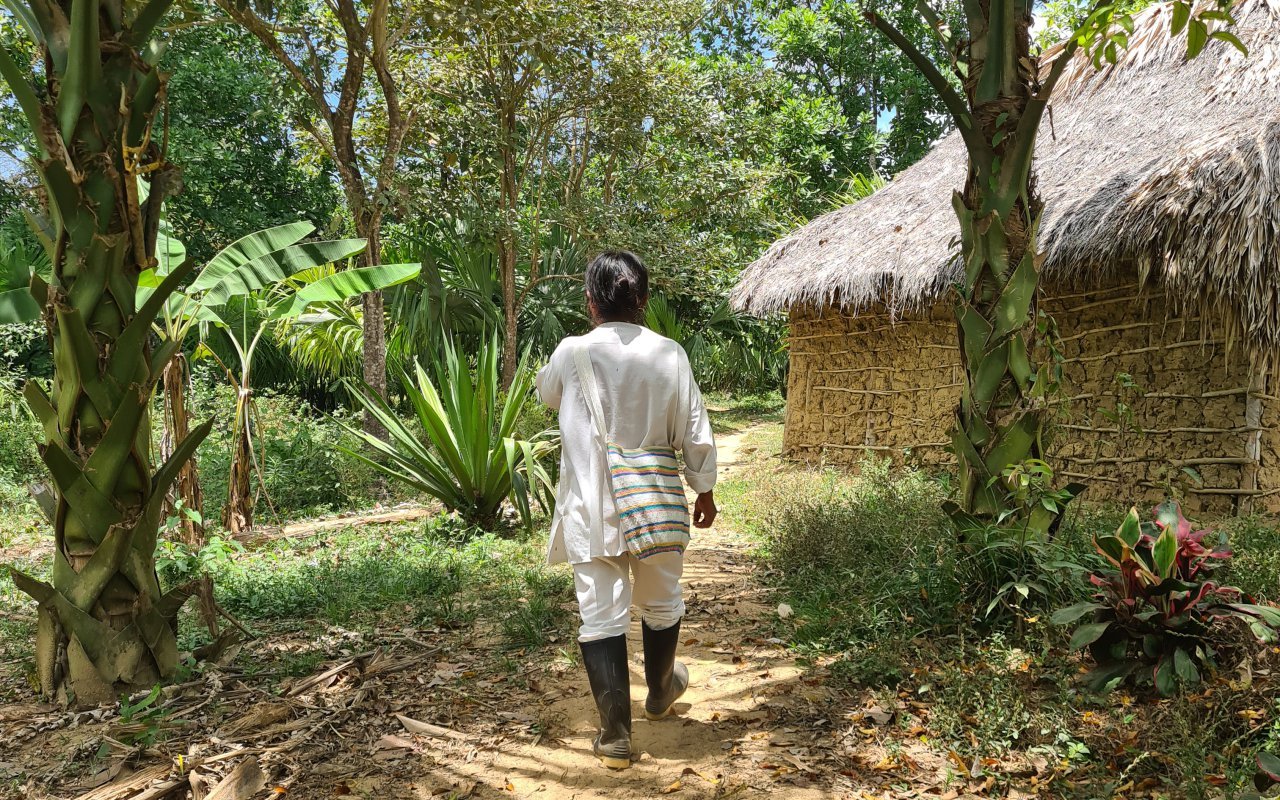
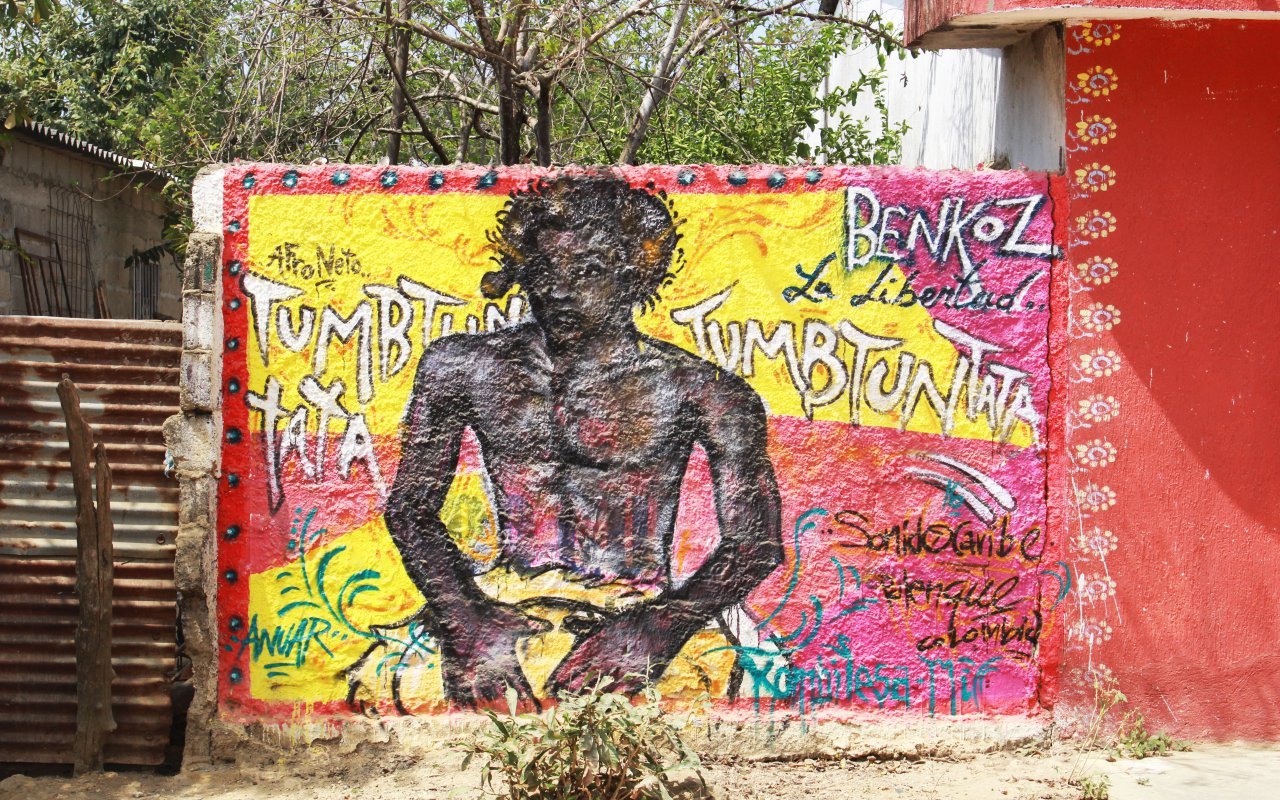
Approximately one hour’s drive from Cartagena, San Basilio de Palenque offers an immersion in Afro-Colombian culture, where you’ll discover the culture of African descendants.
In a nutshell...
Stroll through its narrow streets
By day or by night, don’t hesitate to stroll through the narrow streets and get lost in them. It’s here that Cartagena has some of its finest surprises in store! In the early evening, head to the Getsemani district, and more precisely to the “Plaza de la Trinidad”, where you can take in the street entertainment while enjoying a drink on the terrace.

Try the local cuisine
As you make your way through the streets, stop off at one of the stalls selling “arepas de huevos”, corn cakes filled with egg, to be eaten on the spot! For gourmets, try the lobster with the unavoidable “arroz de coco” coconut rice – we love it!

Go further afield!
Take the time to explore the surrounding area, and ask us for our addresses and associations to help you discover the other side of Cartagena!