Colombia is a bird’s paradise, with the greatest variety of species on the planet, many of them endemic. Twirling in the canopies or soaring over the peaks, these birds represent a unique heritage that will take you on a journey through countless dream landscapes. A waking dream that will revive your senses, caught up in a whirlwind of colors, plumage, rustling wings and exotic chirps.
A paradise of varied ecosystems
Colombia is one of the most biodiverse countries on the planet. Its tropical climate and position on the equator are conducive to the development of varied ecosystems. In short, this country is a haven for a myriad of bird species. More than 20% of the world’s bird species can be found in its jungles, mountains and plains, making it the world’s leading country for birdwatching. An obligatory stopover for North-South migrations on the American continent, Colombia is also home to many endemic species. In all, there are 1,889 different species in Colombia, 74 of which can only be observed here. Enthusiasts will be delighted…
Some emblematic species

The Andean condor
Although it can be seen in other Andean countries, the condor is the symbol of Colombia. The world’s largest bird, with a wingspan of over 3 meters, flies over the páramos of Chingaza or Puracé, and is very present in the heart of the Macizo Colombiano.
Recently, some specimens have been observed at lower altitudes, notably above the Cocora Valley, renowned for its palm trees, the tallest in the world. Atop these giants is the Golden-cheeked Parakeet, an endemic species in danger of extinction, characterized by its emerald-green plumage and bright yellow fringe around the eyes. Inhabiting the fronds of the national tree, they have long been victims of the cutting of these palm trees, coveted for their wax, which was used to make candles for religious ceremonies.
Hummingbirds
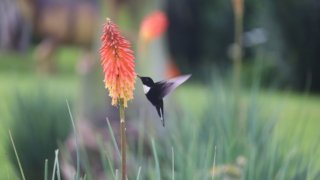
Colombia is home to several dozen different species of hummingbird. Their rapid wingbeats can be observed all over the country. They are particularly abundant in regions such as Antioquia, where there is a wide variety of flowers from which they draw nectar.

In Colombia, some specimens are absolutely unique. These include the Mitchell’s Hummingbird or Rumbito pechiblanco, and the Olivares Emerald or Chiribiquete Esmeralda. The latter is mainly found in the Amazon region. It has a very short, brightly-colored beak. It can be green, violet or blue. The Barbudito de los Nevados or Stubel’s Hummingbird is a rare specimen in danger of extinction, and can be seen in the páramos of Los Nevados National Park, in the heart of the high altitude humid plains.

The Barranquero
This specimen is unique to the Popayan region. It takes its name from its ability to dig tunnels in the cliffside to build its nest. From March to May, pairs lay their eggs in the cavities, sometimes up to 4 meters deep and 10cm in diameter, protected by the rock wall.
Sometimes nicknamed “pendulum birds” because of the rhythmic swaying of their long tails, they are known as Juru in Chocó, in reference to the deep, low sound they make when perched for long periods. Their two long hind feathers are topped by an azure-blue crown.
Harpy Eagle
This is one of the most exotic birds you’ll see during your stay in Colombia … if you’re lucky. if you’re lucky. In fact, this noble and fearsome bird of prey is very difficult to observe, as it nests in the tropical rainforests of the Amazon, northern Chocó and the Cauca Valley. Patience is required to catch a glimpse of this rare and swift specimen
The Golden Quetzal
Although the Quetzal is a fairly widespread species in Central America, Colombia boasts 13 different endemic species. With its bright green and red plumage, it will charm fans with the dances it gracefully performs, waving its white-feathered tail. It is a common sight in coastal forests such as the Sierra Nevada de Santa Marta, overlooking the Caribbean.
The Cacique
The Cacique chocoano or Oropendola is an endemic species of the Colombian Chocó. This magnificent little bird, dark black and bright yellow, will accompany you on your escapades with its long, rattling chirps.

This species likes to live in communities, so you’ll often see them in packs, leaving their nests hanging in the tall baobabs. These saddlebag-shaped nests, whose shape will surely remind you of the mochilas woven by the natives, have earned them the nickname mochileros (“backpackers”).
The Colombian Carpintero
This unique Colombian carpenter-bird or Picid shapes the trees of the Caribbean coast. It uses wood shavings to build its nest. If you’re awakened by the drumming of its beak, peek through the foliage for a glimpse of the red fringe that tops its trademark skull
The Helmeted Coracine or Toropisco del Pacifico
A strange-looking bird, the male wears a long wattle on his throat and a majestic crest on his skull, like an umbrella. Their jet-black plumage is dotted with bluish spots. Their courtship displays are particularly impressive. They are mainly found in the Pacific region
Toucans
Colombia boasts a wide variety of Toucan species, some of which are endemic to the country, such as the Culirrojo and the Pechiblanco.

Macaws or Guacamayas
Colombia is home to a number of endemic macaw species, including the ruddy Guacamaya or militaris. Colorful and cheerful, these birds are mainly found in the Amazon region.
A heritage worth protecting
Today, the conservation of these unique species is a major challenge, as the increasing exploitation of natural resources, particularly deforestation, is jeopardizing their natural habitat. Hunting and illegal trafficking are also practices that need to be regulated to prevent the disappearance of certain species. Hence the importance of developing responsible and sustainable tourism, which, by raising awareness of these rare specimens, contributes to their conservation. In February in Cali, you can attend the International Bird Fair of Colombia. A tribute to the 1,900 species that inhabit the valleys and mountains of Colombia. Organized by renowned Colombian and international ornithologists, this event brings bird lovers together around conferences, exhibitions and field expeditions, and raises awareness of the need to protect rare and endangered species.To find out more
- El Dorado Bird Reserve
- Miles McMullan, Field Guide to the Birds of Colombia, Conservation Allies LLC, 2011
- Jurgen Beckers and Pablo Florez, Birdwatching in Colombia, Buteo Books, 2013
- Film: Colombia Magia Salvage
- Blog: Wildlife Capture, Marie-France Grenouillet
Text by Eliott Brachet