The Colombian Amazon hides many secrets.
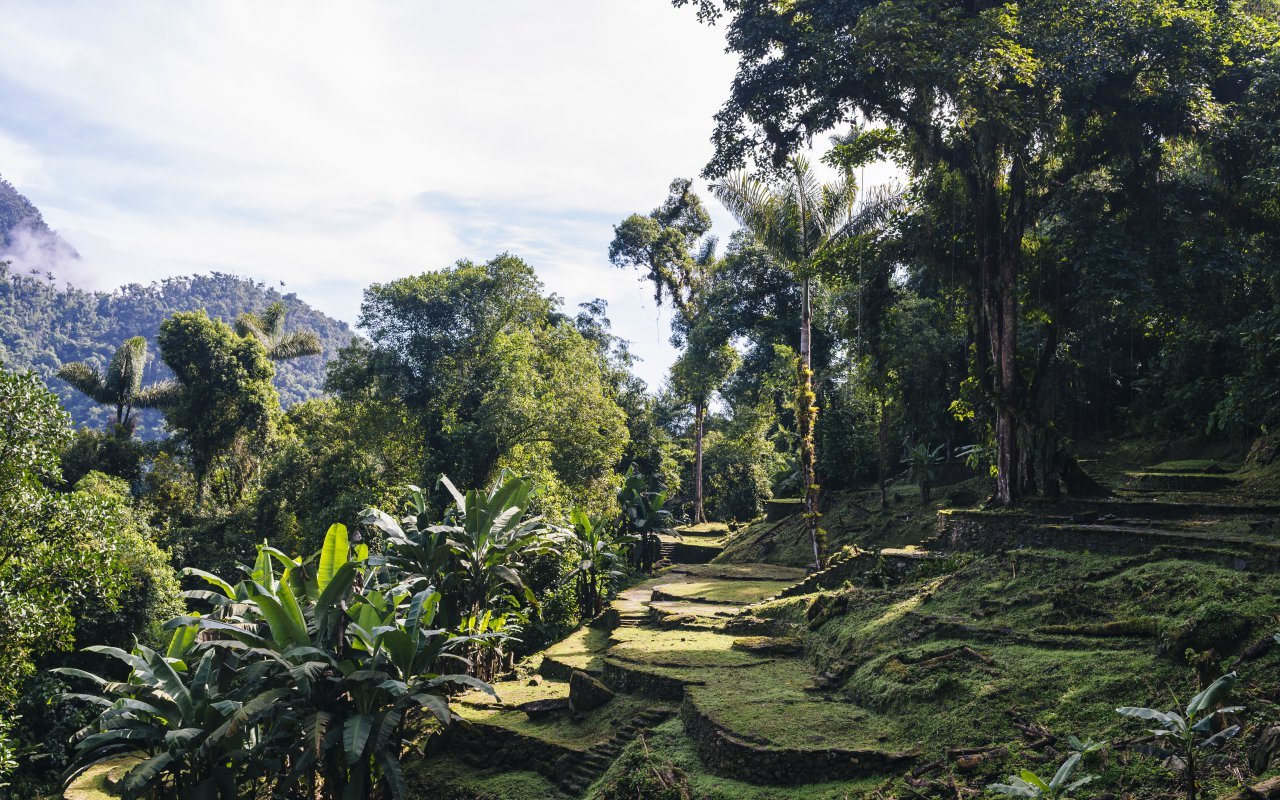
Covering a third of the country’s territory, this green and virtually unexplored immensity is covered by an inextricable jungle that seems to stretch to infinity. This vast rainforest, home to an exceptional biodiversity, has nourished the countless fantasies of explorers, ethnologists and travelers who have ventured, by pirogue or on foot, on long and perilous expeditions into the bowels of this maze of muddy waterways and sprawling lianas. Man enters a universe apart, unfathomable, whose mysteries are often beyond comprehension. Yet millennia-old peoples live beneath these emerald foliage, adopting an extraordinary way of life in harmony with the hostile, mystical nature that surrounds them.

Long preserved from outside contact, these inhabitants viewed with suspicion the first European missionaries and traders who ventured into this corner of the world in the early days of colonization. They were followed by the large extractive companies coveting the resources of these lands to supply European companies with rubber, tobacco, wood, metals of all kinds, etc.
Faced with this foreign incursion, many indigenous people disappeared (ravaged by disease or decimated by exploitation), some were assimilated, but others were able to preserve and assert their ancestral culture.
Today, there are a myriad of indigenous communities scattered across the Amazon territory, although they are increasingly sedentary and dependent on river communication. Among the many tribes inhabiting the “lungs of the Earth”, three stand out in Colombia: the Huitoto, mostly located on the banks of the Putumayo River marking the border with Peru; the Tikuna, mainly present in the Rio Amazonas basin around Leticia (the tri-border); and the Makuna , mostly found in the Vaupés region bordering Brazil.
The indigenous peoples of the Amazon are the guardians of ancestral knowledge. Their intimate knowledge of the local flora and fauna will amaze you. These men and women are perfectly adapted to life, and even survival, in the tropical rainforest. They’ll be your guides on the barely visible jungle trails, detailing the uses of every plant, every root.

The hollow trunks of certain trees enable them to communicate, the songs of birds and the tracks of animals allow them to orientate themselves, certain lianas will be used for the construction of huts, others for shamanic rituals… With respect and wisdom, they hunt or fish the animals living around or in the rivers. It is not uncommon to see crocodiles, turtles, monkeys, capybaras (large rodents) and fish of all shapes and sizes loaded onto pirogues or traded at itinerant markets, to be brought back and prepared by the community to feed their families.

Traditional weapons such as blowpipes, spears and arrows, which the natives took care to poison with plants or batrachian secretions (the world’s most poisonous frogs are abundant in the region), are still sometimes used, but are rivaled by the somewhat rusty firearms that the luckiest ones proudly carry on their shoulders.
Language and cosmovision
The various indigenous peoples of Amazonia are distinguished not only by their linguistic families, but also by their spirituality. Each community has its own cosmogony (myths and legends about the origin of the world) and cosmovision (spiritual interpretation of the organization of things).
The Makuna, for example, are known as the “Water People”. Their language belongs to the Tukano Oriental family, which they share with other surrounding peoples. Less numerous than the Tikuna, they number just over a thousand. These natives associate the birth of mankind with the mythical cycle of theAnaconda, whodescended the river, leaving behind him people, languages and teachings on how to cultivate the land, organize themselves, and so on.

The word Tikuna is polysemous, meaning either “the man” or the color black, in reference to their custom of painting their bodies with a natural dark pigment derived from the Genipa tree. Among themselves, the Tikuna use the term Du-u, meaning “the people”. Estimated to number around 8,000 souls, they are believed to be the descendants of the fish that the deity Yoi pulled out of the river to give them an earthly life. This semi-nomadic people gradually became sedentary with the arrival of Portuguese settlers from Brazil, who imposed compulsory labor to produce rubber, flour or wood for export.
Social organization

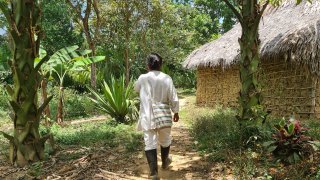
Traditionally, Amazonian peoples share a similar social and economic organization. Communities are divided into clans, which are divided into different villages built around the Maloca, the community hut that is the epicenter of social, economic and ceremonial organization.
Today, fishing has become their main activity, given the relocation of settlements along the rivers. The natives have developed a number of techniques that enable them to fish in different environments: mangroves, lagoons, streams or large rivers. You may accompany a fisherman laying wooden traps in the current to trap his prey, or he may show you how to fish in small streams, spreading barbasco, a slightly poisoned plant, which kills fish almost instantaneously, even if they were still wriggling under the surface a few moments earlier.
By burning, they also ensure a supply of platano (plantain banana), yuka (a tuber similar to manioc), corn, pineapple, camote (a type of sweet potato), achiote (a fruit containing the pigments used in dyes), tobacco and many other foodstuffs that vary from region to region. These crops, known as Chagras, are often grown by women, while the men are sent out to hunt or fish. The daily life of the indigenous people is punctuated by numerous spiritual rituals. Among the Tikuna, the first menstruation of young girls is the object of a solemn and joyous ceremony, where great feasts are shared, bodies are painted and convulsed to the sound of songs and music inspired by woodland spirits. The young woman, after being isolated from the rest of the community, dressed in a yanchama and adorned with a feather diadem, makes her passage to adulthood, during which her hair is cut. The natives generally conceive of the universe on three levels: the upper level, that of the souls; the lower, subaquatic level, the territory of the demons; and the intermediate level where men live in harmony with nature. Shamans are essential mediators for the community, enabling it to make the link between the spiritual worlds.
Recovering from a difficult past
The Huitoto, who live mainly in the Putumayo region and west of the Amazonas department, have had a particularly difficult history. At the beginning of the 20th century, Peruvian trader Julio Cesar Arana founded a company to transport and market the rubber extracted in the region.

Controlling an immense production territory, it could reach markets all over the world via Iquitos. This expansion was at the expense of the local population, and to say that Casa Arana was responsible for the deaths of 40,000 indigenous people in its 30 years of operation would be an understatement.
Today, the headquarters of the Peruvian Amazon Company, located in the department of La Chorrera, has been converted into a place of remembrance thanks to the efforts of Fanny Kuiru, an indigenous leader who succeeded in transforming this site, 15 days by boat from Leticia, into a cultural and remembrance center recognized by the Colombian state after what some call the “holocaust” of the indigenous people.
In the wake of these events, however, the Amazonian peoples of this region experienced other curses, such as the Colombian-Peruvian conflict in the 1930s, which left behind the tragic stigma of war. It was only some thirty years ago that the indigenous populations began a process of “reclaiming” their identity, and through the creation of ” resguardos ” (indigenous reserves) were able to enforce respect for their territory.

Despite the many conflicts that still exist with resource-hungry oil companies, the indigenous people of the Colombian Amazon have been granted rights such as Consulta Previa (a kind of participation in decisions taken in the region) or the possibility of drawing up a Plan de Vida (life plan), endorsing their demand for an autonomous indigenous “government” model in line with their ancestral socio-cultural organization.
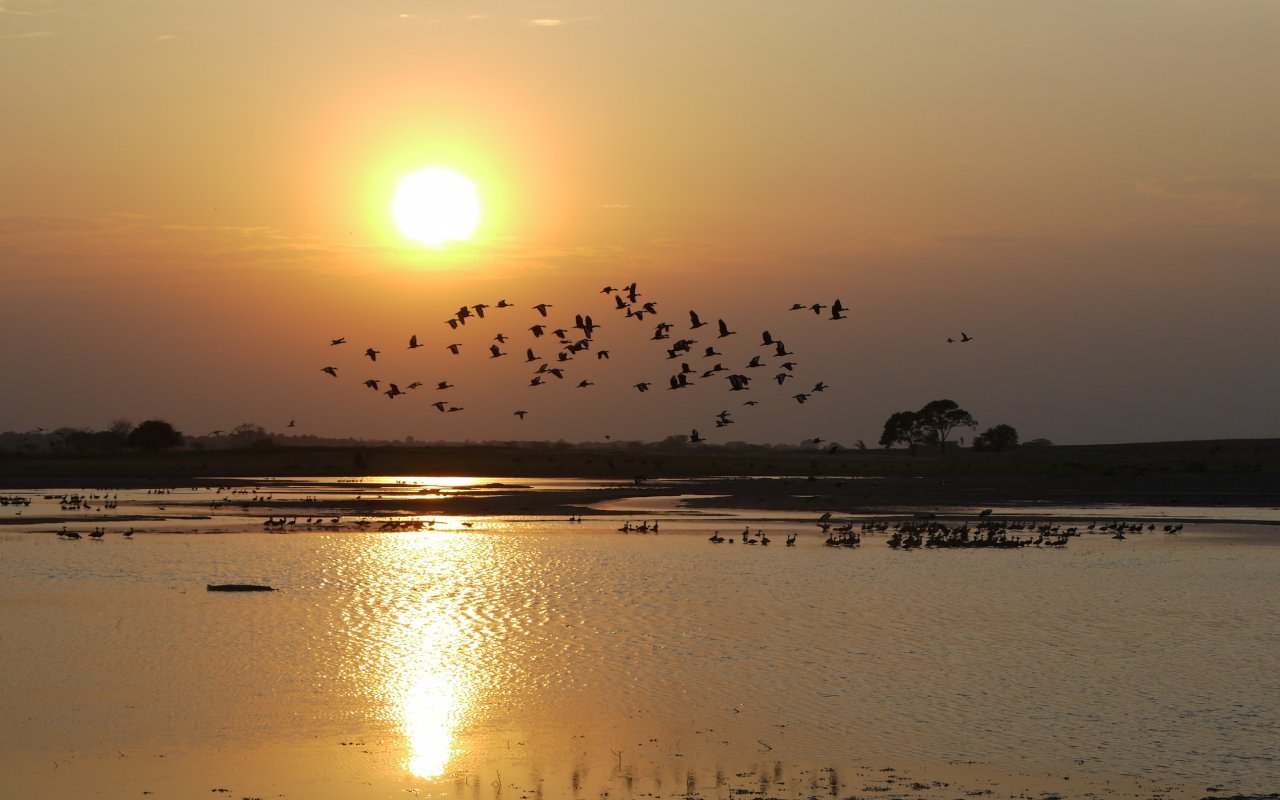
As night falls, the last light of the day casts the Amazonian sky in its most beautiful hues, reflecting off the rivers like a kaleidoscope, and the chirping of the multitude of birds on the peaks gradually fades away, giving way to the incredible symphony of insects, you’ll feel drawn into this world apart, filled with poetry and mysticism.
By the fire, in a hammock or in the maloca that sits at the center of the village, you’ll take part in the daily exchanges of the families who get together to share laughter and stories, before dozing off in the heart of this dense jungle that never sleeps. To find out more
- Suggested books: Claude Lévi-Strauss,Tristes Tropiques, 1955 – José Eustasio Rivera, La Voragine, 1924
- Film: El abrazo de la serpiente (The Embrace of the Serpent), by Ciro Guerra, 2015 (Oscar nomination)
- Reportage: Indiens d’Amazonie, le dernier combat, by Laurent Richard, Productions Premières Lignes with the participation of France Télévisions, 2013
Text by Eliott Brachet