San Agustin, a village of 30,000 souls located at an altitude of 1,730 m in the “Archaeological South” region, is an excellent base from which to explore the region’s natural and cultural wonders: lush, biodiverse landscapes and the pre-Columbian sites of the San Agustin civilization, unearthed since the 1930s.
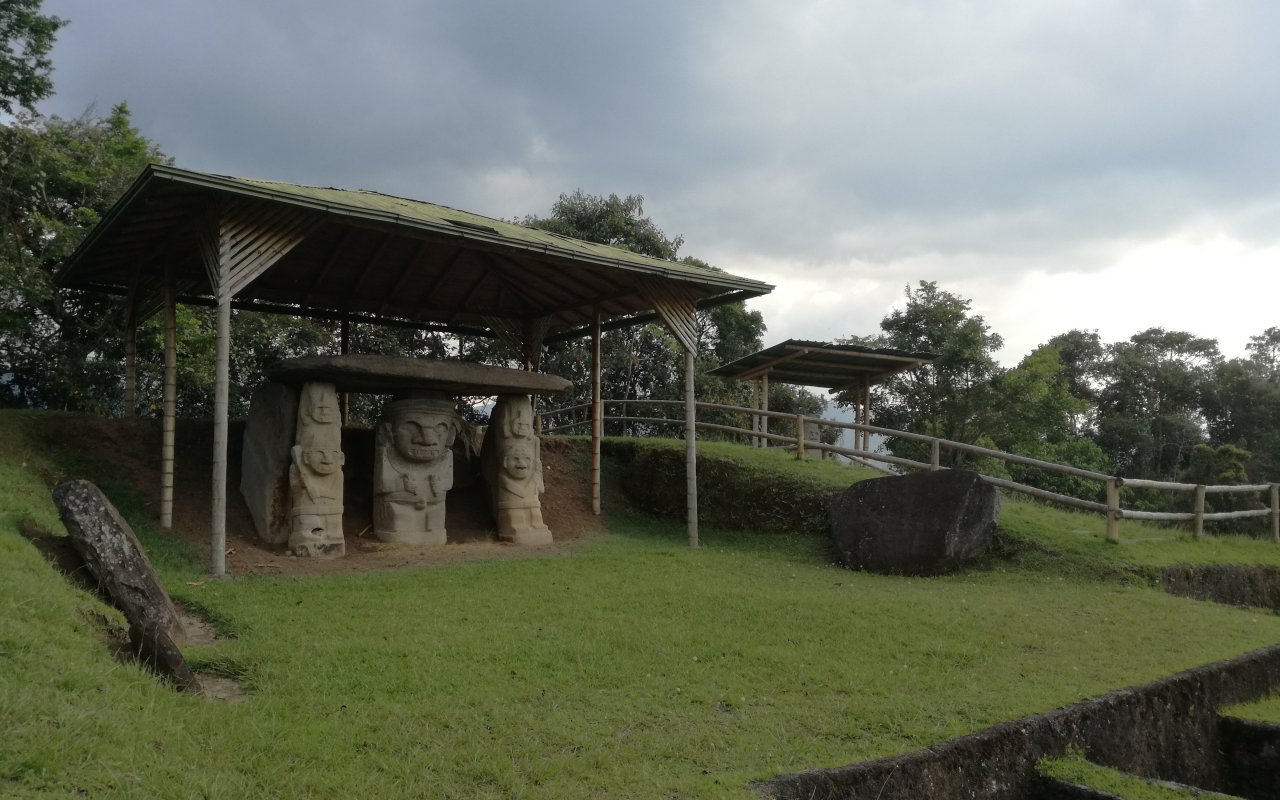
The civilization known to the Western world as San Agustin is still a mystery. This civilization is said to have appeared in 600 BC and disappeared a few decades before the arrival of the Spanish, around the 14th century.
The reasons for his disappearance are still rather vague… Epidemic? Flight from an invader? A drought involving a move to more fertile lands? The hypotheses are still numerous… Many questions remain unanswered. What was the organization and cosmovision of their society? What was the purpose of these gigantic statues? What links did this civilization have with other pre-Columbian societies? A few hypotheses emerge. Firstly, they were a peaceful civilization.
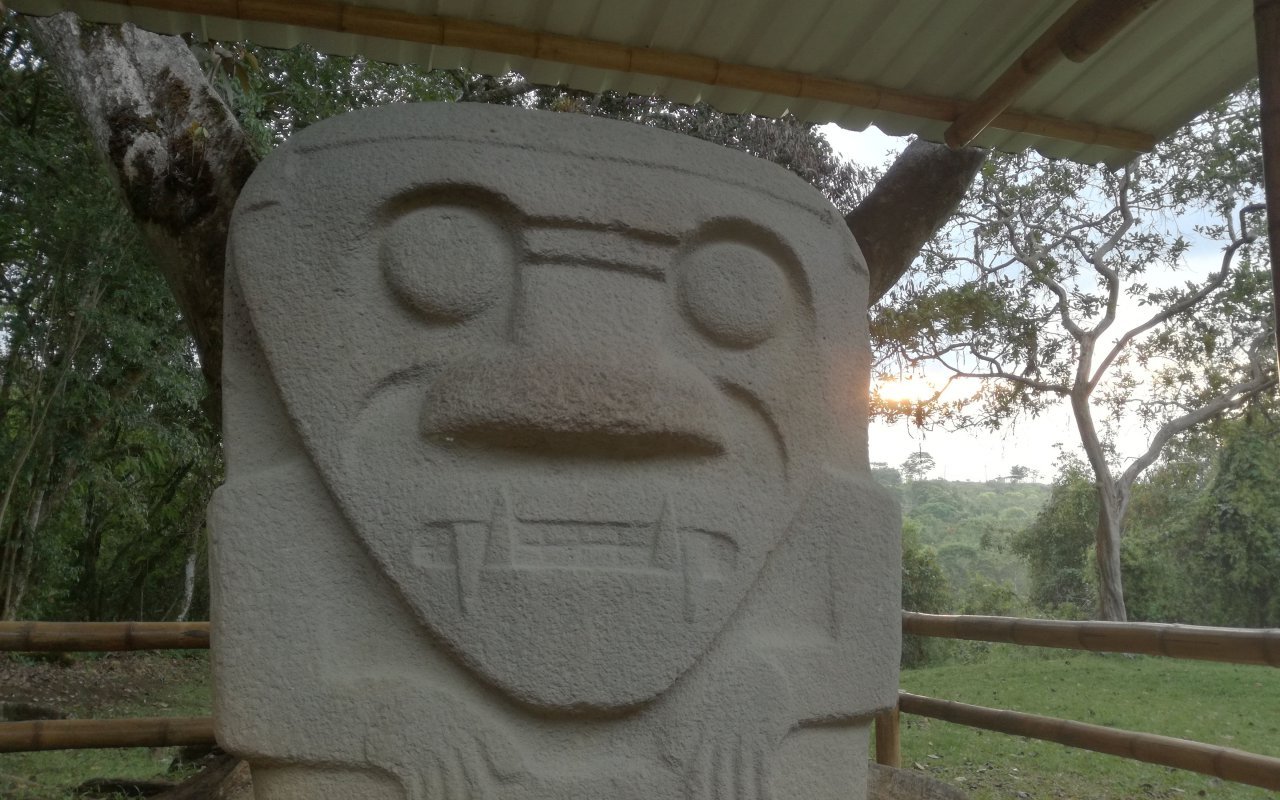
Indeed, this people sculpted dozens of gigantic statues. This requires time and resources, which implies that they were a peaceful civilization preferring to devote their energies to their rites and traditions rather than to expanding their territory – unlike the Inca Empire, for example.
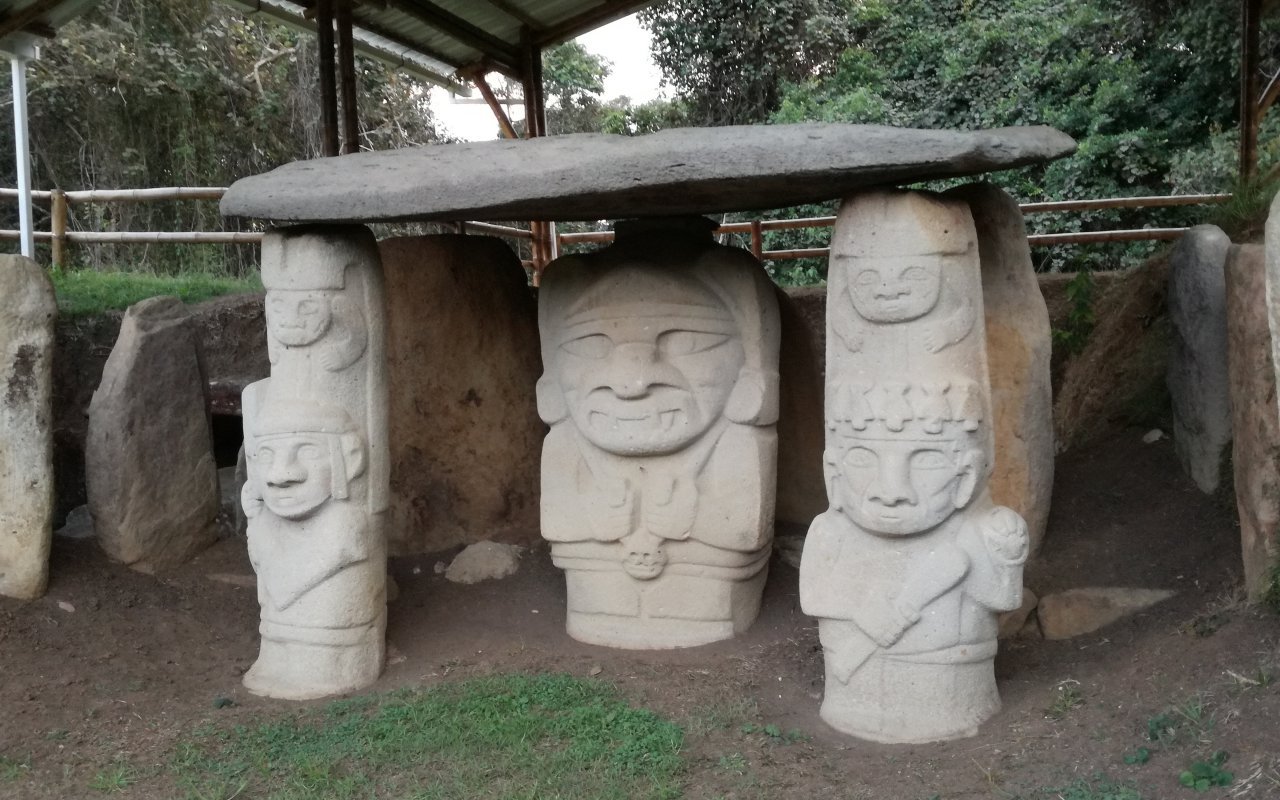
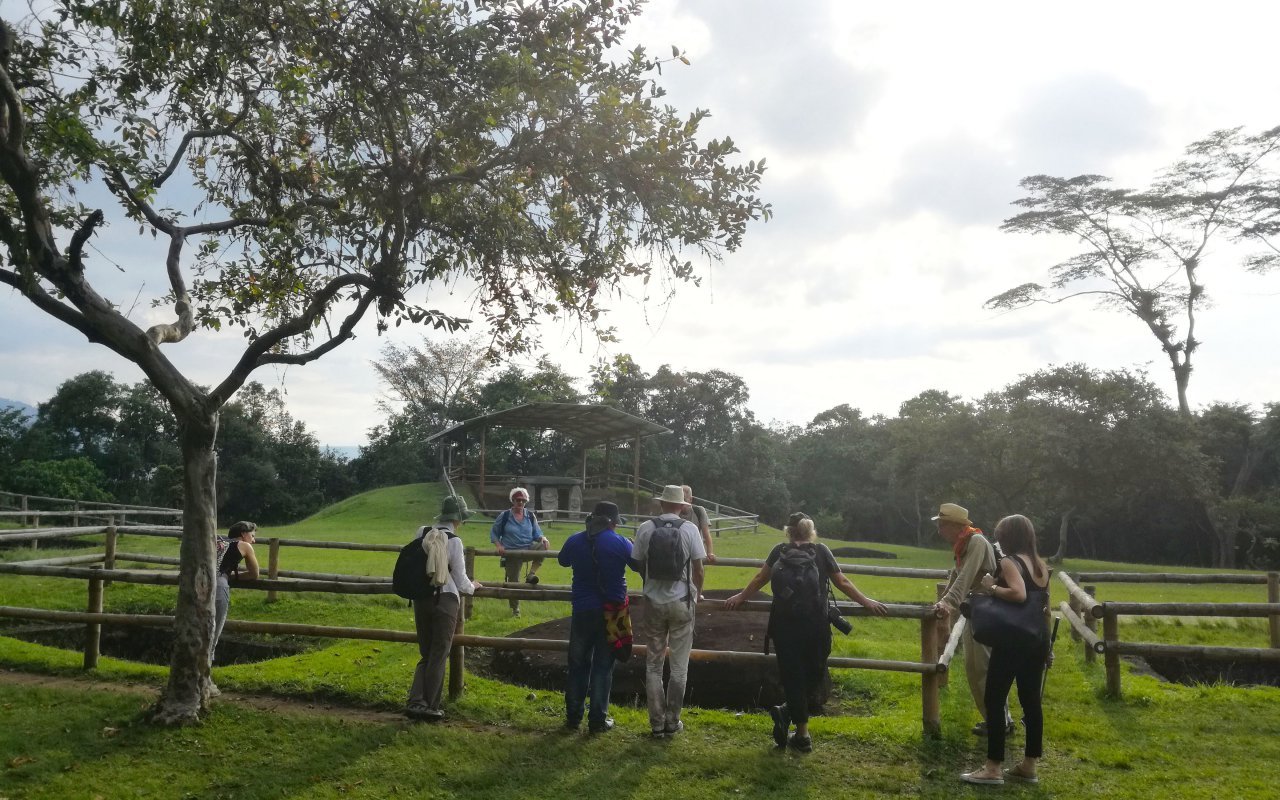
Secondly, the role of stone statues was to provide a link between the living, the dead and deities. These statues would represent anthropomorphic figures, benevolent or frightening creatures, a sort of pantheon of local gods. As for the rest, your guide will explain the hypotheses and it will be up to you to interpret the information and make up your own mind on the subject! First stop: the archaeological museum, located 10 minutes by vehicle from the village of San Agustin. An ideal introduction to the origins of this civilization and the various points of interest in the region, we then set off to discover the various sites, including the major ones of
- La Fuente de Lavapatas: a complex network of basins and gullies cut into the rock and decorated with engraved figures of men and animals.
- The Bosque de las estatuas: a “forest of statues” comprising 40 statues arranged along a 600m path through the woods.
After half a day exploring this archaeological park, we return to the village to enjoy a typical almuerzo in the Casa Grande, a traditional restaurant where we taste the “asado huilense”, a delicious local pork grill accompanied by freshly-cooked vegetables.
Our next stop is La Chaquira, a stone carved from a boulder on the edge of the Magdalena Canyon. This anthropomorphic statue has 3 faces, each relating to a precise position of the sun, one corresponding to the two equinoxes and two corresponding to the two solstices.

According to some specialists, the sculpted figure raises its hands to the heavens in adoration of the sun. It is highly probable that ceremonies were held around this stone on the 4 key days of the year. It is therefore a historic landmark of the San Agustin civilization, which can be visited on foot or on horseback.

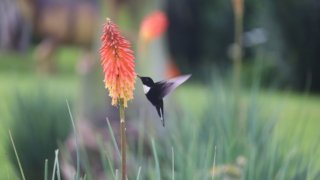
The day continues with a visit to the archaeological sites around the village, in places offering spectacular views (Alto de los Idolos, Alto de las piedras, el Tablon). We also discover the local flora and fauna, very rich and abundant in this temperate region, fed by numerous streams thanks to its proximity to Mount Puracé.
The diversity in this region is incredible. According to some locals, the proximity of the junction of the Colombian massif (the Amalguer junction, the point where the Andes divide into 3 cordilleras) explains the settlement of the San Agustin civilization. This energetic point would enable excellent crops to be grown and would offer an abundance of water. In fact, this point is Colombia’s largest hydrological reservoir. There are 4 major Colombian rivers rising from this junction: rio Magdalena, rio Cauca, rio Caqueta and rio Putumayo.
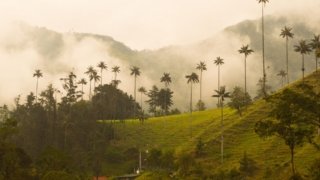
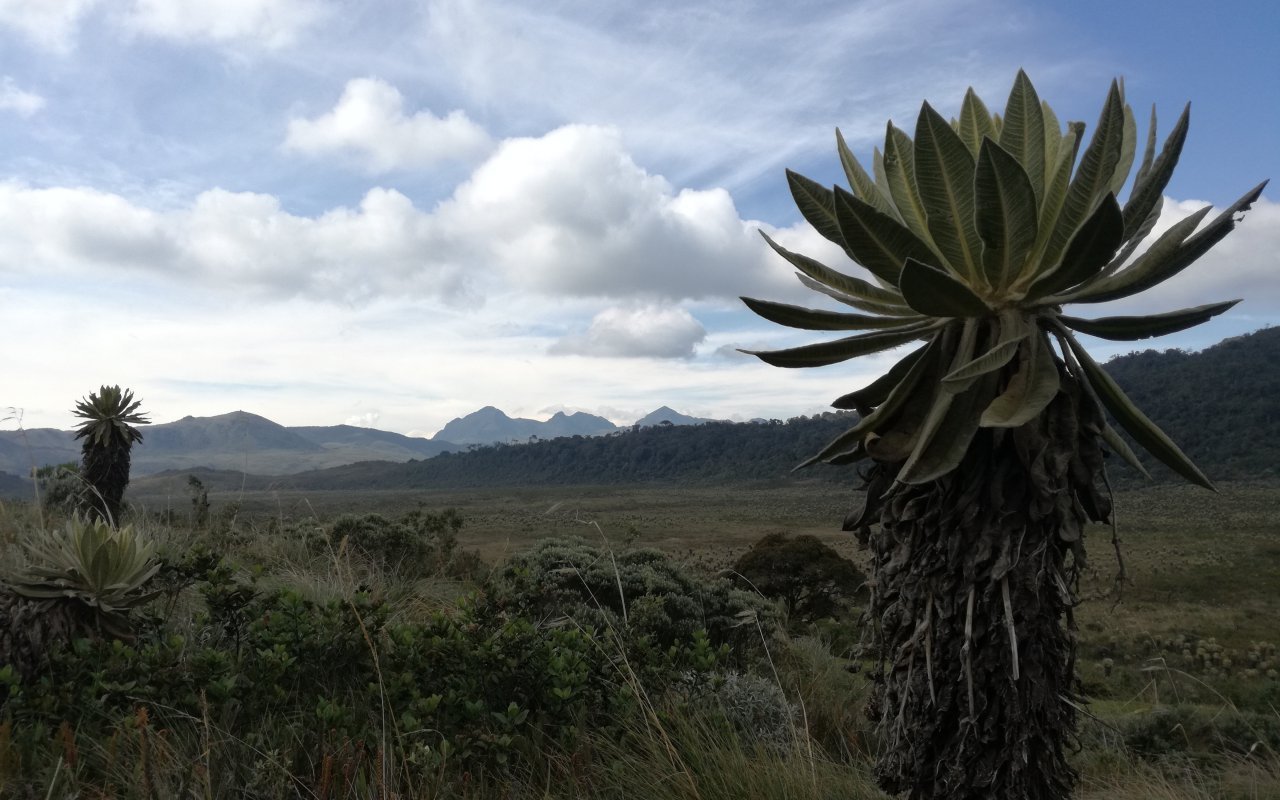
It’s the frailejones that feed this hydrological basin: this shrub captures water from the atmosphere and discharges it into the earth, feeding Colombia’s main rivers. After your stopover in San Agustin, on the road to Popayan, you can observe frailejones and better understand one of the phases of the water cycle as you cross the paramo.
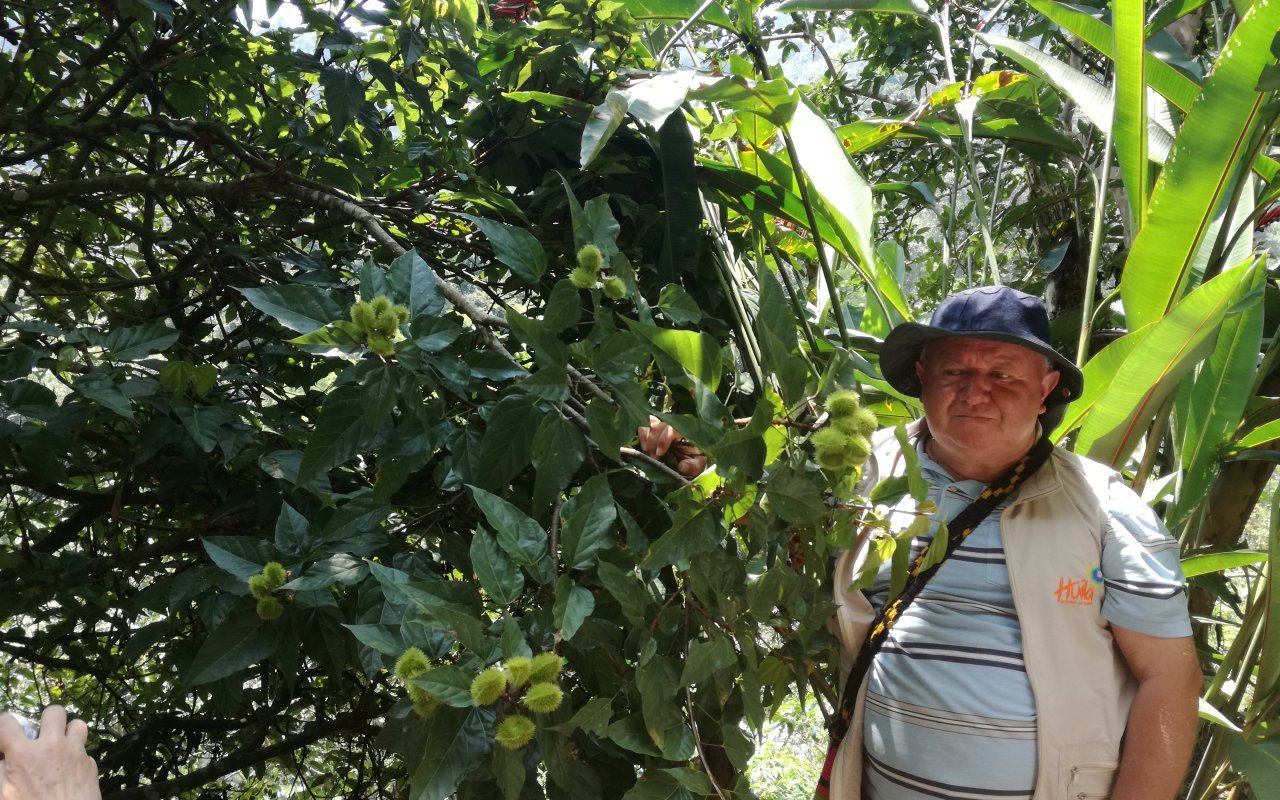
Many thanks to our guide Fabio. Fabio is the 38th guide in the history of Colombia’s national guides, and is also the grandson of the former owner of the house where the entrance to the archaeological museum is now located. He gave us some fascinating explanations of San Agustin culture and local biodiversity.