Colombia Today: A Nation Transformed (2016-2026)
The years following the historic 2016 Peace Accords have brought profound transformation to Colombia. While the path to lasting peace continues to evolve, the country has emerged as one of South America’s most dynamic and welcoming destinations.
The Duque Years: Stagnation and Resistance (2018-2022)
The election of Iván Duque in 2018 marked a shift in the implementation of the Peace Accords. Running on a platform of “Peace with Legality,” Duque’s administration slowed the pace of rural development programs and suspended negotiations with the ELN after a 2019 attack on a police academy in Bogotá.
During this period, implementation of key provisions faced delays, particularly in rural areas far from tourist circuits. However, Colombia’s major cities continued their remarkable security improvements, and tourism flourished even as the peace process faced political headwinds.
The Petro Era: Total Peace and Renewed Momentum (2022-Present)
In 2022, Colombia elected its first leftist president, Gustavo Petro, a former member of the M-19 guerrilla movement who later became mayor of Bogotá. Petro brought renewed energy to the peace process with his ambitious “Paz Total” (Total Peace) strategy, which addresses both armed conflict and the underlying social inequalities that fuel violence.
In November 2022, Petro signed Law 418 of Total Peace, establishing a legal framework for comprehensive negotiations. This innovative approach seeks dialogue not just with insurgent groups but with all actors involved in violence, representing a shift toward holistic conflict resolution.
The Total Peace initiative focuses on five key elements: full implementation of the 2016 FARC accord, negotiations with remaining armed groups, dialogue on drug trafficking issues, comprehensive rural reform, and investment in education for peace and reconciliation.
Tangible Progress
Nearly 12,000 former FARC combatants have successfully transitioned to civilian life, marking a historic achievement. The Special Jurisdiction for Peace (JEP) has begun delivering justice for conflict victims, while rural reform programs have brought land distribution to communities that suffered during decades of violence.
Most significantly for visitors, Colombia’s transformation has been visible in its cities and tourist destinations. Medellín, once synonymous with violence, has become a model of urban renewal and received over 1 million international visitors in 2024. Bogotá, Cartagena, the Coffee Region, and the Caribbean coast have all seen dramatic improvements in security and infrastructure.
The ELN Negotiations: An Ongoing Process
Peace talks with the ELN, the country’s last major guerrilla group, have followed a complex path. Negotiations resumed in November 2022 after a three-year pause, with international support from countries including Norway, Cuba, and Venezuela. A historic ceasefire was announced in 2023, though the process has experienced setbacks.
In January 2025, President Petro temporarily suspended negotiations following violence in the remote Catatumbo region near the Venezuelan border—an area far from established tourist routes. These negotiations continue to be an important element of Colombia’s comprehensive peace strategy.
Colombia for Travelers in 2025
Colombia welcomed over 6.7 million international tourists in 2024, a record that reflects the country’s successful transformation. The conflicts that persist occur in remote rural and border regions that are not part of standard tourist itineraries. No tourist has been killed due to the armed conflict, and the areas visitors explore—from the Caribbean coast to the Coffee Region, from Bogotá to the colonial jewel of Cartagena—are safe and welcoming.
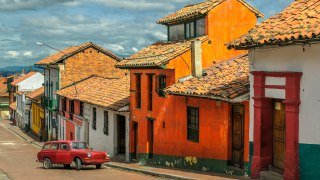
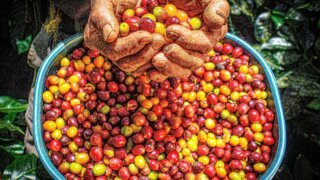
Major cities have dedicated tourism police, improved infrastructure, and vibrant cultural scenes. Medellín has been recognized internationally for its urban innovation, while Cartagena continues to charm visitors with its colonial architecture and Caribbean atmosphere. The Coffee Region offers peaceful landscapes and authentic cultural experiences, and destinations like Tayrona National Park showcase Colombia’s extraordinary biodiversity.
The U.S. State Department maintains advisories for specific border areas and remote rural zones, but these regions are generally outside typical tourist circuits. Visitors who follow standard travel precautions—staying in established tourist areas, using registered transportation, and remaining aware of their surroundings—consistently report positive, safe experiences.
A Nation Moving Forward
Colombia today represents a remarkable success story of transformation. The peace process has created space for the country to flourish economically and culturally. Tourism has become a vital industry, generating employment and bringing the world to Colombia’s doorstep.
While the full implementation of the Peace Accords continues, the progress achieved since 2016 is undeniable. Colombia has built a more inclusive political system, created mechanisms to address historical inequalities, and successfully demobilized the hemisphere’s largest insurgency.
For travelers, this means experiencing a country that has retained all its authenticity—its warmth, its cultural richness, its natural beauty—while shedding the violence that once defined it. From the rhythm of salsa in Cali to the emerald hills of Salento, from the street art of Comuna 13 to the pristine beaches of the Caribbean, Colombia invites you to discover a nation that has chosen dialogue over conflict and is writing a new chapter in its history.
The international community continues to support Colombia’s peace efforts through the UN Verification Mission and other initiatives. As observers note, Colombia’s commitment to resolving conflict through dialogue makes it a model for other countries facing similar challenges.
Come and experience Colombia’s transformation firsthand. The country that was once closed to the world has opened its doors, and the welcome you’ll receive reflects the optimism of a nation looking confidently toward the future.
The Venezuela Crisis and Regional Tensions (January 2026)
In early January 2026, the regional political landscape underwent a dramatic transformation when U.S. military forces conducted Operation Absolute Resolve, capturing Venezuelan President Nicolás Maduro and his wife Cilia Flores in Caracas. The operation, which involved strikes on military targets across northern Venezuela, represented the most significant U.S. military intervention in Latin America since the 1989 Panama operation.
Colombia’s Response
President Petro immediately condemned the U.S. military action as a violation of Venezuelan sovereignty and international law. Colombia mobilized security forces along its 2,219-kilometer border with Venezuela, anticipating potential refugee flows and security challenges. The Colombian government activated an emergency National Security Council meeting at 3 a.m. on January 3rd to coordinate the response.
Despite the rhetoric, by mid-January, tensions appeared to de-escalate. Petro announced he would visit the White House, marking a diplomatic breakthrough after what had been described as the lowest point in bilateral relations in over a century. This shift reflected both countries’ recognition of their interdependence and shared interests in regional stability.
Impact on Colombia and the Region
Colombia now faces significant challenges related to the Venezuela situation. The country already hosts approximately 2.8 million Venezuelan migrants and refugees—the largest Venezuelan diaspora in the world. The uncertain political transition in Venezuela could either trigger new migration flows if instability increases, or potentially see returns if conditions improve.
Venezuela’s interim government, led by acting president Delcy Rodríguez, is attempting to maintain control while facing international pressure to transition toward democratic governance. The situation remains fluid, with Venezuela’s future political direction still uncertain.
What This Means for Travelers to Colombia?
Despite these significant geopolitical developments, Colombia’s tourist destinations remain safe. The events in Venezuela are occurring in a neighboring country, and the Colombia-Venezuela border regions where security concerns exist are remote areas far from established tourist routes.
Major Colombian cities—Bogotá, Medellín, Cartagena, Cali—and popular tourist destinations including the Coffee Region, Tayrona National Park, and Caribbean coastal areas continue to operate normally. Tourism infrastructure remains unaffected, and international flights and travel arrangements continue without disruption.
Colombia received record tourist numbers in 2024, surpassing 6.7 million international visitors, and tourism continues to be a vital economic sector strongly supported by the government. The country maintains dedicated tourism police in major destinations and has invested heavily in ensuring visitor safety and satisfaction.
The diplomatic tensions between the U.S. and Colombia have eased considerably, with both countries acknowledging their long-standing partnership on security cooperation and shared economic interests. U.S. citizens continue to represent the largest group of international tourists to Colombia, demonstrating ongoing confidence in the country as a travel destination.
Visitors should stay informed through official travel advisories and follow standard travel safety practices. Tourist areas benefit from enhanced security infrastructure, and the situations affecting border regions with Venezuela do not impact the vast majority of destinations that international visitors explore.
As regional politics evolve, Colombia’s commitment to tourism as a cornerstone of its economy remains steadfast. The country welcomes travelers from around the world to experience its remarkable journey and discover why Colombia has emerged as one of South America’s most dynamic and rewarding destinations.
Colombia, now a peaceful country
On August 26, 2016, the Colombian government and the FARC guerrilla group (Revolutionary Armed Forces of Colombia) signed a historic peace agreement putting an end to one of the world’s longest-running armed conflicts. Held in Havana, Cuba, the negotiations, which began in 2012, seek to turn the page on half a century of violence leaving behind more than 260,000 victims, nearly 7 million displaced and at least 60,000 missing.
Despite being rejected by a slim majority of the people on October 2, the Peace Accords were finally adopted “in force” by parliament at the end of November. This marked the beginning of a post-conflict process in the country, which augurs well for an inevitable improvement in the situation, even if there are still many obstacles to the establishment of a definitive and lasting peace.

At a time when the 7,000 FARC fighters have already joined the demobilization camps spread across the country, and a new negotiating table has been set up in Quito (Ecuador) with the country’s second guerrilla group, the ELN (National Liberation Army), peace seems to be gradually breaking through the foliage of the Colombian jungle..
A retrospective of the conflict: between cycles of violence and failed negotiations
While many believe that the Colombian conflict began in the mid-1960s with the creation of the main guerrilla groups, historians’ opinions differ, with some tracing it back to independence in 1819. What needs to be understood is that, while the violence in Colombia stems from ideological and political confrontations, its roots lie above all in the geographical, economic and social disparities that have persisted since colonization.

Tensions crystallized in 1948 with the assassination in Bogotá of a charismatic liberal leader, Jorge Eliecer Gaitan, who favored the implementation of agrarian reform; the capital went up in flames.
Confrontations between radical liberals, the “gaitanists”, and conservatives spread throughout the country, ushering in the dark period of “La Violencia”, a decade of bloodshed in which more than 300,000 Colombians lost their lives. In 1958, the authoritarian regime of Rojas Pinilla (who fomented a coup d’état in 1953) was replaced by the National Front, an alliance of liberal and conservative elites who decided to share power every 4 years. Meanwhile, liberal dissidents went underground, forming the embryo of future guerrillas.

During the 1960s, the various dissident groups and the Communist Party, excluded from any political participation, consolidated against the backdrop of the Cold War, while just a few years earlier, the Castro regime in Cuba had set an example of successful revolution.
In 1964, the bombing of Marquetalia by U.S.-backed government forces marked the birth of a unified guerrilla movement of peasant origin, which in 1966 became known as the Revolutionary Armed Force of Colombia (FARC). At the same time, the ELN (National Liberation Army) andEPL (Popular Liberation Army) guerrillas were formed. The conflict escalated as other guerrilla groups emerged, along with the rise in power of drug traffickers, who organized themselves into cartels, and the emergence of paramilitary groups.
The latter, veritable mercenary militias in the pay of landowners and corrupt politicians, waged a “dirty war”, unleashing counter-guerrilla operations throughout the country, sometimes with the complicity of the regular army. In the 1980s, the first negotiations with FARC led to aceasefire and the creation of the Patriotic Union, the guerrilla’s political party. This party was soon decimated by its opponents, setting off a new cycle of violence. The 1990s saw an intensification of the conflict, despite the demobilization of an urban guerrilla group, the M19. In 1998, the government ofAndres Pastrana once again opened negotiations with the country’s leading guerrilla group (some 30,000 fighters at the time) in the Caguan region. Unfortunately, once again, attempts at peace failed to produce an agreement, and the belligerents resumed fighting. The arrival in power ofAlvaro Uribe in 2002 marked a turning point. Although Uribe considerably reduced guerrilla numbers, with the help of Plan Colombia (US financial and military aid set up in 2000), his “mano dura” policy had harmful repercussions throughout the country. Paramilitary groups proliferated, despite a demobilization agreement negotiated with the government in 2005. FARC stepped up its attacks and kidnappings. The state and army commit macabre exactions such as the “Falsos Positivos” (False Positives) scandal, in which thousands of civilians were dressed in guerrilla uniforms to inflate the figures for maintaining security. On the other hand, the country’s rural areas are severely affected, finding themselves in the crossfire on a daily basis. Peasants and indigenous peoples are suffering as the army fumigates their land to eradicate illicit crops, and their traditional crops wither away in the process. Violence is spreading, and civilians, increasingly affected, are beginning to organize themselves into victims’ associations, embodying the general “fed-up” with a conflict that seems to have no way out.

When Juan Manuel Santos, Uribe’s former Defense Minister, ran for president in 2010, everyone expected him to be the leader who would defeat the ailing guerrillas. However, a detailed analysis of the situation inevitably leads to the conclusion that the solution to the conflict cannot be military, given the catastrophic state of the country after 8 years of merciless war and the socio-economic issues that are the breeding ground for the protests (isolation of certain regions, glaring economic inequalities, concentration of agricultural land, etc.). Santos, freshly elected, understood this. The great turning point was initiated secretly and then officially in Oslo, where discussions began in 2012 before being relocated to Havana.
In Havana, peace step by step
After the signing of a Global Agreement in 2012, which set out the conditions for the peace negotiations, a marathon began between the two delegations.The Peace Accords were concluded in 5 major stages
- Agreement on an integral rural reform that takes into account the demands and living conditions of a large part of the population.
- An agreement on the political participation of FARC, an essential condition for the guerrilla group, which now administers certain parts of the territory where the state has always been absent.
- An agreement on the replacement of illicit crops (coca, marijuana, poppies) and the reduction of trafficking, the main source of funding for armed groups.
- An agreement on victims and their inclusion in the peace process, based on the principles of truth, justice and reparation.
- An agreement on the end of the conflict, setting out the conditions for a ceasefire between the two parties and the demobilization of FARC.
the Peace Accords have been hailed around the world as an example of successful negotiation. The text provides for a host of measures aimed at transforming the country in depth. In Havana, special emphasis was placed on victims, minorities and women in particular, in order to generate a breath of reconciliation and hope among the populations most vulnerable to the war.
Juan Manuel Santos, winner of the Nobel Peace Prize in 2016, made peace his battle horse during the campaign for his re-election in 2014. After years of deadly conflict, which seemed to isolate Colombia from the rest of the world and helped build a negative image of the country, peace represents a huge opportunity in many respects. In recent years, the country has continued to open up and develop. Economically, all the indicators are green, and the country’s economy seems to be clearly benefiting from the reduction in violence. Most of the country has been made safe, and tourism is developing apace. Yet Colombia has lost none of its authenticity. Come and visit!
The road ahead
As evidenced by the popular rejection of the Peace Accords last October, Colombian society remains deeply divided, not least because of Senator Uribe’s (ex-president) aggressive opposition to the Santos government and its desire for peace. Moreover, the Accords, which are promises on paper, must be translated into action if they are not to generate frustration. Today, if peace is to take root in concrete terms and endure, the challenge is to generate a climate favourable to social peace and the reduction of inequalities, which are factors of tension, insecurity and illegality. Finally, memory and reconciliation appear to be two key, demanding but necessary steps towards healing the wounds of the past and thinking about the future.
Text by Eliott Brachet