Like the novels of Gabriel Garcia Marquez, certain stories in Colombia often transcend the boundaries of reality to become myths. Soccer may be a religion in this Andean country, but cycling has no fewer followers, and the epics of historic Colombian riders are just as many legends to the glory of the two-wheeler. Colombians adore cycling, love the Tour de France, and above all revere their emblematic rider: Nairo Quintana.
Standing at just over six feet tall and weighing in at fifty-seven kilos, The Little Big Man – or Naironman to others – has been shining on the European circuits since 2013, generating unprecedented enthusiasm among the Colombian public. The director of the Tour de France, Christian Prudhomme, told the newspaper El Espectador that “passion for cycling in Colombia has reached new heights”. Let’s take a look back at the origins of this passion…
The phenomenon of Colombian cyclist Nairo Quintana: "the Condor of Movistar"
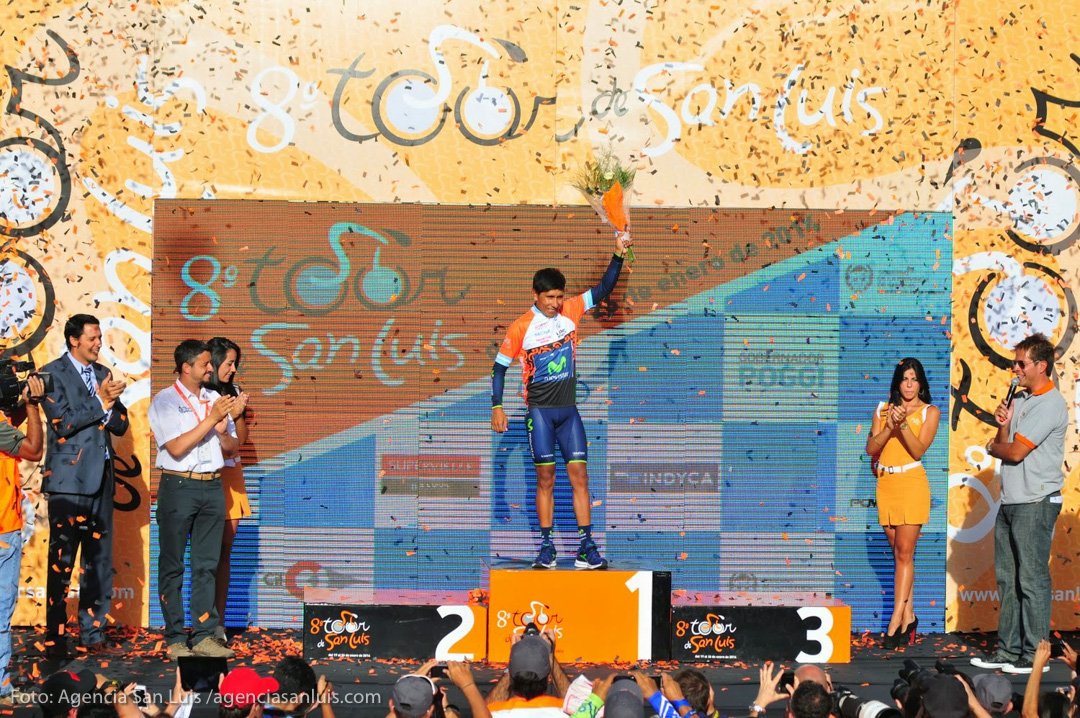
The young man hails from the mountains of Boyacá, a verdant Andean region just a stone’s throw north of Bogotá. From a modest background, he began cycling at the age of 8 on a mountain bike his father had cobbled together so that he could freewheel to school 16 kilometers down the road. Every evening,young Nairo rode in the opposite direction, arched over his pedals, relentlessly climbing an 8% gradient. He quickly made his mark in the big leagues, joining the Colombian national team (Colombia es Pasion – Café de Colombia) in 2009, where he unsurprisingly stood out.
Recruited by the Spanish Movistar team
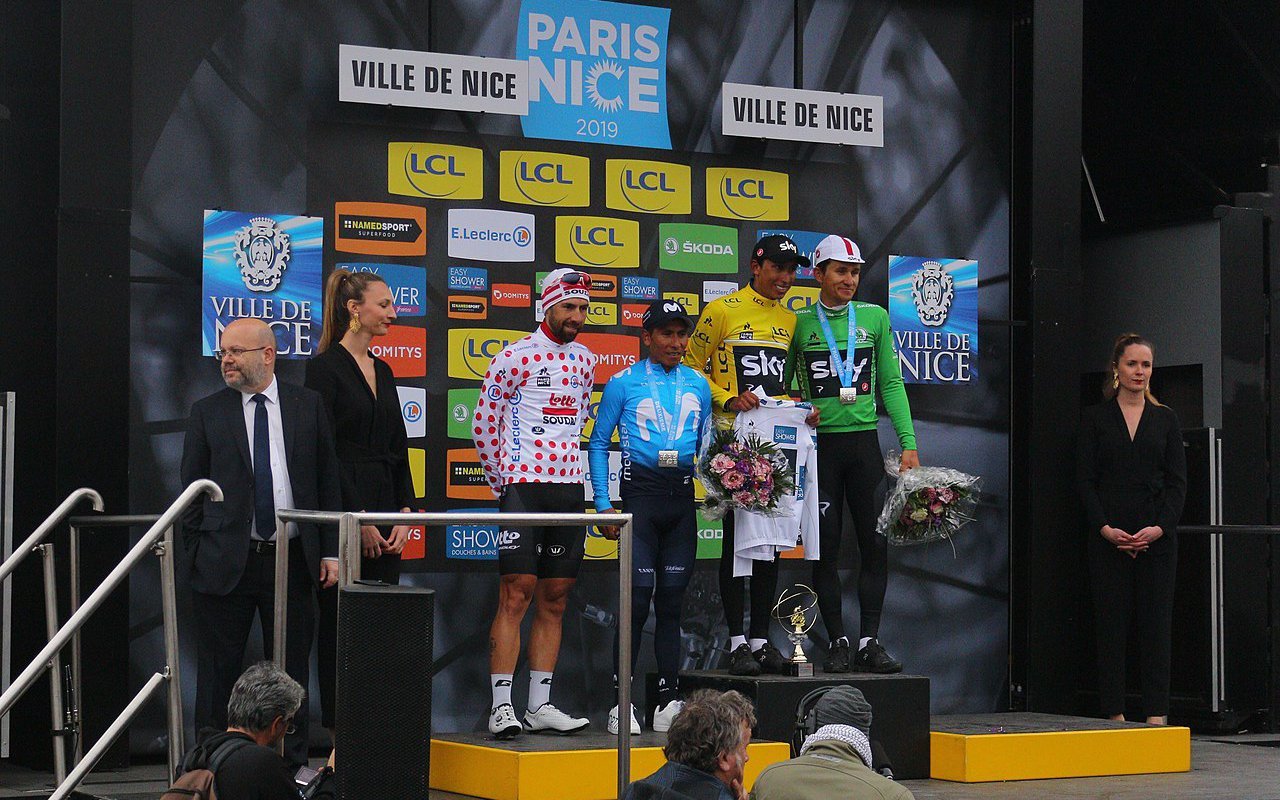
In 2012, he was recruited by the Spanish Movistar team, managed by Eusebio Unzué. Training mainly in the Pyrenees, it was in the Alps that he scored his first successes, winning his first European stage at the Critérium du Dauphiné that same year. On his first appearance in the Tour de France in 2013, his greatest dream, he finished second overall. A feat at just 23 years of age! The following year, he won the Giro d’Italia. In 2015 and 2016, he finished second and third respectively in La Grande Boucle. On all three occasions, he wore the weighted jersey for best climber, or the immaculate bib for best young rider. Quintana loves hills. The long, winding climbs are his favorite stages and offer him his greatest successes. His years of training in the Colombian Andes have made him an outstanding competitor, earning him the nickname of Movistar’s “Condor”. A humble and reserved boy, he is also warm and jovial, just like the Colombians. With their ears glued to their transistor radios, they never miss a stage contested by “el Aguila de Combita”. Indeed, in summer, when the Cafeteros (the national soccer team) aren’t playing, Colombians are glued to their TV sets, attentively scrutinizing the wheels of their champion on the cobbles of the North, in the bends of Mont Ventoux, or on the slopes of the Col du Tourmalet.
On a trip to the Caribbean coast, in the sweltering heat of the tropics, you’ll be surprised to recognize the green plains of the Massif Central or the pastures of the Alps on the small screen. In Colombia, sporting events are genuine moments of national unity, when the country stops breathing, clinging to the dreams of its compatriots. The fiery Quintana is well aware of this, and is working like a madman to get his supporters cheering across the Atlantic.
A story of beetles
A country with relief for cyclists
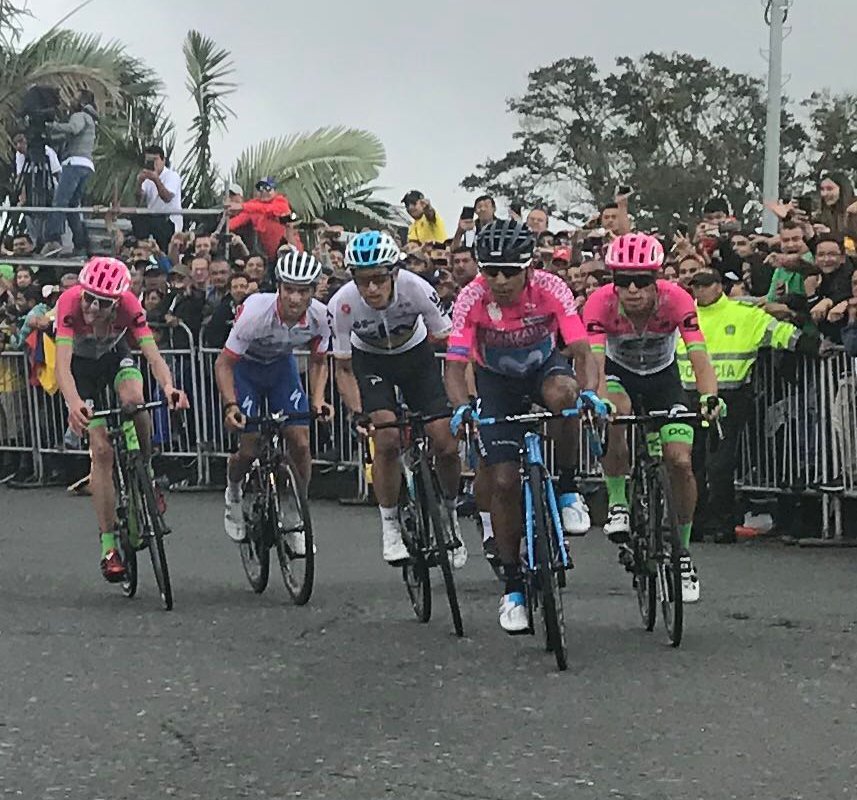
Colombia’s varied terrain is ideal for the country’s cyclists. Training at altitude, over passes and valleys, has sculpted thighs of steel. Colombian competitors have historically been noted for their skill on mountain stages. Light and small, they are excellent climbers and very combative. In the words of the great Costa Rican commentator Carlos Arturo Rueda, they are comparable to small “beetles”, compensating for the shortcomings of their wings with the power of their legs.
This time, the Beatles don’t come from Liverpool, but from the Andes; they don’t play pop music, but they know how to crush the pedal to escape the peloton!
Creation of the Tour of Colombia in the 50s
The birth of cycling in Colombia as a sporting discipline in its own right dates back to the early 1950s, with the creation of the Tour of Colombia in 1951. Following in the footsteps of its French namesake, the Tour soon became a popular festival, widely attended throughout the country and bringing together people from all walks of life and social backgrounds.
The Tour continued even during periods of intense violence, notably in the 1950s. El Niño de Cucaïta, or Rafael Antonio Niño, the Tour’s emblematic winner, became a veritable star, rallying the public around shared values
A link with France
Very early on, Colombian cycling forged a special bond with France. José Bayaert, a cyclist from France, won the Tour of Colombia in 1952. Until the 1970s, he was a highly influential figure in Colombian cycling, training many young riders and helping to democratize the sport in the country.
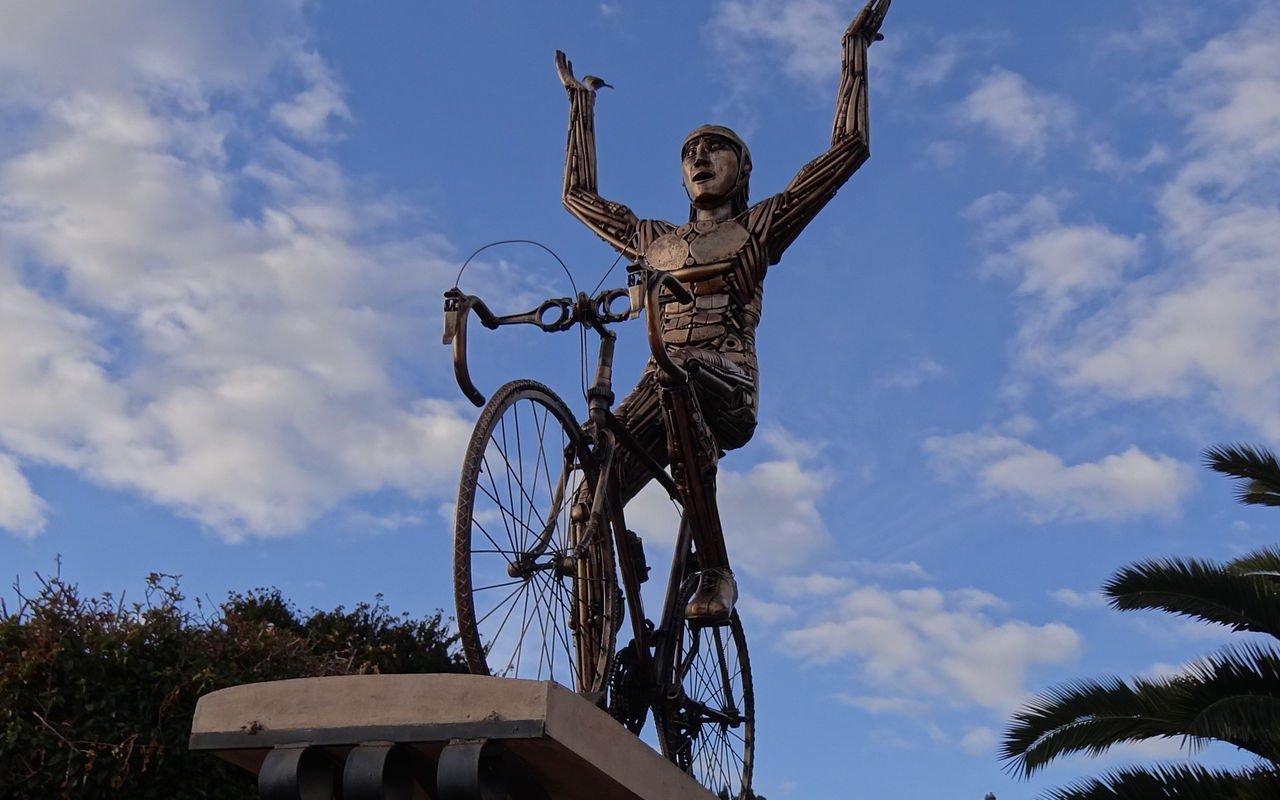
In 1973, the first team of Colombian riders arrived in France to compete in the Tour de l’Avenir, their first steps on European soil. The first Colombian to take part in the Tour de France was named “Cochise” Rodriguez. Since then, with the exception of 2010, La Grande Boucle has always welcomed Colombian cyclists. In 1984, Martin Ramirez, nicknamed “El Negro”, caught the eye of Bernard Hinault and Greg LeMond to win the Critérium du Dauphiné libéré on his first appearance on a European circuit. He made the front page of L’Equipe, captivating the journalists.
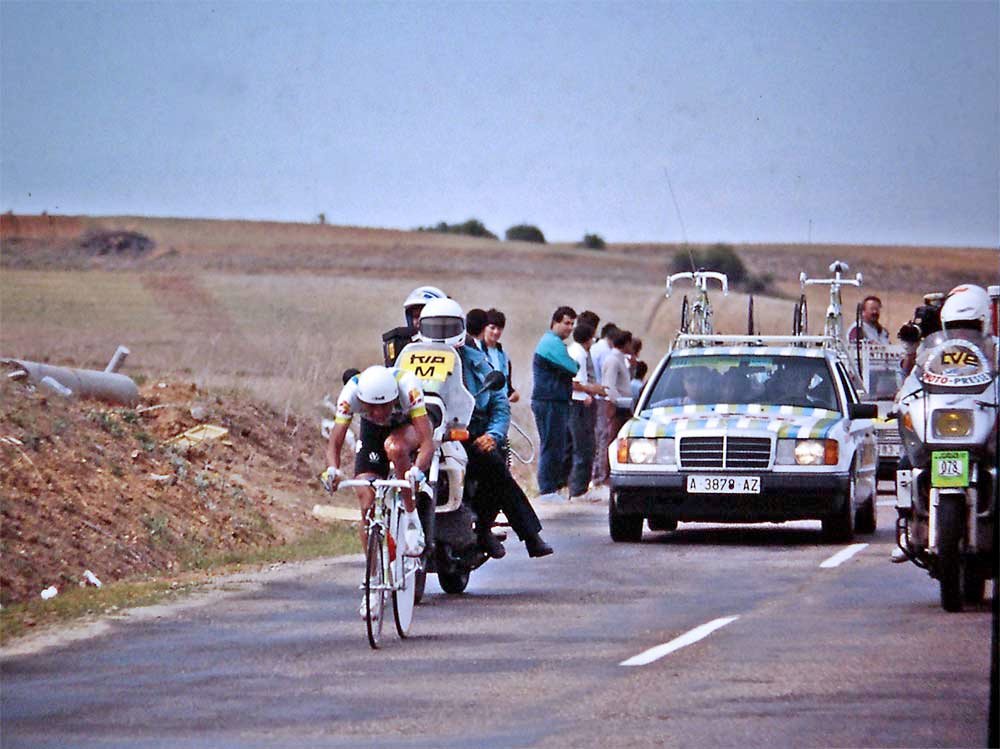
Colombian cyclist Luis Alberto Herrera
In the 1980s, Luis Alberto Herrera became the embodiment of Colombian panache. Nicknamed “the little gardener from Fusagasuga”, from the mountains near Bogotá, or Lucho to the French public, he was the first South American rider to win a grand tour: He also finished in the top ten of the Tour de France three times, winning the weighted jersey for best climber in 1985 and 1987. In 1984, following a fierce chase, he won the iconic Alpe d’Huez stage ahead of Bernard Hinault and Laurent Fignon.
His successes on La Grande Boucle will always be remembered, even if he never reached the podium. That feat was achieved by his compatriot Fabio Parra in 1988, the first Colombian to reach the top three. Names change, but the passion and emotions exalted by the sport remain intact in Colombia. From Cochise’s madness to Parra’s dashed hopes, from Herrera’s mountainous assaults to Quintana’s promising breakaway, Colombia’s “forçats de la route” nurture a tireless passion for two wheels and the mythical Grande Boucle.
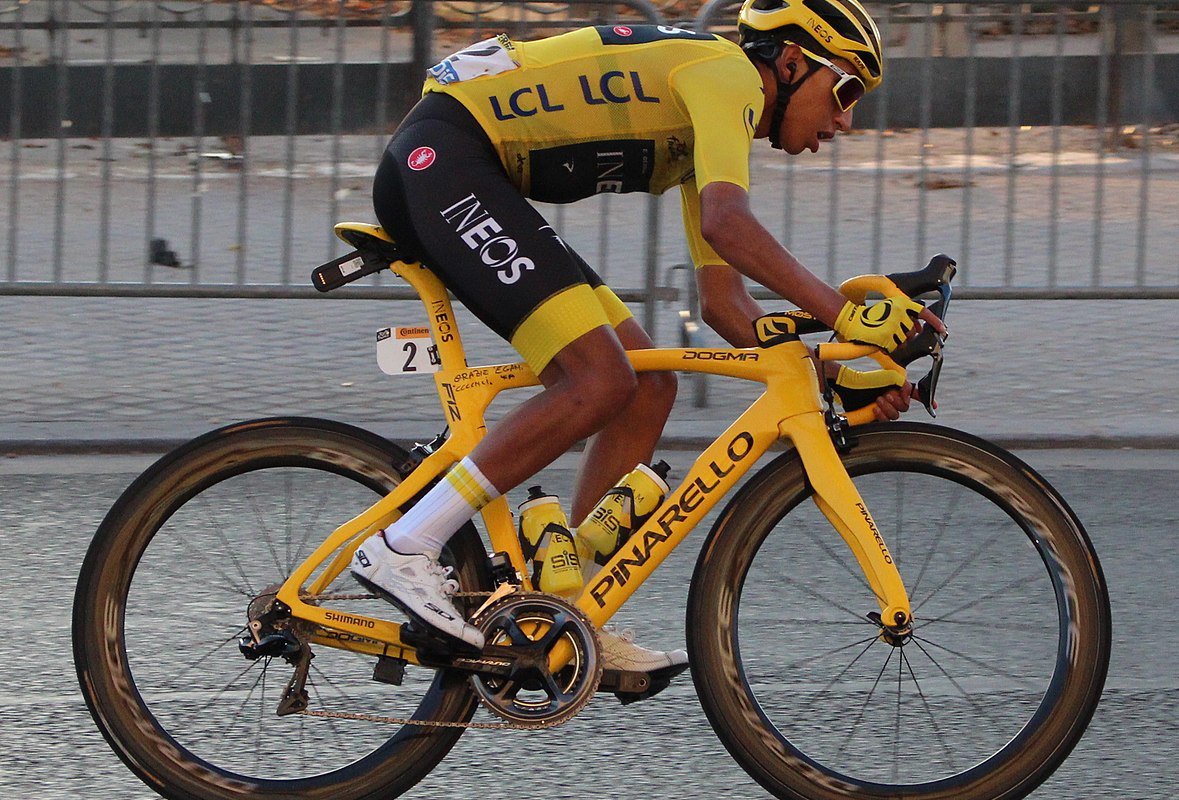
Egan Bernal, forever in Tour de France history
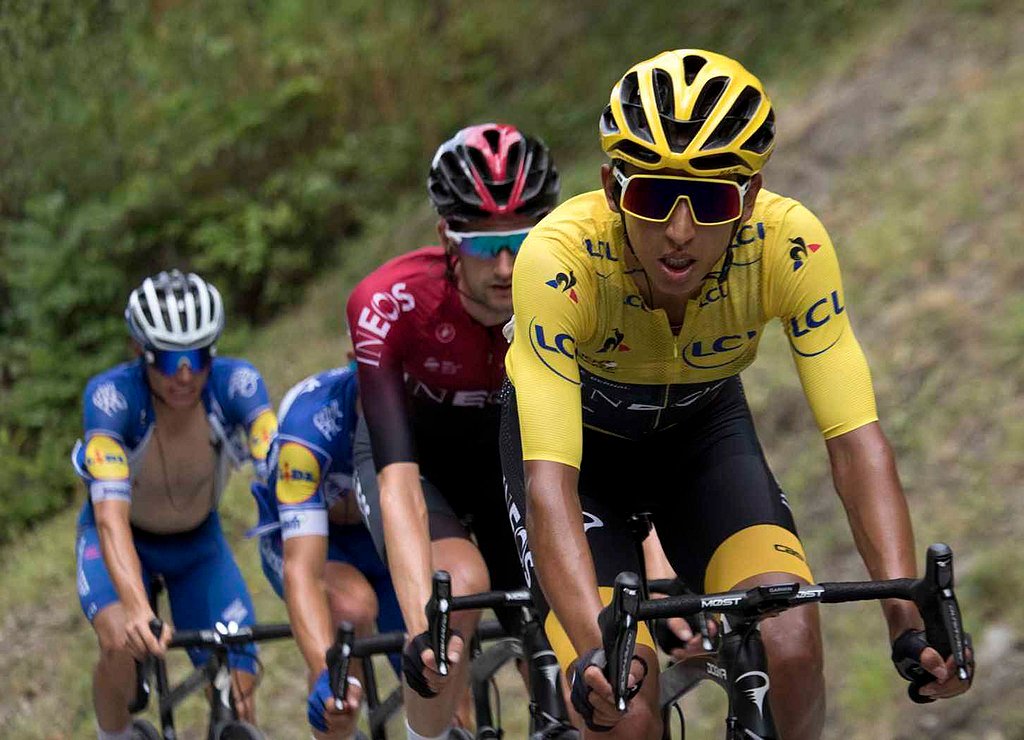
In 2019, Colombia entered the legend of the Tour de France. Winner of the 106th edition, Egan Bernal won the Grande Loop at the age of 22, making the Colombian one of its youngest winners. It’s a source of pride for an entire country and for his home town, Zipaquira, situated at an altitude of over 2,700 metres north of Bogotá.
Dreaming of becoming a champion, he has been training since his youth on the winding roads of the Cordillera Oriental. The day after his thunderous victory, the Colombian newspaper El Espectador published a glowing review of Egan Bernal: ” Egan, a name that means to be radiant with light, shone in yellow, caught the eye from Brussels to Paris and will now have his whole life to remember that he is, in 2019, the champion of the Tour de France. Egan didn’t make history, Egan is history itself.”
On his two wheels, Egan not only paved the way for the champion he became, but also for a whole generation of young Colombians in search of glory. At the pinnacle of world cycling, it’s a country that dreams of being known and recognized as a land of champions, determined to put its difficult past behind it. There’s no doubt that Colombians will achieve further brilliant victories on their bikes, but also in other sports, and Colombia will be for the world what it has never ceased to be: a Nation of daring and dreamers.
Text by Eliott Brachet