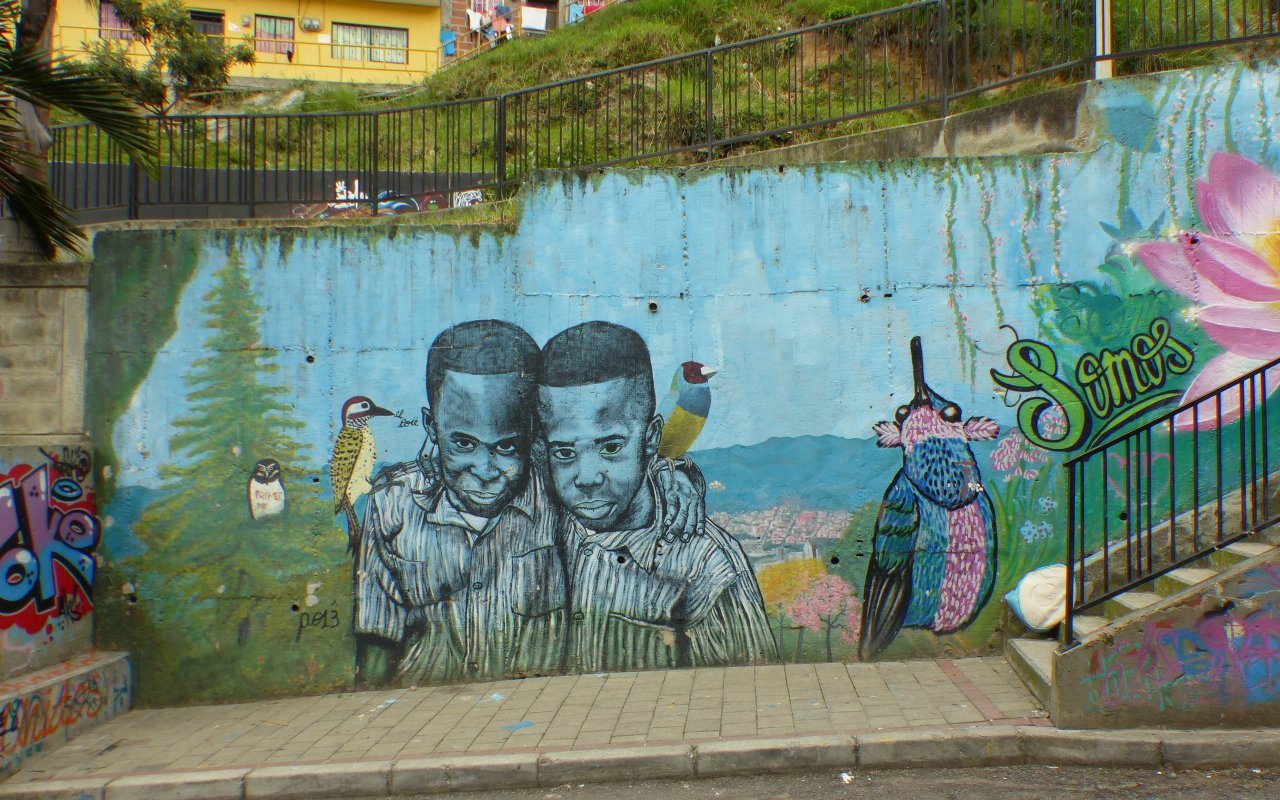
Since the early 2000s, Colombia has experienced an unprecedented artistic ferment. This revolution is taking place in the big cities, outside museums and galleries. Street art is covering the country’s walls, right down to the bricks, and becoming a veritable tourist attraction.
Street Art in Bogota
In Bogotá in particular, a real craze is building up around this new form of artistic expression. The capital is fast becoming “South America’s Mecca” for urban art and graffiti. The influences of hip-hop culture, coming straight from the United States, arrived in this Andean country in the late 1980s, confides Felipe Cespedes, an artist from Bogotá. For some years now, he has been scouring the city, painting a variety of figures inspired by mythical animals from indigenous beliefs, such as the jaguar or sacred Amazonian plants, always in a geometric style. “Initially, we talk about graffiti and tags. They’re simple writings and shapes, quick to execute. Gradually, this art form was transformed. Public authorities also became more inclined to tolerate this means of expression. Muralism then became street art, earning its letters of nobility and becoming increasingly respected and appreciated by the public.
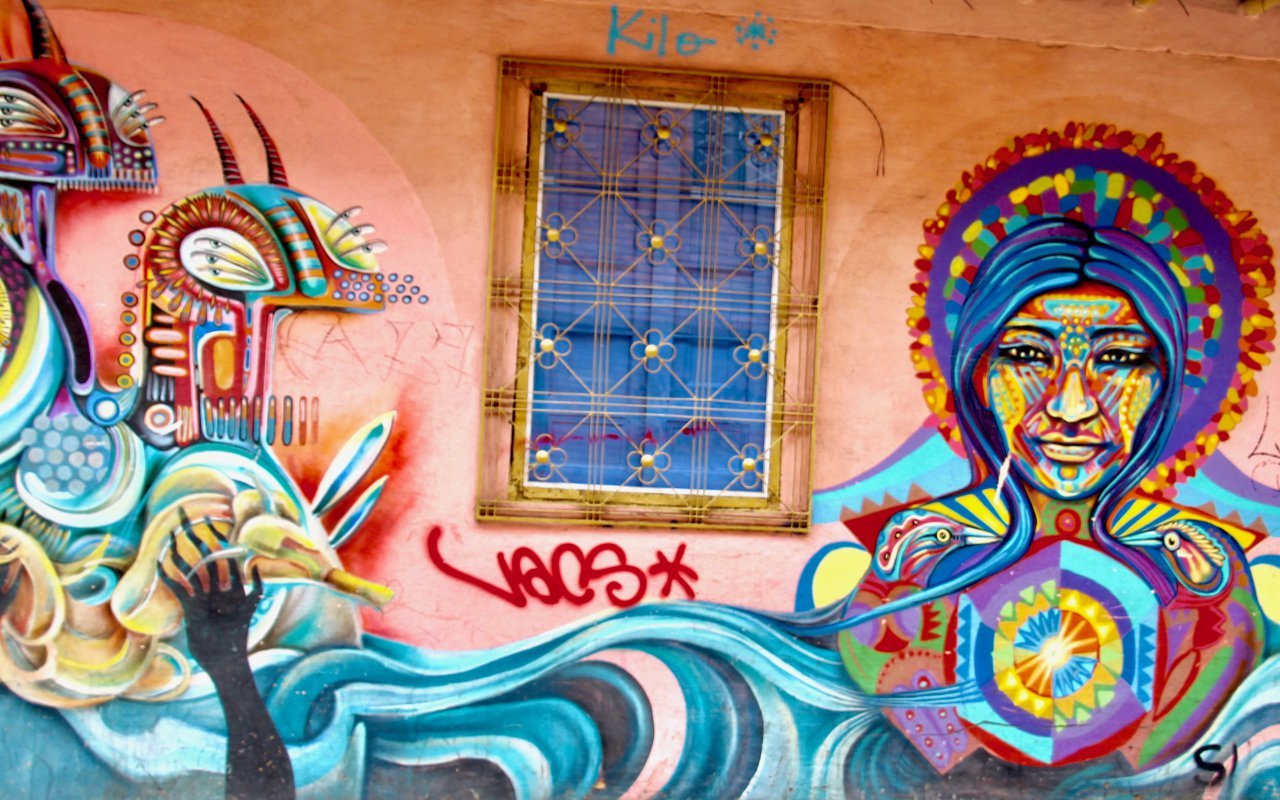
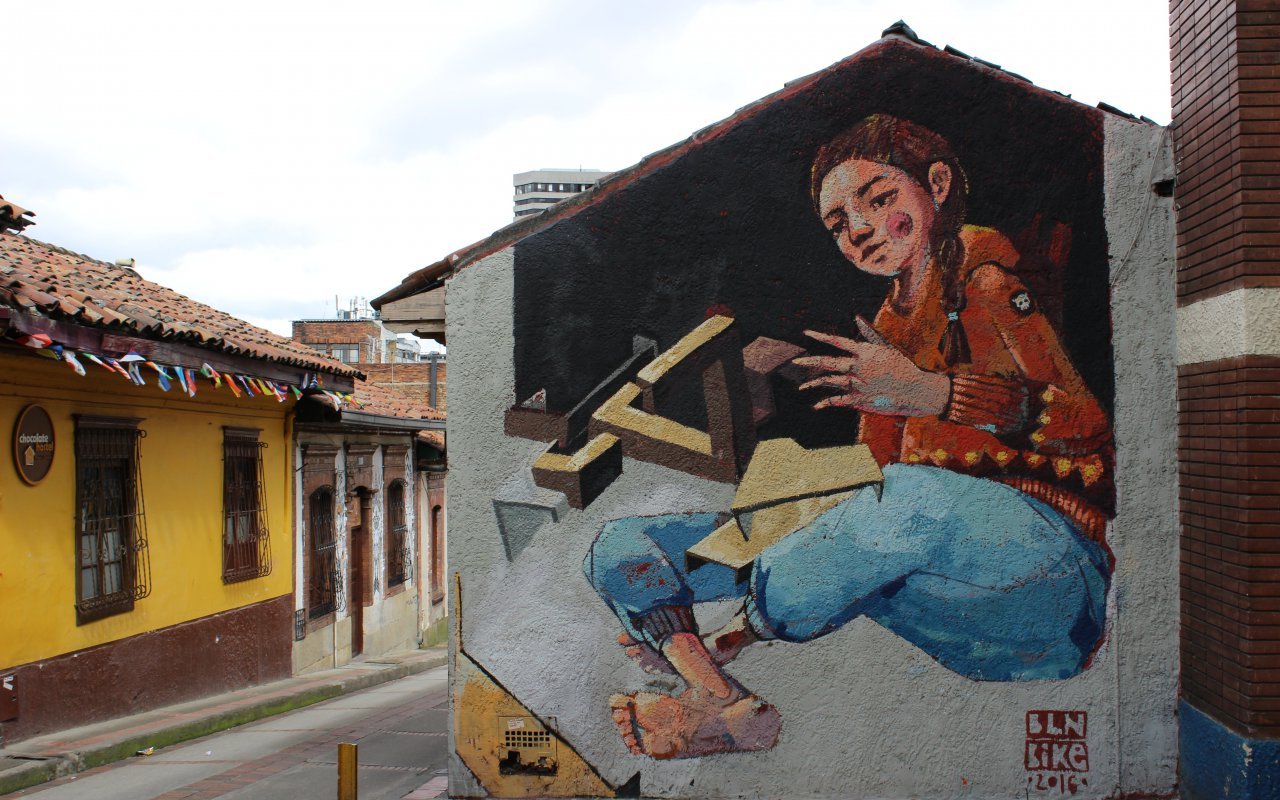
Candelaria disctrict
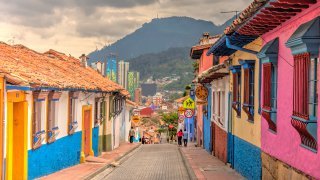
In Bogotá, the most visible changes are taking place in Candelaria. This colonial district, renovated in the early 2000s, is attracting increasing numbers of tourists. One of the district’s must-sees is the Bogota Graffiti Tour, which takestourists on a tour of street art, offering an image of a Colombia that is constantly reinventing itself, far from the clichés with which it is commonly associated. In just a handful of years, the project launched by Christian Petersen, alias Crisp, has grown exponentially. For this Australian, who has lived in Candelaria since 2011, there was an urgent need to showcase this little-known art form, often regarded as vandalism.
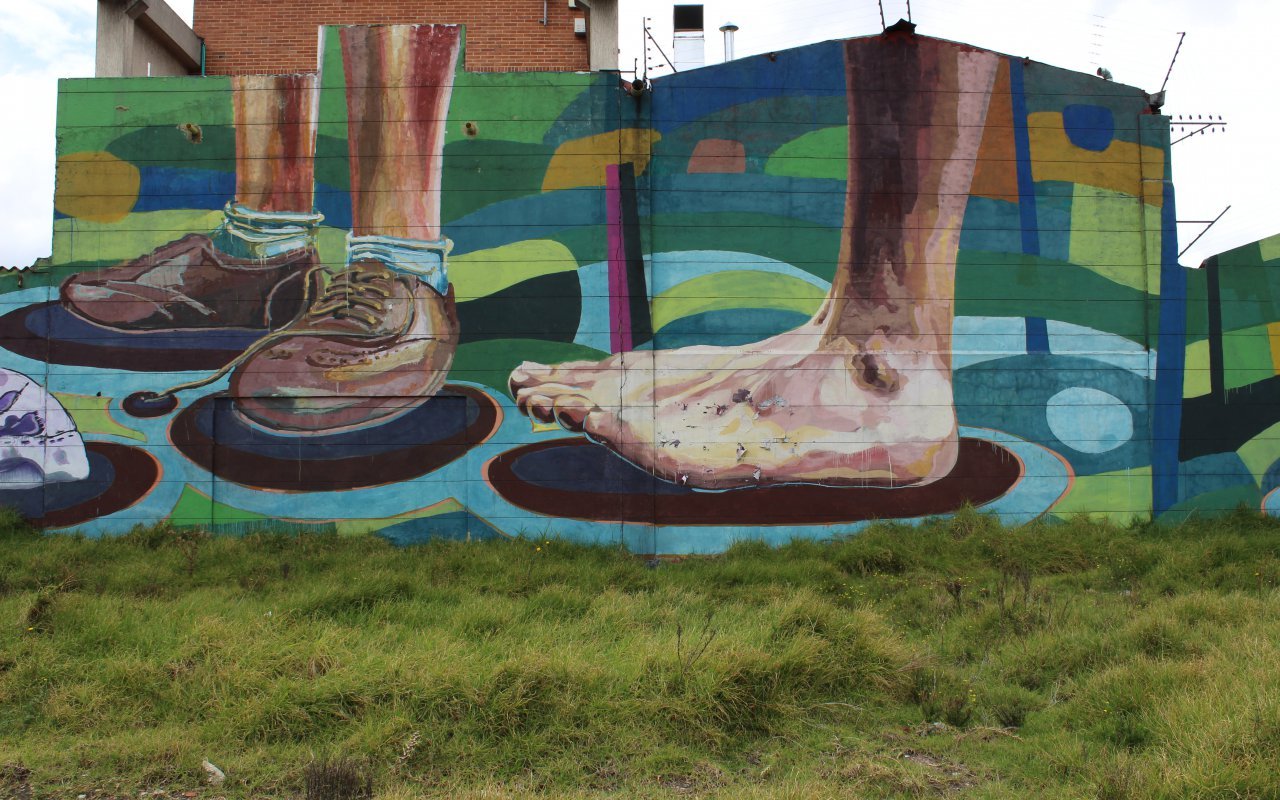
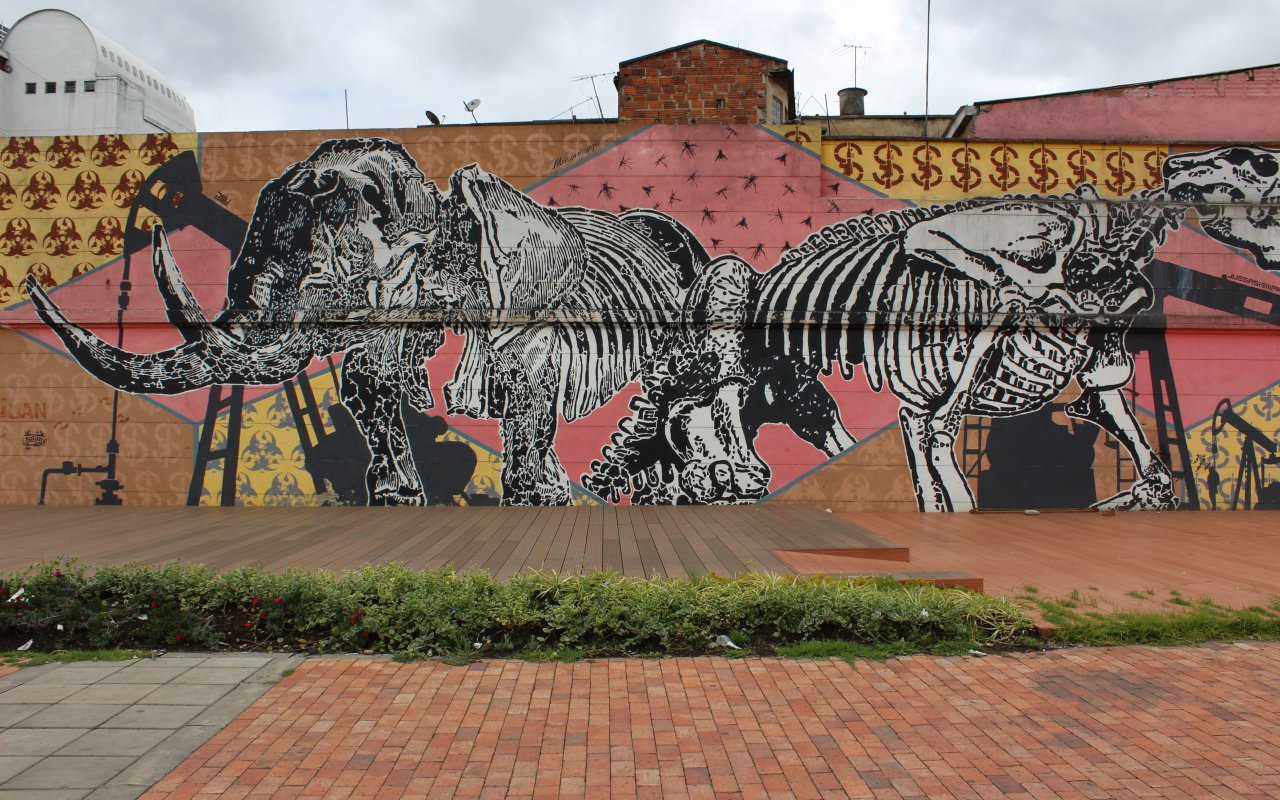
You’ll have the opportunity to stroll through the streets of Bogotá, your nose in the air to detect all the subtleties of the surrounding paintings. Each has its own story, its own secrets. You may remember the names of leading artists such as Stinkfish, DjLu, Toxicomano or APC (Animal Poder Crew). Bastardilla’ s panels are also among the most evocative, highlighting women’s rights issues in Colombia. Guache, a member of the Bogota Street Arte Collective, creates multicolored frescoes inspired by Colombia’s indigenous heritage. This year, inside the National Library, he created a fresco illustrating the famous book One Hundred Years of Solitude, by Nobel Prize winner Gabriel Garcia Marquez. The former mayor of Bogotá, Gustavo Petro (2011-2014), also worked to promote graffiti. The municipality commissioned large-scale frescoes from various artists, encouraging the development of this art form. A new wave of young artists is sweeping the capital, eager to show a different image of their city. Many are former art students from the capital’s universities, such as theNational University in the heart of the city, reputed to be an open-air street-art museum. According to Felipe, ” if it’s important to visit the Gold Museum, the Montserrate, or Bolivar Square when you set foot in Bogotá, it’s essential to spend time scrutinizing the walls, as these paintings say a lot about the country’s socio-political situation “. Walking the streets of Bogotá, it’s easy to see that this form of expression is often linked to political demands: the conflict raging in the four corners of the country, the need to support a lasting peace, corruption, mixed-race roots, etc.: all reasons that transcend the imagination of these young talents. Chucho Bedoya, a street artist living in Chapinero, Bogotá’s central district, explains that ” art heals the wounds of a long-lasting conflict “. He continues: ” I hope that its influence will continue tirelessly to generate spaces for dialogue and reflection for a country that is struggling to emerge from violence. The aim is for people’s daily lives and the decisions they make to be permeated by an infinite range of colors . After criss-crossing Latin America for two years, Chucho returned to his hometown, overwhelmed by ideas and determined to get them out into the street, totally free of charge. With others, he formed the Lavamoatumba collective. The concept is simple: in a sprawling city under perpetual construction, the idea is to take over empty spaces, bring in artists to paint them, and give these wastelands a last creative breath. For the past five years, these artists have been occupying derelict buildings, with the approval of the municipality which is preparing to demolish them, to organize ephemeral exhibitions where passers-by can come and admire mural works of all kinds.
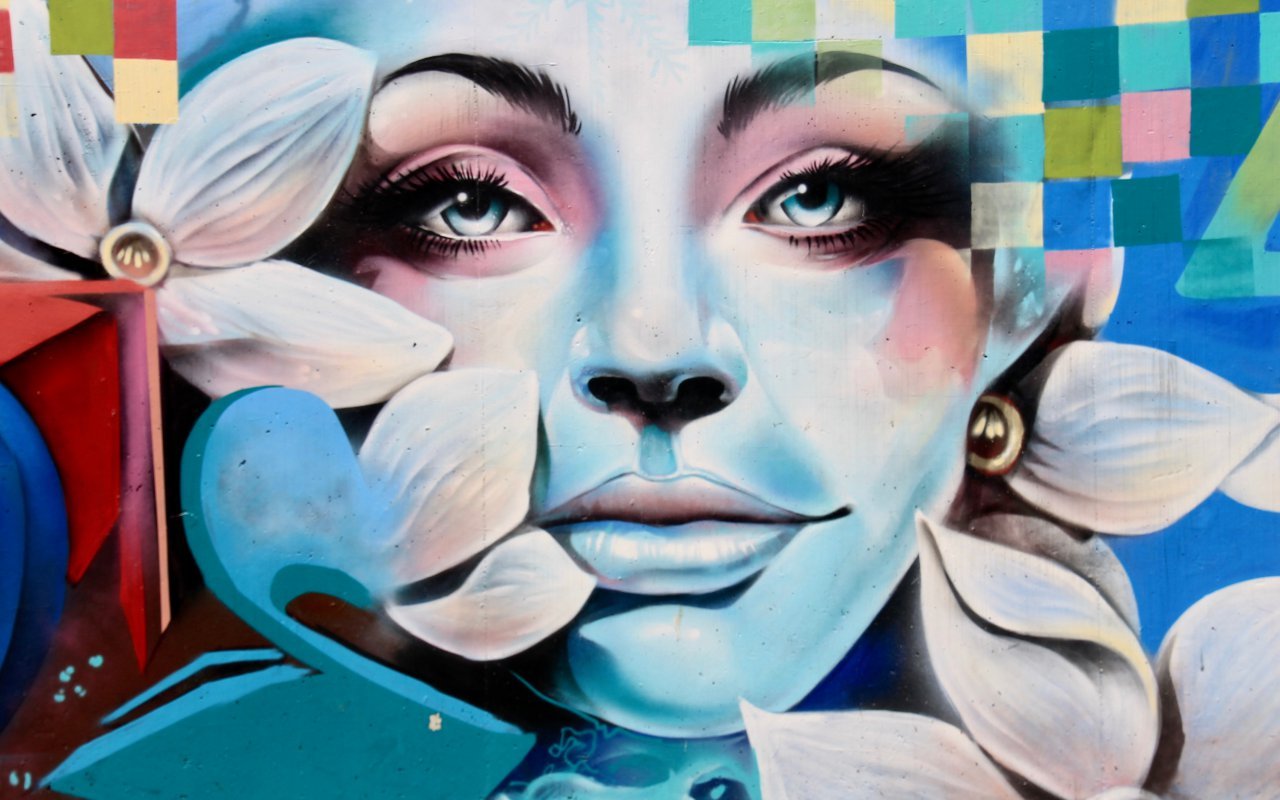
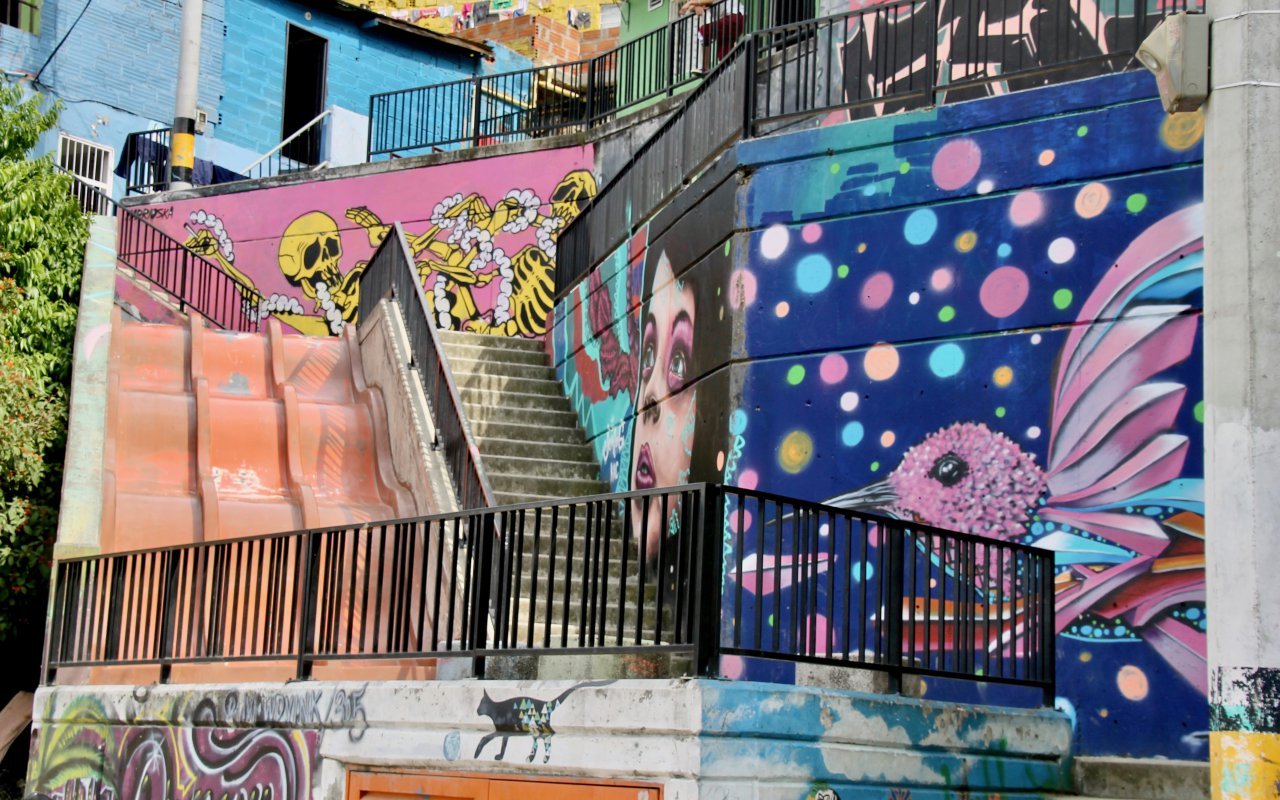
In every city, street art has become a means of breaking the spiral of violence. In the “invasiones” (underprivileged neighbourhoods built precariously on the slopes of mountains), numerous associations and collectives reach out to young people and set up creative workshops, encouraging residents to embellish the walls of their daily lives and spread positive messages. This type of action is also very common in other cities, notably Medellin, Cali and Barranquilla. Artist Nice Naranja, for example, was able to produce a series of paintings in a municipality in the Cauca region (southwest of the country) located in a guerrilla-controlled zone. He says that, ” just as in the poorest districts of Bogotá, the gloom gives way to a warm welcome. Art is seen as a great way of breaking away from the violence of everyday life “.
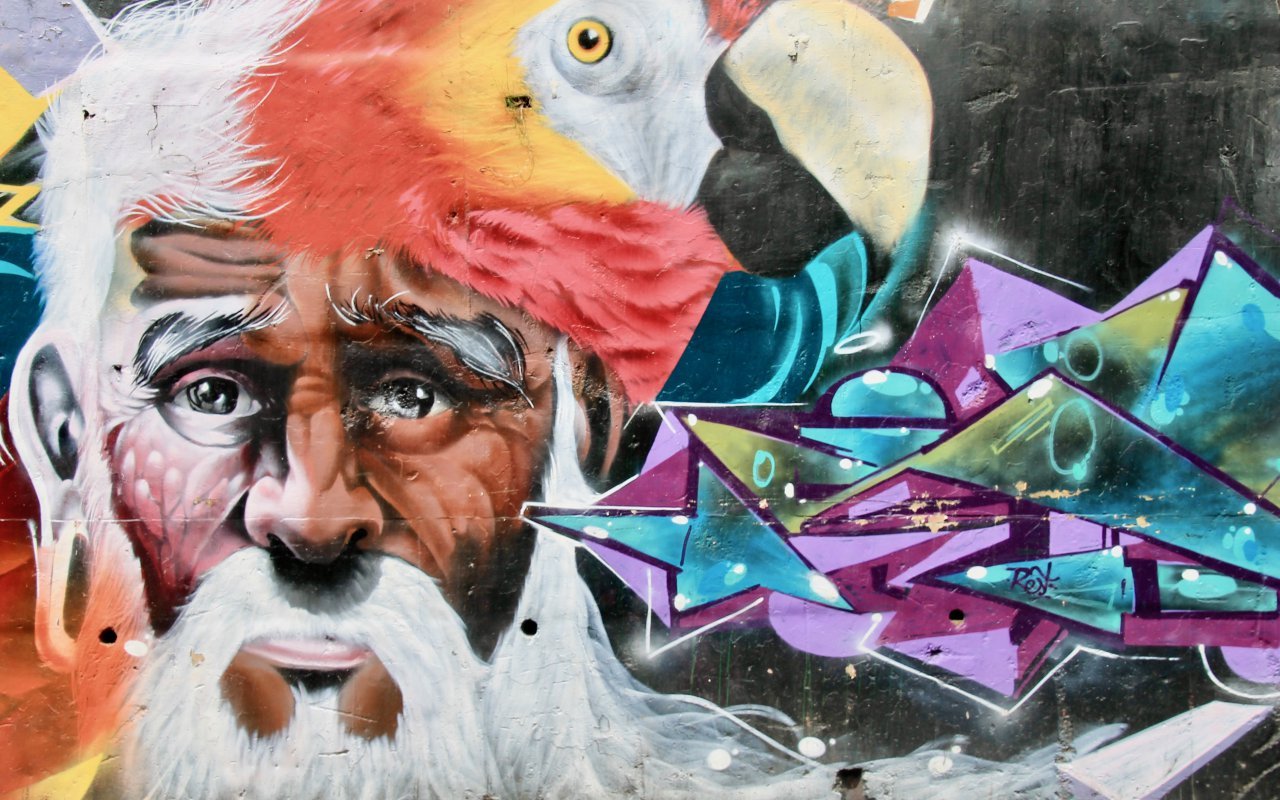
Although street art is often supported by the public authorities, who know how to show off to local artists, it is sometimes controversial. In the Candelaria district, for example, an ambitious renovation plan aimed at preserving the city’s historic heritage is raising questions. Some voices have been raised following the authorities’ covering up of numerous murals. According to Chucho Bedoya, ” it ‘ s regrettable that the municipality still doesn’t consider street art as a possible heritage “.Finally, Colombia’s cities, Bogotá in particular, are the scene of new artistic and cultural innovations that are reaching an ever-wider audience. These paintings, frescoes and stencils bear witness to the need to atone for many of the daily problems faced by the inhabitants of urban sprawl. Urban art in Colombia is a kind of collective therapy, where colors take precedence over the profound inequalities that still structure the country
Text by Eliott Brachet