What is the best season to travel to Colombia?
Best Time to Visit Colombia
Colombia is a year-round destination thanks to its location near the equator, which means relatively stable temperatures throughout the year. However, rainfall patterns vary significantly, and choosing when to visit depends on your priorities: weather, crowds, prices, and specific experiences.
Understanding Colombia’s Climate
Colombia doesn’t have traditional seasons like summer and winter. Instead, the country experiences dry periods (verano) and rainy periods (invierno)—though these names are misleading since temperatures remain fairly constant.
Dry Periods:
- December to March
- July to August
Rainy Periods:
- April to June
- September to November
Important to know: Even during dry periods, rain can occur, especially in tropical regions. Conversely, rainy periods don’t mean constant downpours—expect afternoon showers rather than all-day rain.
Peak vs. Off-Peak Travel
Peak Season (December-March & July-August):
- Advantages: Best weather, ideal for beach destinations and outdoor activities
- Disadvantages: Higher prices (accommodation can increase 30-50%), crowded tourist sites, fully booked hotels during holidays
- Colombian holidays to avoid if you want low prices: Christmas/New Year (Dec 20-Jan 7), Holy Week/Easter (dates vary, usually March or April), mid-year holidays (late June-early July)
Shoulder Season (April-June, September-November):
- Advantages: Lower prices, fewer crowds, lush green landscapes
- Disadvantages: More frequent rain (usually afternoons), some outdoor activities may be limited
- Best for: Budget travelers, nature photography, visiting popular sites without crowds
Regional Climate Variations
Colombia’s diverse geography means climate varies dramatically by region:
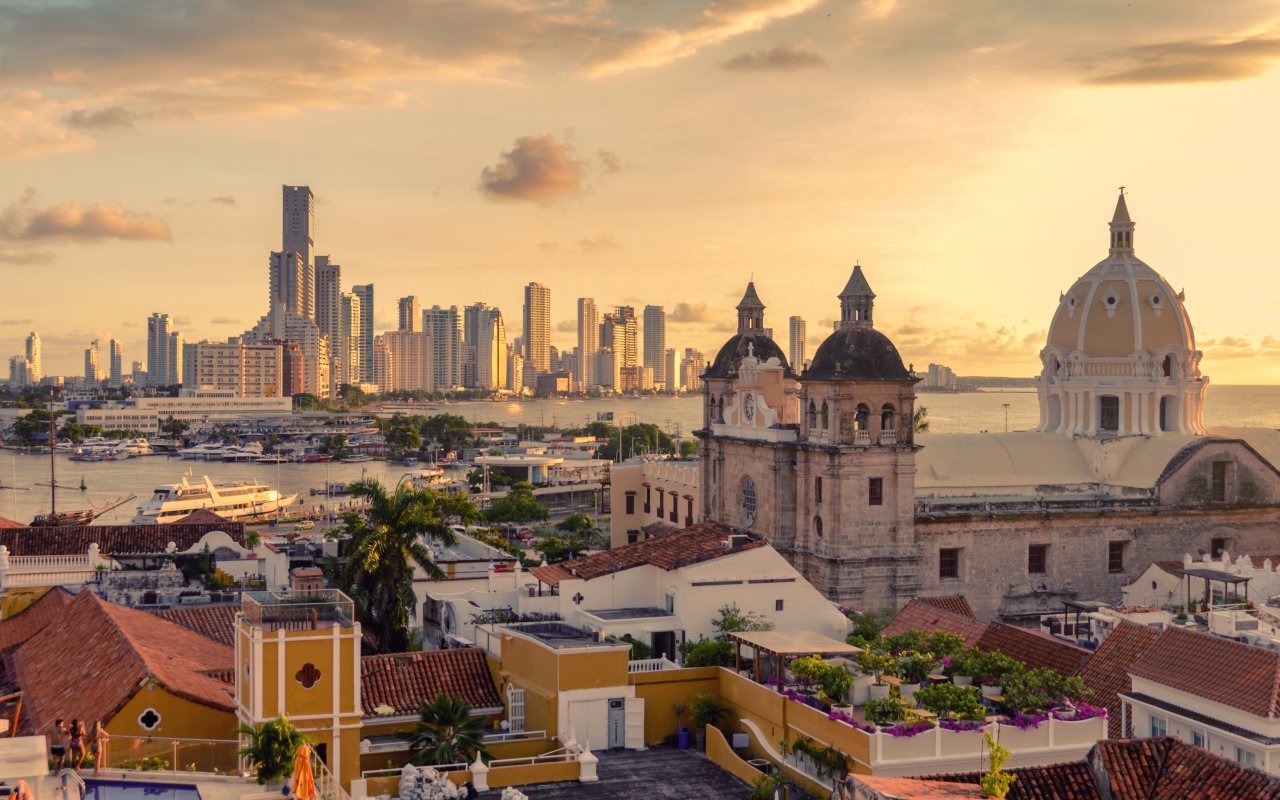
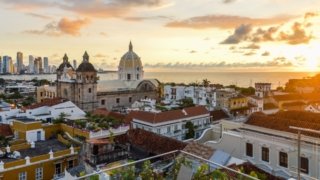
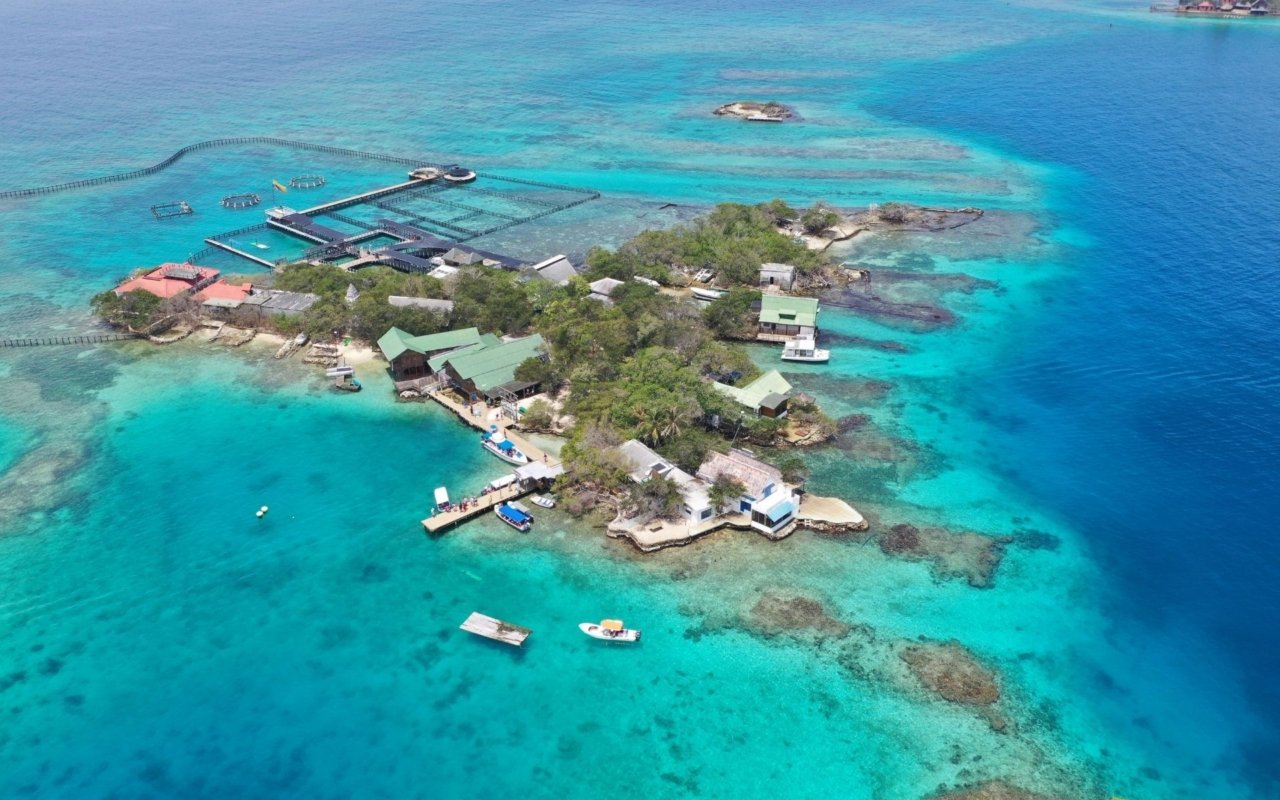
Caribbean Coast (Cartagena, Santa Marta, Tayrona): Hot year-round (28-32°C). Driest December-April.
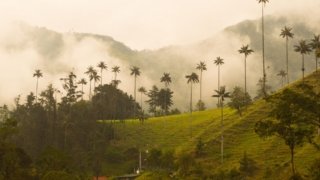
Coffee Region (Salento, Manizales): Mild climate (18-24°C). Best visited during dry periods for hiking and outdoor activities.
Medellín: “City of Eternal Spring” with pleasant temperatures year-round (15-28°C). Less affected by rain patterns.
Bogotá: Cool climate (8-19°C). Bring layers. Can rain any time of year.
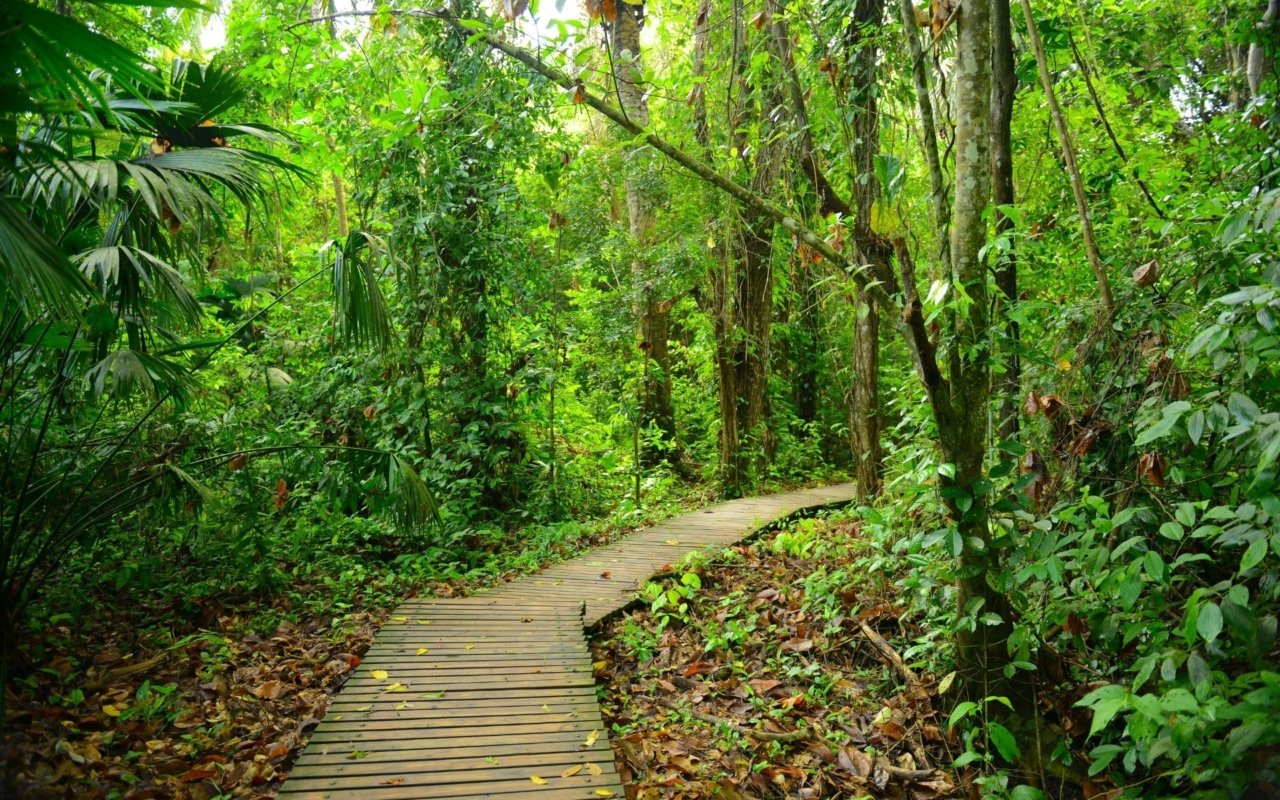
Amazon: Hot and humid year-round with frequent rain. Drier months are July-September.
Pacific Coast: One of the rainiest regions on Earth. Driest January-March, but expect rain anytime.
Best Time to Visit by Region & Ecosystem
Caribbean Coast (Cartagena, Santa Marta, Tayrona)
Best: December-April | Climate: Hot year-round (28-32°C)
Dry season offers perfect beach weather and calm seas. Avoid September-November when rains are heaviest and seas roughest.
Coffee Region (Salento, Manizales, Filandia)
Best: December-March & July-August | Climate: Mild (18-24°C)
Dry periods ideal for hiking coffee trails and outdoor activities. Landscapes stay green year-round but trails can be muddy during rains (April-June, September-November).
Andean Cities (Bogotá, Villa de Leyva, Medellín)
Best: Year-round with variations | Climate: Cool to mild
Bogotá: December-March for less rain (8-19°C, bring layers)
Medellín: Pleasant year-round (15-28°C), “City of Eternal Spring”
Villa de Leyva: December-March for clearest skies and festivals
Amazon Rainforest (Leticia)
Best: July-September | Climate: Hot and humid (25-32°C)
“Drier” months with lower river levels make wildlife spotting easier. Expect rain any time—it’s the rainforest. December-May brings highest rainfall and swollen rivers.
Pacific Coast (Nuquí, Bahía Solano)
Best: July-October (whale season) OR December-March | Climate: Hot and extremely wet
One of Earth’s rainiest regions (6,000mm+ annually). July-October combines whale watching with relatively drier conditions. December-March offers least rain but no whales.
Los Llanos (Eastern Plains)
Best: December-March | Climate: Hot (25-35°C)
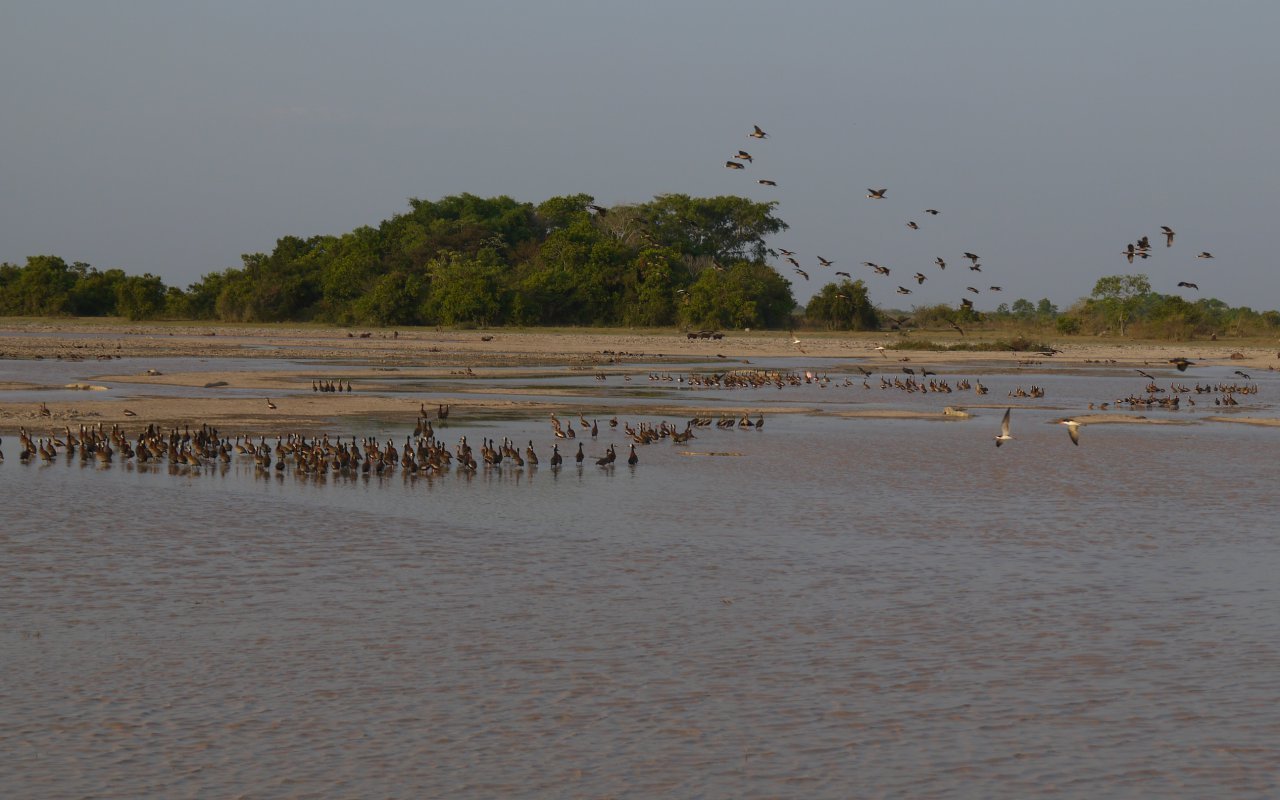
Dry season concentrates wildlife around water sources, making safaris spectacular. Wet season (April-November) floods plains, limiting access.
Caño Cristales (La Macarena)
Best: July-October (peak: July-August) | Climate: Hot
The “Liquid Rainbow” only appears when water levels allow Macarenia clavigera plants to bloom. Park closed December-May when colors disappear completely.
High-Altitude Páramos (Cocuy, Chingaza)
Best: December-March | Climate: Cold (0-15°C)
Dry season offers clearest mountain views and safest trekking conditions. Wet season brings fog and treacherous trails.
Key principle: Colombia’s diverse geography means you can find good weather somewhere year-round by choosing the right ecosystem for the season.
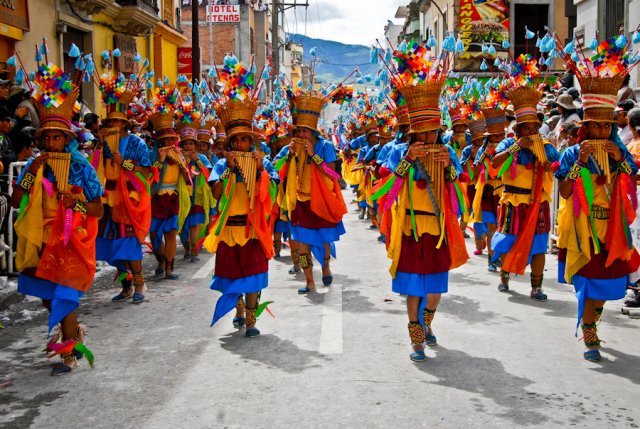


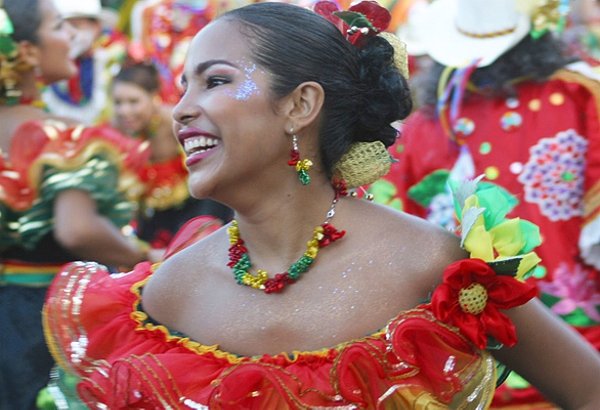
Colombia’s Major Festivals & Events 2026
Planning your trip around Colombia’s spectacular festivals offers the chance to experience authentic Colombian culture at its most vibrant. Here are the country’s most important celebrations:
January-February
Blacks and Whites Carnival (Carnaval de Negros y Blancos)
- Location: Pasto (southern Colombia)
- Dates 2026: January 2-6
- Highlight: January 5 (Day of Blacks) and January 6 (Day of Whites)
- What to expect: UNESCO-recognized festival celebrating cultural diversity. On January 5, participants paint their faces black; on January 6, everyone covers each other in white talcum powder and foam, symbolizing equality and unity. Massive parades with elaborate floats.
- Plan ahead: Book accommodation months in advance—hotels fill up completely.
Barranquilla Carnival
- Location: Barranquilla (Caribbean coast)
- Dates 2026: February 14-17 (four days before Ash Wednesday)
- Pre-carnival events: Begin mid-January with rehearsals, La Guacherna (nighttime parade), and Queen’s coronation
- Main events:
- Saturday, Feb 14: Battle of Flowers (Batalla de Flores)—the grand opening parade led by the Carnival Queen
- Sunday, Feb 15: Grand Parade of Tradition and Folklore
- Monday, Feb 16: Grand Parade of Comparsas (dance troupes)
- Tuesday, Feb 17: Death of Joselito Carnaval (symbolic funeral marking the end)
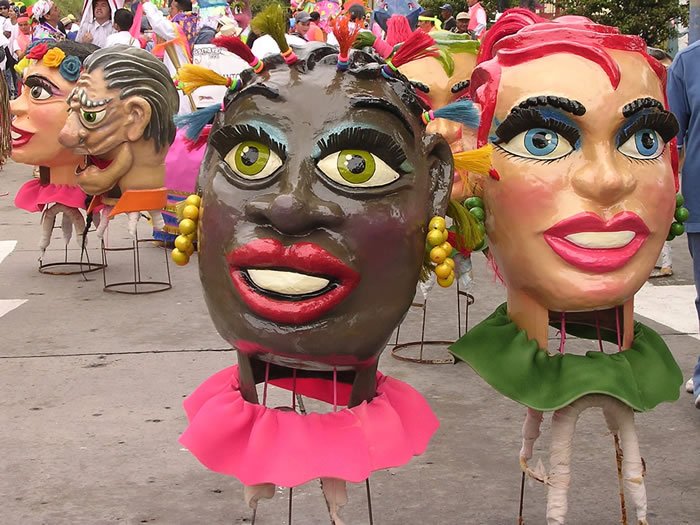
- What to expect: The world’s second-largest carnival (after Rio). UNESCO Masterpiece of Oral and Intangible Heritage. Four days of nonstop cumbia, vallenato, and mapalé music, elaborate costumes, and street dancing.
- Practical tips:
- Buy palco (grandstand) tickets in advance for best views
- Book hotels 3-6 months ahead
- Expect prices to double during carnival
- The motto: “Quien lo vive, es quien lo goza” (He who lives it, enjoys it)
March
Cartagena International Film Festival (FICCI)
- Location: Cartagena
- Dates: Usually early-mid March (specific 2026 dates TBA)
- What to expect: Latin America’s oldest film festival. Screenings in historic colonial courtyards and open-air venues. Focus on Latin American and Caribbean cinema.
April
Vallenato Legend Festival
- Location: Valledupar (northern Colombia)
- Dates: Usually late April (4-day event)
- What to expect: Celebration of vallenato music—a traditional accordion-based genre. Competitions to crown the year’s vallenato king. Street parties and concerts.
- Best for: Music lovers wanting to experience authentic Colombian musical traditions.
June-July
Caño Cristales Viewing Season
- Location: La Macarena, Meta department
- Season: Late June through November (peak: July-October)
- What to see: “River of Five Colors”—aquatic plants turn the river bed red, yellow, green, blue, and black in a rare natural phenomenon
- Requirements: Must book through authorized tour operators. Park access is limited and requires advance permission.
- Important: Check if the park is open before planning—it occasionally closes for environmental protection.
August
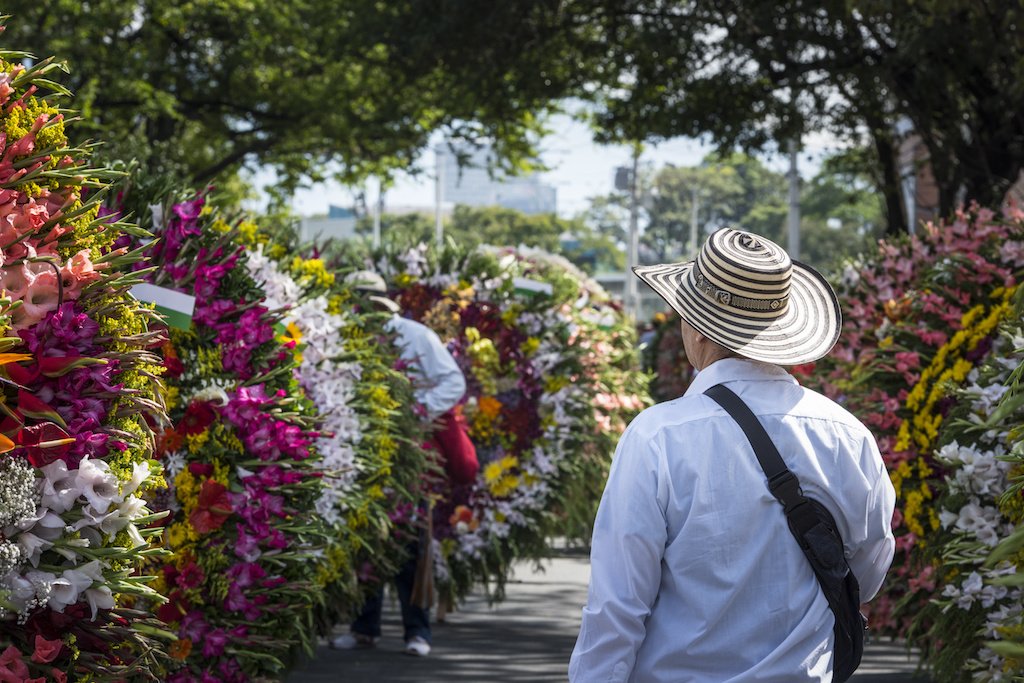
Medellín Flower Festival (Feria de las Flores)
- Location: Medellín
- Dates 2026: August 1-10 (10-day festival)
- Main event: August 9—Silleteros Parade (Desfile de Silleteros), where over 500 flower farmers carry elaborate floral arrangements weighing up to 70kg on their backs
- Other highlights:
- Classic and antique car parade
- Horse cavalcade (Cabalgata)
- Orchid, bird, and flower exhibitions
- Bicycle parade
- Free concerts throughout the city
- Tablados (neighborhood music stages)
- What to expect: Medellín transforms into a garden city. The Silleteros tradition honors rural flower farmers and commemorates the end of slavery (when people carried the wealthy on their backs; now they proudly carry flowers).
- Practical tips:
- All events are free and public
- Hotels book up quickly—reserve 2-3 months ahead
- Best viewing spots for the Silleteros Parade require arriving early
- Festival generates over $50 million USD for the local economy
September-October
Whale Watching Season – Pacific Coast
- Location: Bahía Solano, Nuquí, Gorgona Island (Pacific coast)
- Season: July-October (peak: August-September)
- What to see: Humpback whales migrating from Antarctica to Colombia’s warm Pacific waters to breed and give birth
- Best time: August-September for highest whale concentrations
- Where to stay: Eco-lodges in Bahía Solano or Nuquí
- What to expect: One of the world’s best whale-watching destinations. See mothers with calves, breaching, tail slapping. Combine with jungle treks and pristine beaches.
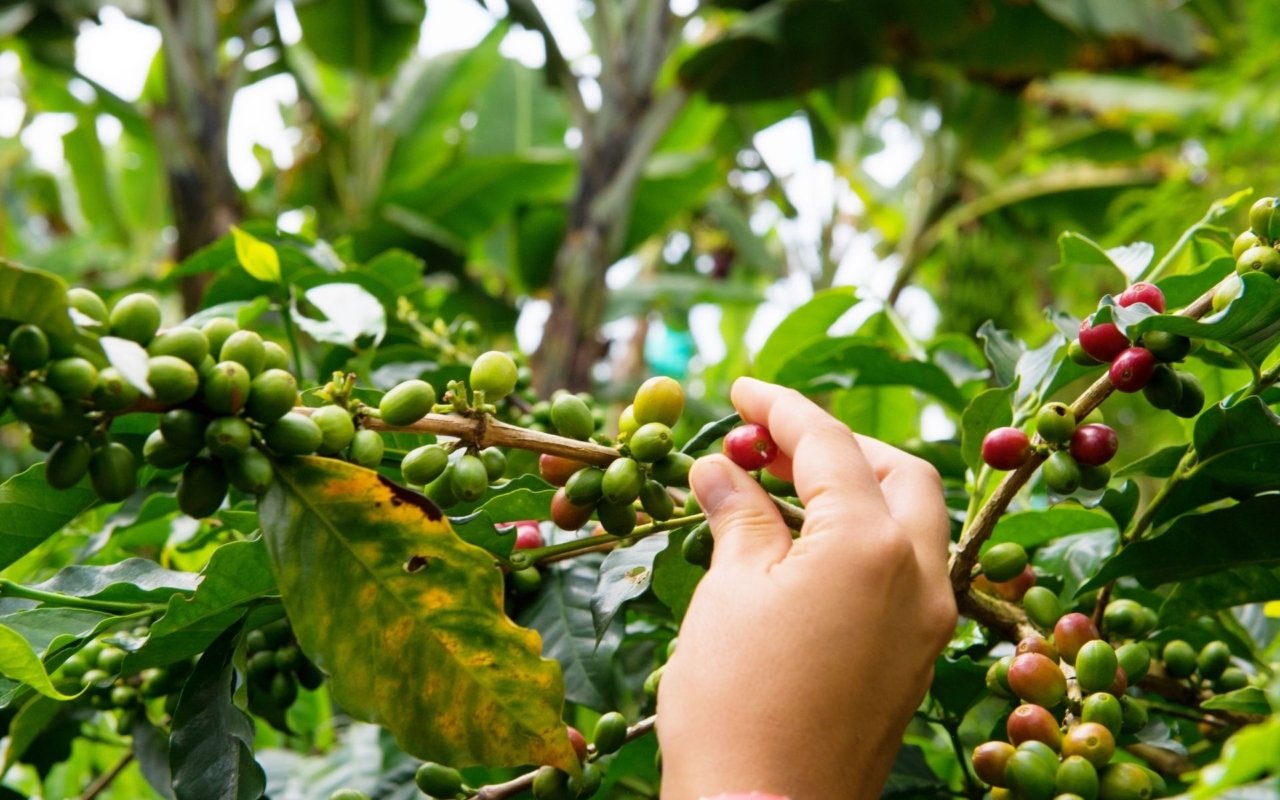
Coffee Harvest Season
- Location: Coffee Triangle (Salento, Manizales, Pereira)
- Main harvest: September-December
- Secondary harvest: April-May
- What to experience: Visit working coffee farms (fincas), participate in coffee picking, learn the entire coffee production process from cherry to cup
- Best time: October-November when coffee trees are in full bloom and harvest is underway
- Note: Colombia produces coffee year-round thanks to varied microclimates, so you can always see some stage of coffee production.
December-January
Cali Fair (Feria de Cali)
- Location: Cali (Valle del Cauca)
- Dates: December 25-30 (typically)
- What to expect: The world’s capital of salsa celebrates with five days of nonstop dancing, concerts, parades, and competitions. Street parties throughout the city.
- Highlights:
- Salsa dancing competitions
- Bullfights (controversial—avoid if opposed)
- Cabalgata (horse parade)
- Concerts by top salsa orchestras
- Best for: Salsa enthusiasts and anyone wanting to experience Caleño party culture.
Day of the Little Candles (Día de las Velitas) – Villa de Leyva
- Date: December 7 (nationwide, but spectacular in Villa de Leyva)
- What to expect: Marks the unofficial start of Christmas season. Colombians light candles and lanterns outside their homes. Villa de Leyva hosts a massive fireworks competition that illuminates its colonial plaza.
- Plan ahead: Villa de Leyva is a small town—book accommodation well in advance.
Christmas & New Year
- Dates: December 16-January 9
- What to expect: Colombia goes all-out for Christmas. Cities are decorated with millions of lights (especially Medellín’s Alumbrados display). Expect higher prices, fully booked hotels, and many businesses closed December 24-January 2.
- Practical advice: Book everything months in advance or avoid this period entirely if you want lower prices and fewer crowds.

When to See Caño Cristales river?
Best time for the most vibrant red colors: July – October
If you want to see Caño Cristales looking like a liquid rainbow with those spectacular red carpets covering the riverbed, plan your visit for July or August. These months offer the perfect combination of peak color intensity and stable weather conditions.
Peak months: July and August – This is when the river is at its absolute most spectacular, with the deepest, most intense red hues.
Why These Months?
The brilliant red color comes from an endemic aquatic plant called Macarenia clavigera that only grows in this region. The plant needs very specific conditions to turn red:
Perfect water level – Not too high (wet season floods it), not too low (dry season kills it)
Direct sunlight – The plant must be submerged but exposed to strong sunlight
Right time in bloom cycle – After the initial rainy season growth
Season Breakdown:
June: Park opens, colors beginning to appear but still developing
July-August: PEAK SEASON – Most vibrant reds, most reliable weather, best visibility. This is THE time to go.
September-October: Still excellent, colors remain strong though slightly fading toward season end
November: Colors fading, hit-or-miss depending on rainfall that year
December-May: Park CLOSED – The plant goes dormant, colors disappear completely
Humpback Whale Migration in the Pacific
Season: July to November
Peak viewing: August and September
Official season: July 15 – October 17
The Spectacle
Every year, over 2,000 humpback whales make an extraordinary 8,000-kilometer journey from Antarctica and southern Chile to Colombia’s warm Pacific waters. These gentle giants travel without feeding, covering one of the longest migrations in the animal kingdom, to breed and give birth in the protected bays along Colombia’s Pacific coast.
What makes this experience unforgettable is witnessing mothers with newborn calves, breaching (whales jumping completely out of the water), tail slapping, and if your boat has an underwater microphone, hearing their haunting songs echoing through the ocean.

Best Destinations for Whale Watching
1. Nuquí (Chocó Department)
- Why go: Most popular destination, excellent infrastructure for tourists
- What makes it special: Pristine black-sand beaches where waterfalls cascade directly onto the sand, lush rainforest, natural hot springs (Termales)
2. Bahía Solano & El Valle (Chocó Department)
- Why go: More affordable than Nuquí, equally beautiful, gateway to Utría National Park
- What makes it special: Direct access to Utría National Park, family-run eco-lodges, strong community tourism
3. Utría National Natural Park
- Why go: A marine sanctuary where whales come to breed, one of the most protected viewing areas
- Special experience: Sometimes whales can be spotted directly from shore without needing a boat
4. Bahía Málaga (Near Buenaventura)
- Why go: One of the main whale breeding hotspots, around 800 whales counted annually
- What makes it special: Part of Uramba National Park, excellent for kayaking among whales, cave exploration
5. Gorgona Island (Cauca Department)
- Why go: The ONLY place where you can witness whales giving birth and newborn calves taking their first swims
- What makes it special: Former prison island turned pristine national park, exceptional biodiversity, most remote and exclusive whale-watching experience
When to Visit
July: Season begins, whales arriving, fewer crowds, colors just beginning
August-September: PEAK SEASON – Highest whale concentrations, most active behavior, best weather
October: Still excellent viewing, season winding down
November: Possible to see whales early in the month but numbers declining
What You’ll See
- Breaching: Whales launching their entire bodies out of the water (the most spectacular behavior)
- Tail slapping: Whales slapping their tails on the water surface
- Pec slapping: Slapping pectoral fins on the water
- Spy-hopping: Whales poking their heads vertically out of water to look around
- Mothers with calves: Newborns staying close to their mothers
- Singing: Males performing complex underwater songs (if boat has hydrophone)
Medellín Flower Festival (Feria de las Flores)
Dates 2026: August 1-10
Location: Medellín, Antioquia
The Flower Festival is Medellín‘s most iconic celebration, a 10-day extravaganza that transforms the “City of Eternal Spring” into a living garden.
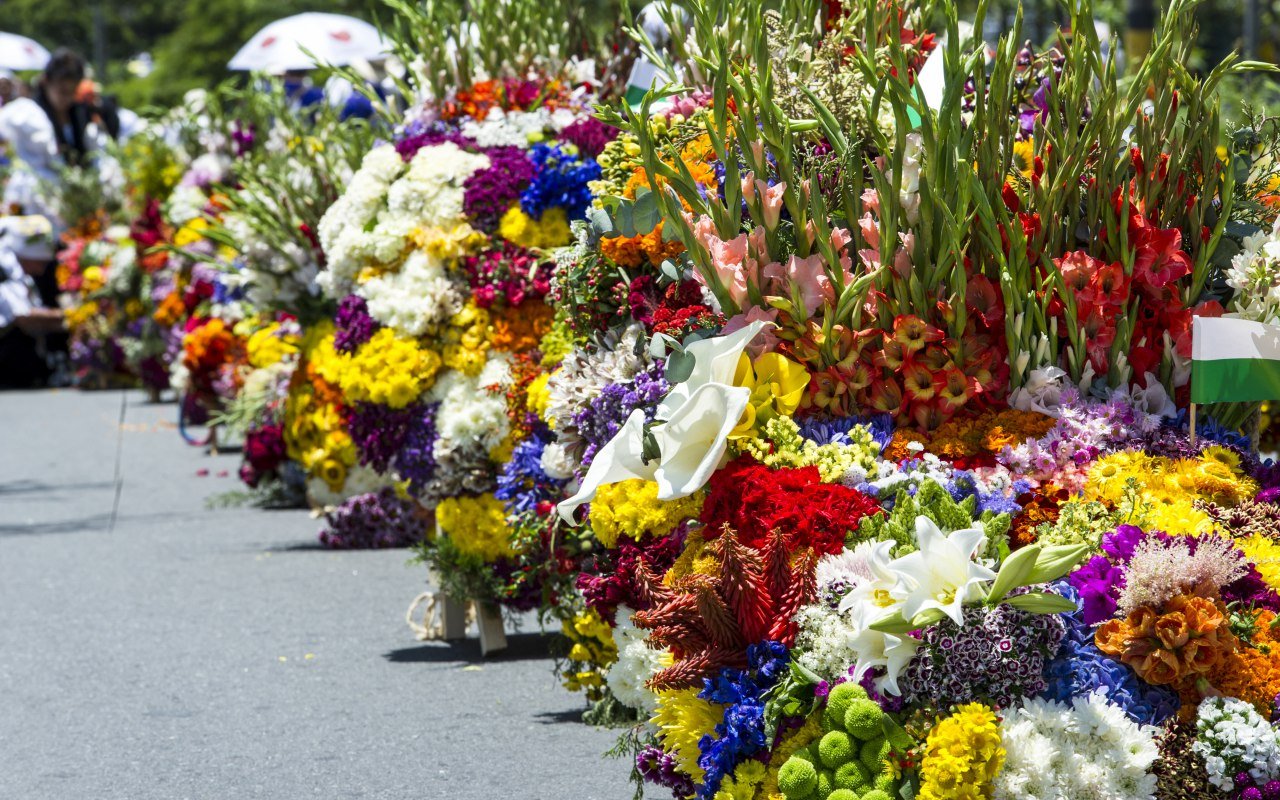
The highlight is the Silleteros Parade (August 9), where over 500 flower farmers from Santa Elena carry massive floral arrangements on their backs through the city streets. These silletas (wooden frames) weigh up to 70 kilograms, measure up to 5 meters in diameter, and contain up to 25 different flower varieties in intricate designs. This tradition honors rural flower growers and commemorates when farmers once carried the wealthy on their backs—now they proudly carry flowers instead.
Beyond the parade, the festival features free concerts (including major Colombian artists like J Balvin and Carlos Vives), a classic car parade, the Cabalgata (horse parade with hundreds of riders), orchid exhibitions at the Botanical Garden, a massive bicycle parade, and neighborhood music stages (tablados) throughout the city. All events are completely free and open to the public. The festival generates over $50 million USD for Medellín’s economy and attracts visitors from around the world.

Barranquilla Carnival
Dates 2026: February 14-17 (four days before Ash Wednesday)
Location: Barranquilla, Caribbean coast
Pre-carnival events: Begin January 17 with rehearsals and cultural activities
The Barranquilla Carnival is the world’s second-largest carnival after Rio de Janeiro and a UNESCO Masterpiece of Oral and Intangible Heritage of Humanity. This four-day explosion of color, music, and dance celebrates Caribbean Colombian culture with a unique blend of African, Indigenous, and Spanish traditions. The carnival’s motto—“Quien lo vive, es quien lo goza” (He who lives it, enjoys it)—captures the infectious energy that transforms the entire city into one massive street party.
Main events: Saturday’s Batalla de Flores (Battle of Flowers) opens the festivities with a spectacular six-hour parade led by the Carnival Queen. Sunday features the Gran Parada de Tradición y Folclor showcasing traditional dance groups performing cumbia, mapalé, and congo dances. Monday brings the Gran Parada de Comparsas with elaborate costumes and contemporary choreography. Tuesday concludes with the humorous Muerte de Joselito Carnaval, a symbolic funeral marking the end of festivities. Purchase palco (grandstand) tickets in advance for the best parade views, and book hotels 3-6 months ahead as the city fills completely and prices double during carnival. Expect vibrant masks, traditional costumes, thundering drums, and four days of relentless celebration.
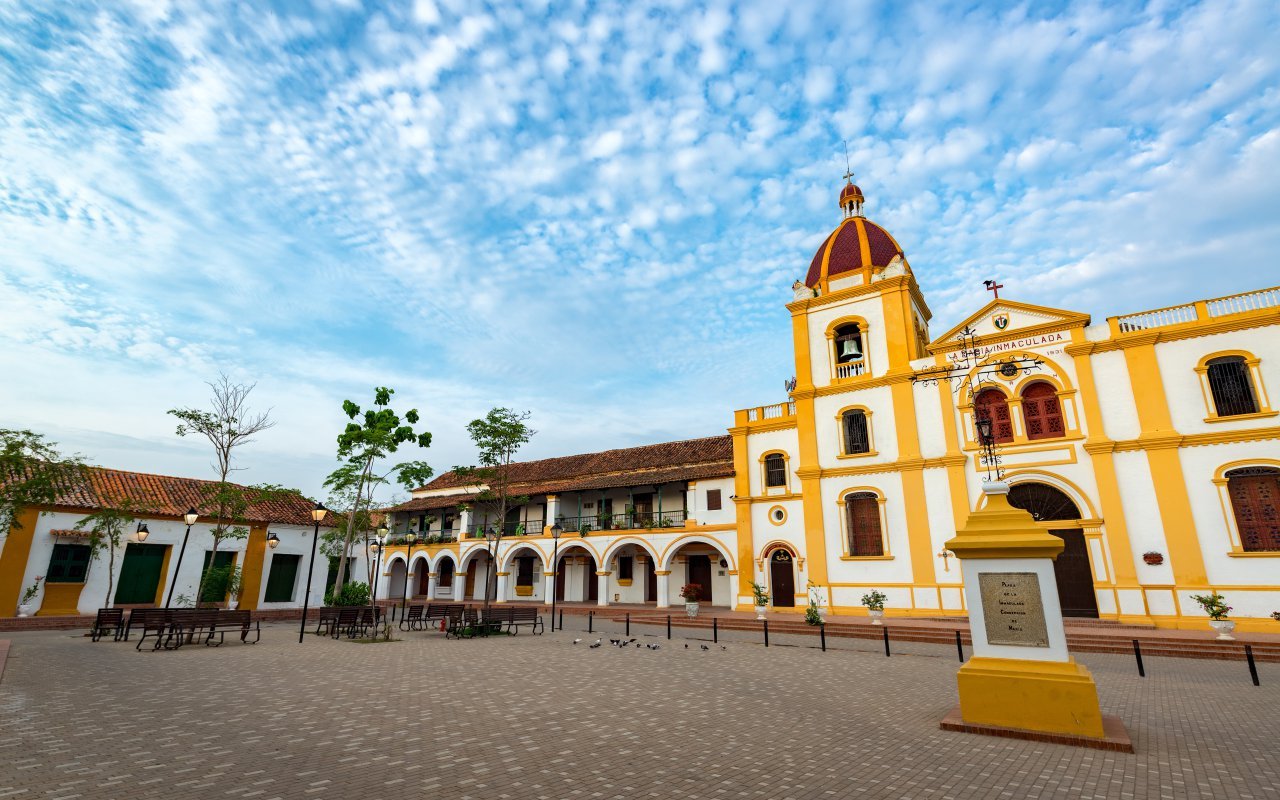
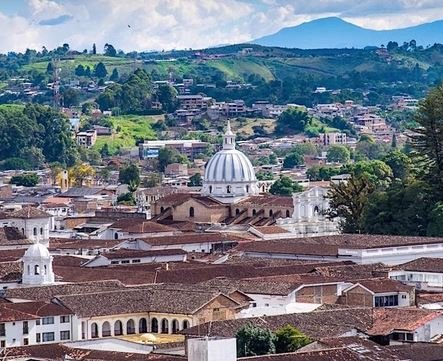
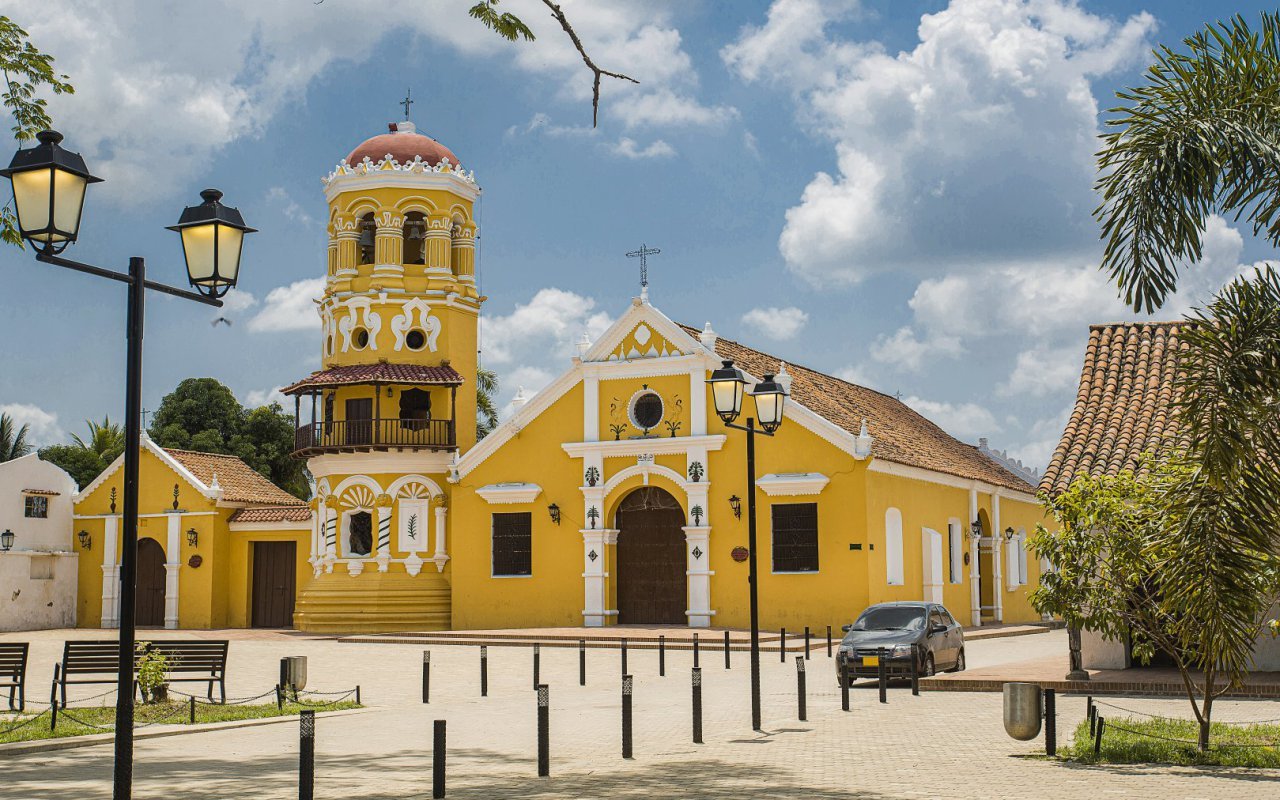
Holy Week in Popayán and Mompox (Semana Santa)
Dates 2026: March/April (dates vary annually based on Easter)
Locations: Popayán (Cauca) and Mompox (Bolívar)
Holy Week in Popayán and Mompox represents Colombia’s most solemn and traditional religious celebration, recognized as UNESCO Intangible Cultural Heritage of Humanity. These meticulously preserved colonial-era processions have been performed continuously since the 16th century, following strict traditions passed down through generations.
In Popayán, nightly processions from Tuesday through Saturday feature hooded cargueros (carriers) bearing massive wooden religious statues (pasos) through cobblestone streets illuminated only by candlelight, creating a haunting and deeply spiritual atmosphere. The city’s white colonial architecture provides a stunning backdrop for this centuries-old ritual.
Mompox, a beautifully preserved colonial river town, offers an equally powerful but more intimate experience with processions winding through narrow streets along the Magdalena River. Both destinations attract thousands of visitors who come to witness these living museums of Spanish colonial religious tradition. The solemnity, precision, and devotion of participants—many from families who have carried these roles for generations—make this one of Latin America’s most authentic cultural experiences. Book accommodation 2-3 months in advance as both small towns fill completely during Holy Week, with hotels often requiring minimum 3-4 night stays. Expect deeply reverent crowds, no photography during processions in some areas, and a unique window into Colombia’s colonial past and enduring Catholic traditions.
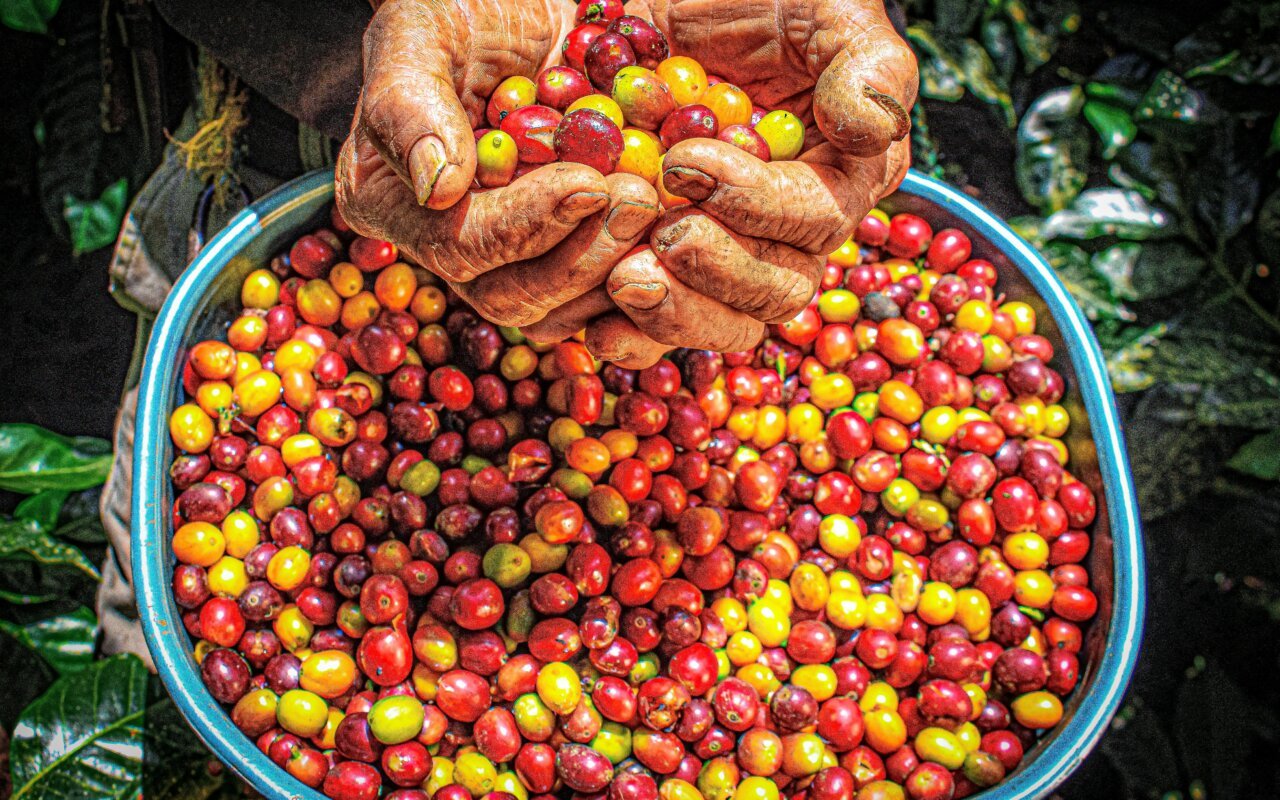
Coffee Production Calendar in Eje Cafetero
Year-Round Production: Colombia’s varied microclimates mean coffee is always being harvested somewhere.
Main Harvest: September-December
Secondary Harvest: April-May
Best time to visit coffee farms: October-November when farms are bustling with harvest activity, coffee trees are flowering, and the landscape is lush.
Coffee tourism: Available year-round in the Coffee Triangle. You’ll always see at least one stage of production: planting, growing, flowering, harvesting, processing, or roasting.

Colombian Public Holidays 2026
Colombia has 18 official public holidays—more than most countries. Many are moved to the following Monday under the “Emiliani Law” to create long weekends (puentes).
Impact on travelers:
- Banks, government offices, and many businesses close
- Colombians travel extensively during long weekends
- Prices increase significantly
- Hotels and transportation book up quickly
- Popular destinations become crowded
Key holidays to be aware of:
- Holy Week (Semana Santa): March/April (dates vary)—entire country shuts down
- Mid-year break: Late June/early July
- Christmas period: December 24-January 6
Tip: Avoid traveling during Colombian holidays if you want lower prices and fewer crowds. If you do travel during holidays, book everything well in advance.
Itinerary ideas in Colombia
Andean and colonial Colombia : on the gold and coffee route
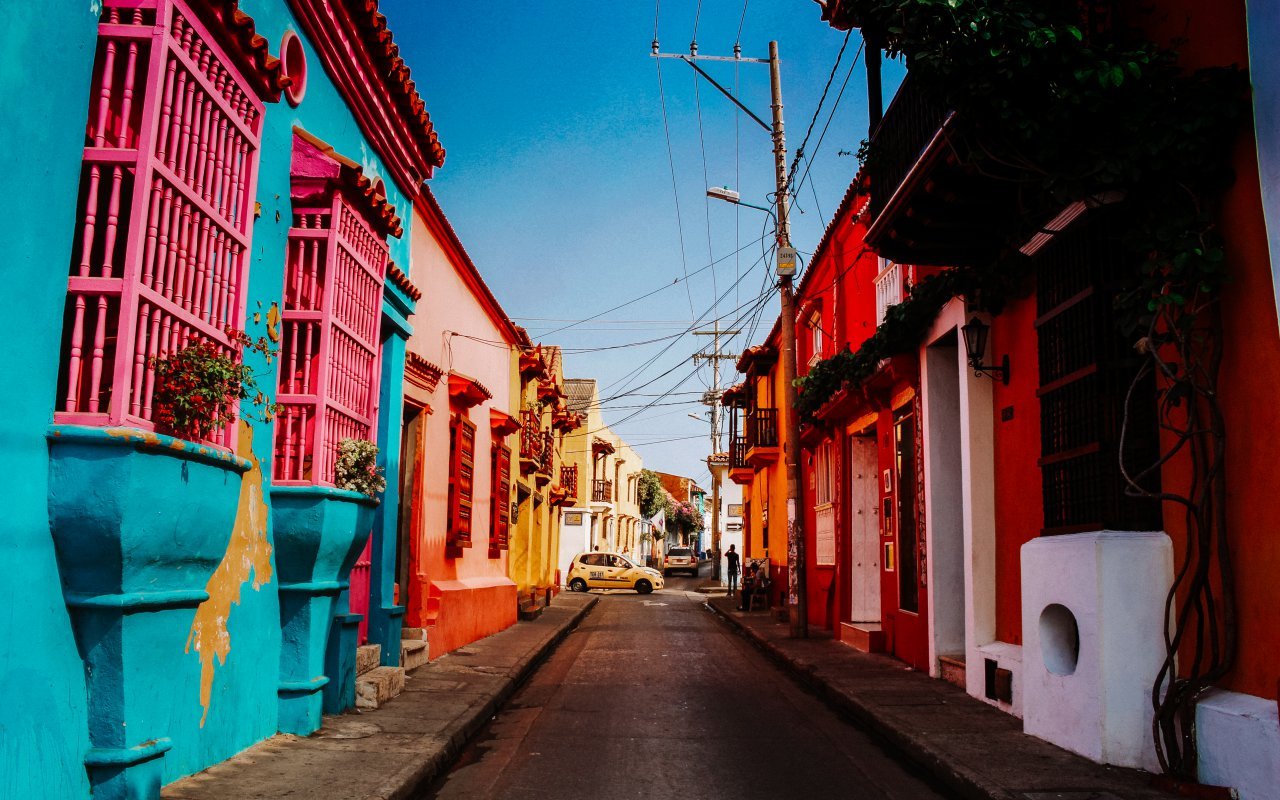
Caribbean tour of Colombia: Cartagena and its archipelagos
Colombia must-see tour in 15 days